The Environment
- Office and field devices used by administrative and project teams
- Laptops and desktops with varying age and performance levels
- Inconsistent patching across operating systems and applications
- Limited tracking of device lifecycle and replacement timelines
- Minimal centralized management of endpoints
- Growing reliance on devices for project coordination
What ITAD4Me Did
- Audited all devices and identified outdated or high-risk systems
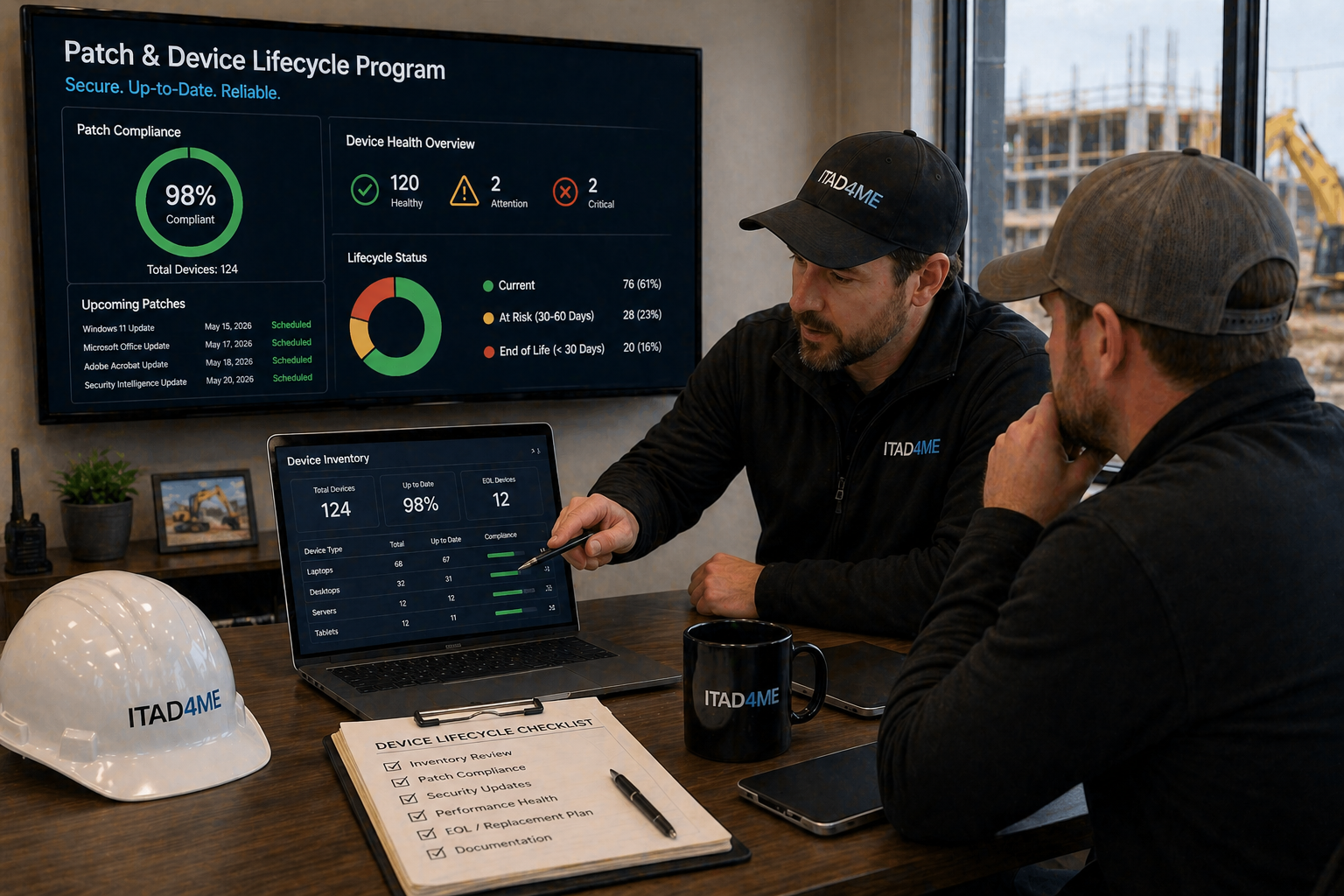
- Implemented centralized patch management across endpoints
- Established schedules for operating system and application updates
- Defined device lifecycle standards and replacement timelines
- Improved endpoint visibility and monitoring
- Removed unsupported or end-of-life systems
- Documented device inventory and lifecycle tracking
- Aligned patching and lifecycle processes with security best practices
- Provided ongoing management through managed IT services
The Results
- Improved consistency of updates across all devices
- Reduced exposure to known vulnerabilities
- Better performance and reliability of user systems
- Clear visibility into device health and lifecycle status
- Reduced downtime caused by outdated or unsupported hardware
- More predictable planning for device replacement and budgeting
Related Services Used
This case study connects to Endpoint Management , Cybersecurity , Managed IT Services , Technology Audits & Risk Assessment , Help Desk .
Background
The company relied on a growing number of devices across both office and field environments. Without a structured approach to updates and lifecycle management, systems became inconsistent and difficult to manage.
Improving control over devices became necessary to support operations.
The Business Risk
Unmanaged devices and inconsistent updates created several risks:
- Increased exposure to security vulnerabilities
- Reduced system performance and reliability
- Unexpected downtime from aging hardware
- Difficulty tracking device status and replacement needs
- Inefficiency in managing multiple systems
Without improvement, these issues would continue to affect productivity and security.
ITAD4Me’s Approach
ITAD4Me focused on creating a structured and repeatable system for managing devices.
All endpoints were audited, and centralized patch management was implemented to ensure consistent updates. Lifecycle standards were defined to guide hardware replacement and planning.
Monitoring tools were introduced to improve visibility, and documentation was created to support ongoing management.
The goal was to bring consistency, reliability, and security to the environment.
Outcome
The company now operates with a clear and consistent approach to device management.
Systems are updated regularly, performance is more predictable, and risks are reduced. The organization has better visibility into its environment and can plan for future needs more effectively.
Services Connected to This Case Study
This engagement directly relates to Endpoint Management, Cybersecurity, Managed IT Services, and Technology Audits & Risk Assessment.
Maintaining devices is essential for both security and performance. A structured approach helps reduce risk and improve long-term efficiency.