The Environment
- Microsoft 365 environment for email and document collaboration
- Local file storage containing case files and client records
- Multiple attorney and staff workstations
- Limited endpoint protection and monitoring
- Backup system in place, but not recently validated
- No formal incident response or recovery playbook
What ITAD4Me Did
- Isolated affected systems to contain the ransomware spread
- Assessed the scope of impact across endpoints, files, and user accounts
- Verified backup integrity and identified clean restore points
- Performed controlled system restoration from verified backups
- Rebuilt compromised systems to ensure a clean environment
- Restored Microsoft 365 data, shared files, and user access
- Implemented enhanced endpoint protection and monitoring
- Established incident response and recovery procedures
- Aligned recovery improvements with long-term cybersecurity strategy
The Results
- Successfully restored critical legal data without paying ransom
- Minimized downtime during an active client workload period
- Re-established secure access to case files and communication systems
- Reduced exposure to future ransomware incidents
- Improved visibility into system health and security events
- Created a repeatable incident response and recovery framework
Related Services Used
This case study connects to Backup & Recovery , Cybersecurity , Business Continuity , Managed IT Services , Help Desk .
Background
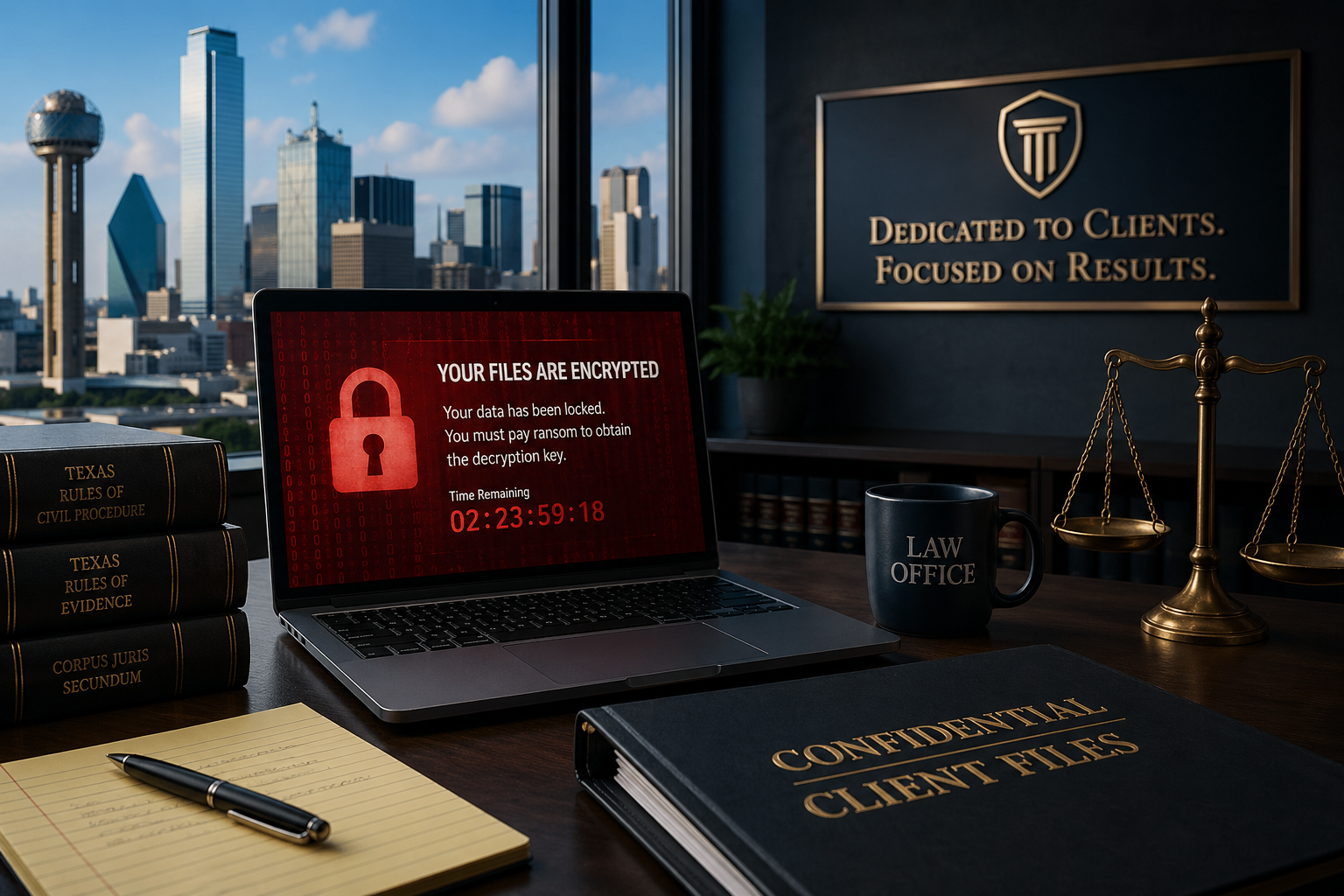
The firm relied heavily on digital case files, email communication, and shared documents to manage client matters. When ransomware disrupted access to these systems, attorneys and staff were unable to retrieve documents, communicate effectively, or continue normal operations.
Legal deadlines, client expectations, and confidentiality requirements created immediate pressure to restore access quickly and securely.
The Business Risk
For a law firm, downtime is not just an inconvenience — it directly impacts client service, case progress, and revenue.
The ransomware incident introduced several immediate risks:
- Loss of access to active case files
- Disruption of attorney-client communication
- Potential exposure of sensitive legal data
- Uncertainty around data integrity and recovery
- Operational downtime during critical legal work
Without a clear recovery path, the firm faced both operational and reputational risk.
ITAD4Me’s Approach
ITAD4Me treated the incident as both a recovery effort and a long-term risk reduction opportunity.
The first priority was containment — isolating infected systems to prevent further spread. From there, the team validated backup integrity and identified clean restore points.
Systems were rebuilt and restored in a controlled manner, ensuring that the environment was free of malware before reconnecting users.
Beyond recovery, ITAD4Me implemented stronger endpoint protection, improved monitoring, and created a documented incident response process so the firm would be better prepared for future events.
Outcome
The firm regained access to critical systems and client data without paying ransomware demands.
Operations were restored, risk was reduced, and leadership gained confidence in their ability to respond to future incidents.
Most importantly, the firm moved from a reactive position to a proactive security and continuity posture — with validated backups, improved protection, and a clear recovery strategy in place.
Services Connected to This Case Study
This engagement directly relates to Backup & Recovery, Cybersecurity, Business Continuity, and Managed IT Services.
A ransomware event is not just a security issue — it is a business continuity event. The ability to recover quickly and safely determines how much impact the business ultimately experiences.