
The Environment
- Office workstations used by administrative, operations, and management teams
- Production-adjacent systems supporting scheduling, inventory, and reporting
- Mixed device ages and inconsistent configuration standards
- Incomplete patching across operating systems and applications
- Endpoint protection configured differently across devices
- Limited reporting on endpoint health and vulnerability exposure
What ITAD4Me Did
- Audited endpoint inventory, patch status, and configuration gaps
- Created a standard endpoint hardening baseline
- Standardized endpoint protection settings across devices
- Implemented consistent operating system and application patch schedules
- Removed unsupported software and reduced unnecessary local risk
- Improved monitoring for device health, update status, and security alerts
- Documented baseline configurations for future device deployment
- Defined an ongoing review process for patch compliance
- Aligned endpoint management with broader cybersecurity priorities
The Results
- Improved endpoint security consistency across the organization
- Reduced exposure to known vulnerabilities
- Stronger visibility into patch compliance and device health
- Fewer risks from unsupported software and inconsistent settings
- More reliable systems for office and operational teams
- Established a repeatable endpoint baseline for future growth
Related Services Used
This case study connects to Cybersecurity , Managed IT Services , Technology Audits & Risk Assessment , Help Desk , Network & Infrastructure .
Background
The manufacturer relied on a mix of office systems and production-support devices to manage day-to-day operations. Over time, device configurations became inconsistent, patching varied by system, and visibility into endpoint health was limited.
Leadership wanted a more structured approach to endpoint security and patch management.
The Business Risk
Inconsistent endpoint management created several risks:
- Increased exposure to known security vulnerabilities
- Higher chance of malware or unauthorized access
- Unpredictable system performance
- Limited visibility into device health and patch status
- Greater support burden from inconsistent configurations
For a manufacturing business, device reliability matters because IT issues can slow communication, scheduling, reporting, and operations.
ITAD4Me’s Approach
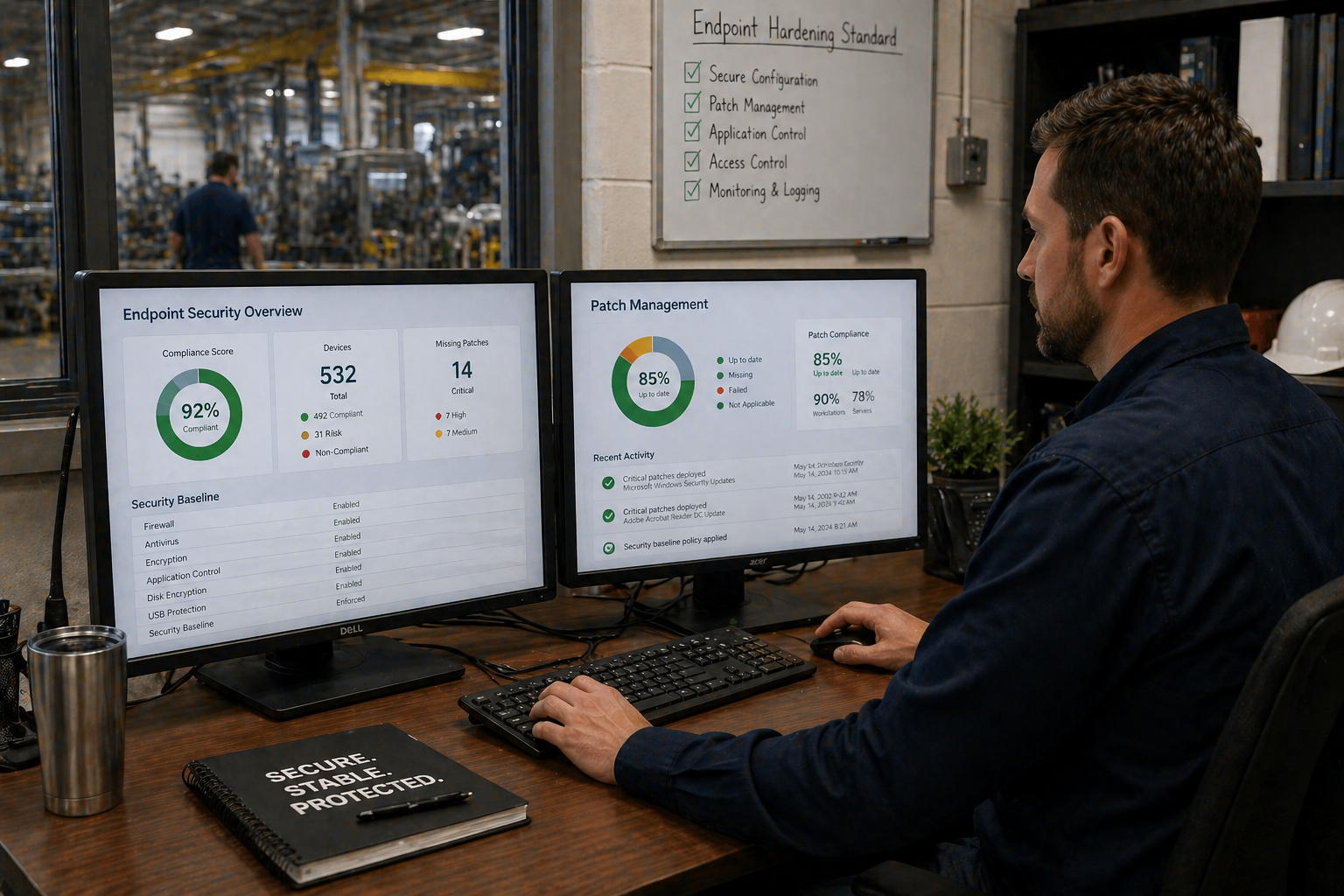
ITAD4Me began with an endpoint audit to understand device inventory, patch status, software exposure, and configuration gaps.
A practical hardening baseline was created to standardize device security settings. Patch schedules were implemented for operating systems and applications, and endpoint protection settings were aligned across systems.
Monitoring was improved so leadership could see which devices were healthy, which required attention, and where patch gaps existed.
The goal was to improve security without creating unnecessary disruption for users or operations.
Outcome
The manufacturer gained a stronger and more consistent endpoint environment.
Devices are now managed against a defined baseline, patch compliance is easier to track, and security risk is reduced. The business has a repeatable model for maintaining endpoints as the organization grows.
Services Connected to This Case Study
This engagement directly relates to Cybersecurity, Managed IT Services, Technology Audits & Risk Assessment, and Help Desk.
Endpoint security is not a one-time task. It requires consistent patching, monitoring, and standards that keep systems protected over time.