The Environment
- Electronic health records and patient data systems
- Microsoft 365 for communication and document management
- Local and cloud-based file storage
- Standard backup system without immutability controls
- Growing concern around ransomware targeting healthcare organizations
- No formal validation of backup integrity under attack scenarios
What ITAD4Me Did
- Evaluated current backup architecture and retention policies
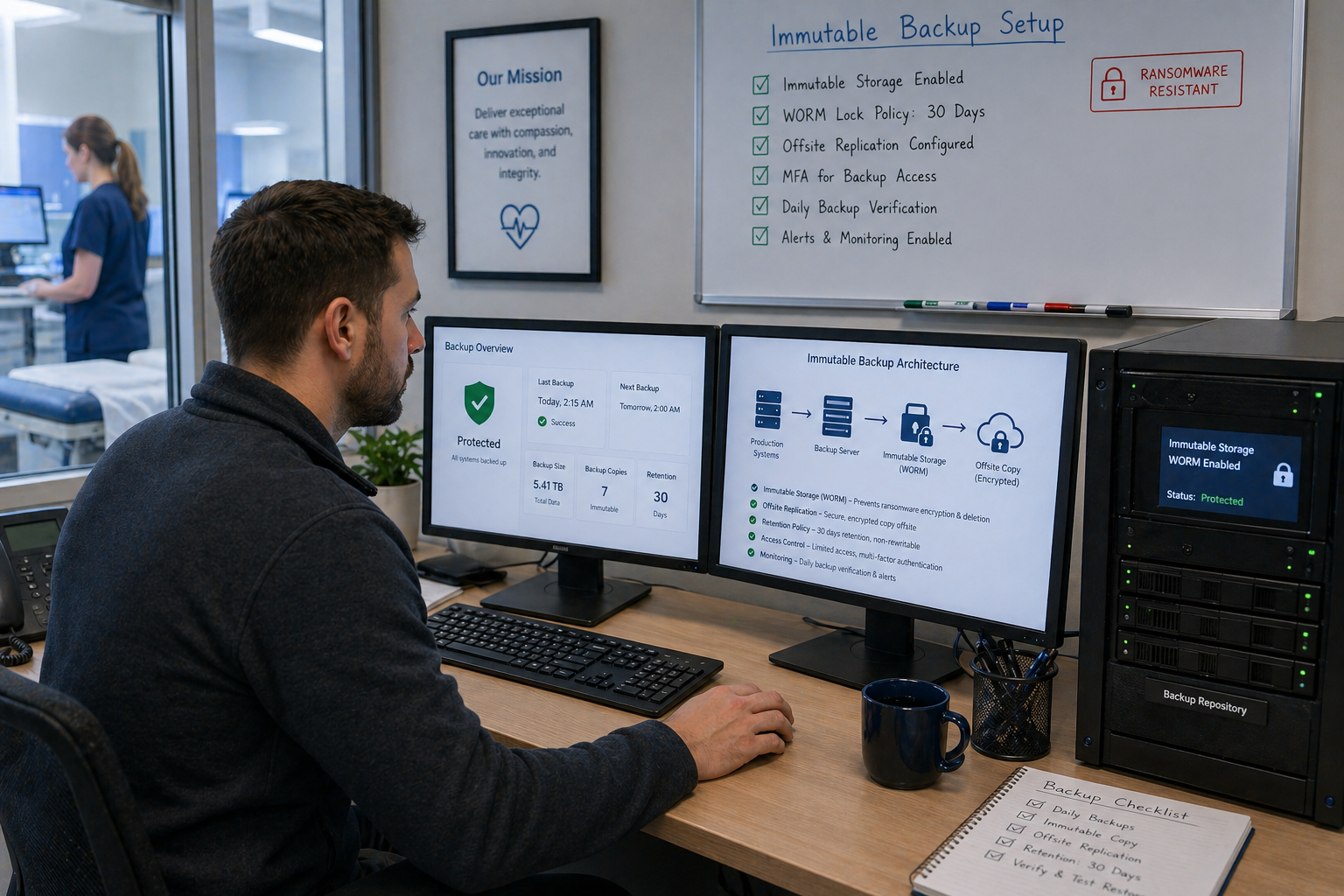
- Implemented immutable backup storage to prevent modification or deletion
- Configured retention lock policies to protect backup data
- Separated backup environments from production systems for added security
- Validated backup integrity through controlled recovery testing
- Improved monitoring for backup success and anomaly detection
- Documented recovery procedures for critical systems and data
- Aligned backup strategy with cybersecurity and compliance requirements
- Established ongoing validation processes to maintain recovery readiness
The Results
- Ensured backup data could not be altered or deleted by attackers
- Improved protection against ransomware targeting backup systems
- Strengthened confidence in data recovery across critical systems
- Reduced risk of data loss from internal error or malicious activity
- Enhanced visibility into backup performance and integrity
- Established a resilient and compliant data protection strategy
Related Services Used
This case study connects to Backup & Recovery , Cybersecurity , Business Continuity , Managed IT Services , Help Desk .
Background
The organization relied on digital systems to manage patient records, communication, and daily operations. While backups were in place, leadership recognized that traditional backup methods did not fully address modern threats such as ransomware.
Ensuring that data could not be altered or deleted became a priority.
The Business Risk
Standard backup systems can be vulnerable if attackers gain access or if errors occur internally.
The organization faced several risks:
- Backup data being modified or deleted during an attack
- Inability to recover clean data after a ransomware incident
- Loss of patient data integrity
- Operational disruption during recovery efforts
- Increased exposure to compliance and regulatory issues
Without immutable protection, backups could not be fully trusted.
ITAD4Me’s Approach
ITAD4Me focused on strengthening the backup architecture by introducing immutability as a core control.
Backup storage was configured to prevent any modification or deletion during defined retention periods. This ensured that even if production systems were compromised, backup data would remain intact.
Recovery testing was performed to validate that data could be restored quickly and accurately. Monitoring and documentation were also improved to support ongoing reliability.
The goal was to move from basic backup capability to a resilient data protection strategy.
Outcome
The organization now operates with a stronger, more reliable backup system that protects against both external threats and internal errors.
Immutable backups provide assurance that critical data remains safe and recoverable. Leadership has greater confidence in recovery readiness and overall system resilience.
Services Connected to This Case Study
This engagement directly relates to Backup & Recovery, Cybersecurity, Business Continuity, and Managed IT Services.
Modern data protection requires more than storing backups. It requires ensuring those backups remain secure, unchanged, and ready when the business depends on them.