
The Environment
- Retail systems supporting point-of-sale and inventory
- Cloud and local systems used for daily operations
- No documented disaster recovery plan
- Unclear roles and responsibilities during an incident
- Limited testing of backup and recovery processes
- Dependence on systems for revenue generation
What ITAD4Me Did
- Reviewed current systems and recovery capabilities
- Developed a structured disaster recovery plan
- Defined roles and responsibilities for key stakeholders
- Documented recovery steps for critical systems
- Identified gaps in backup and recovery processes
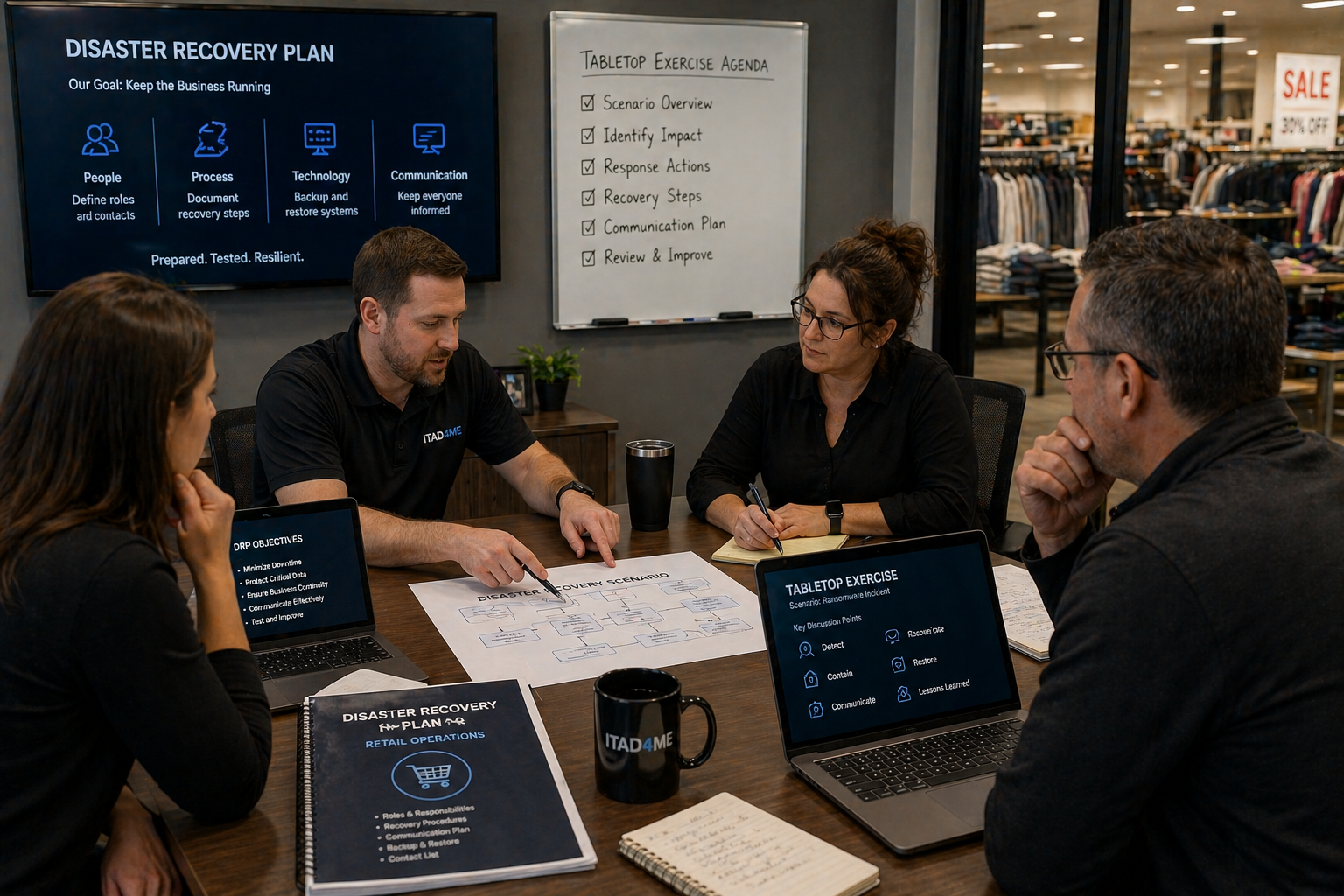
- Conducted a tabletop exercise to simulate a disruption
- Walked through response scenarios with leadership
- Refined the plan based on exercise outcomes
- Established a repeatable testing process for the future
The Results
- Clear disaster recovery plan for key systems
- Improved understanding of roles during an incident
- Identified and addressed gaps in recovery processes
- Increased confidence in handling disruptions
- Better coordination between business and IT teams
- Stronger foundation for business continuity
Related Services Used
This case study connects to Business Continuity , Backup & Recovery , Cybersecurity , Managed IT Services , Help Desk .
Background
The retail business depended on technology to support sales, inventory, and daily operations. Without a clear recovery plan, any disruption could impact revenue and customer experience.
Planning became a priority.
The Business Risk
Lack of a defined recovery plan created several risks:
- Extended downtime during outages
- Loss of revenue from system interruptions
- Confusion around roles and responsibilities
- Inability to restore systems quickly
- Reduced confidence in handling incidents
Without preparation, even a short disruption could have significant impact.
ITAD4Me’s Approach
ITAD4Me worked with leadership to build a structured disaster recovery plan.
Critical systems were identified, recovery steps were documented, and roles were clearly defined. A tabletop exercise was conducted to simulate a disruption and walk through the response process.
The exercise helped identify gaps and improve coordination between teams.
Outcome
The business now has a clear and tested disaster recovery plan.
Leadership understands how to respond to incidents, systems can be restored more effectively, and the organization is better prepared for unexpected events.
Services Connected to This Case Study
This engagement directly relates to Business Continuity, Backup & Recovery, Cybersecurity, and Managed IT Services.
Planning ahead reduces risk and helps businesses recover faster when disruptions occur.