
The Environment
- Classroom environments with shared network access
- Multiple user groups including staff and students
- Devices accessing training materials and online resources
- No segmentation between different user types
- Limited ability to control or restrict content access
- Need for reliable performance during training sessions
What ITAD4Me Did
- Assessed network usage and user access requirements
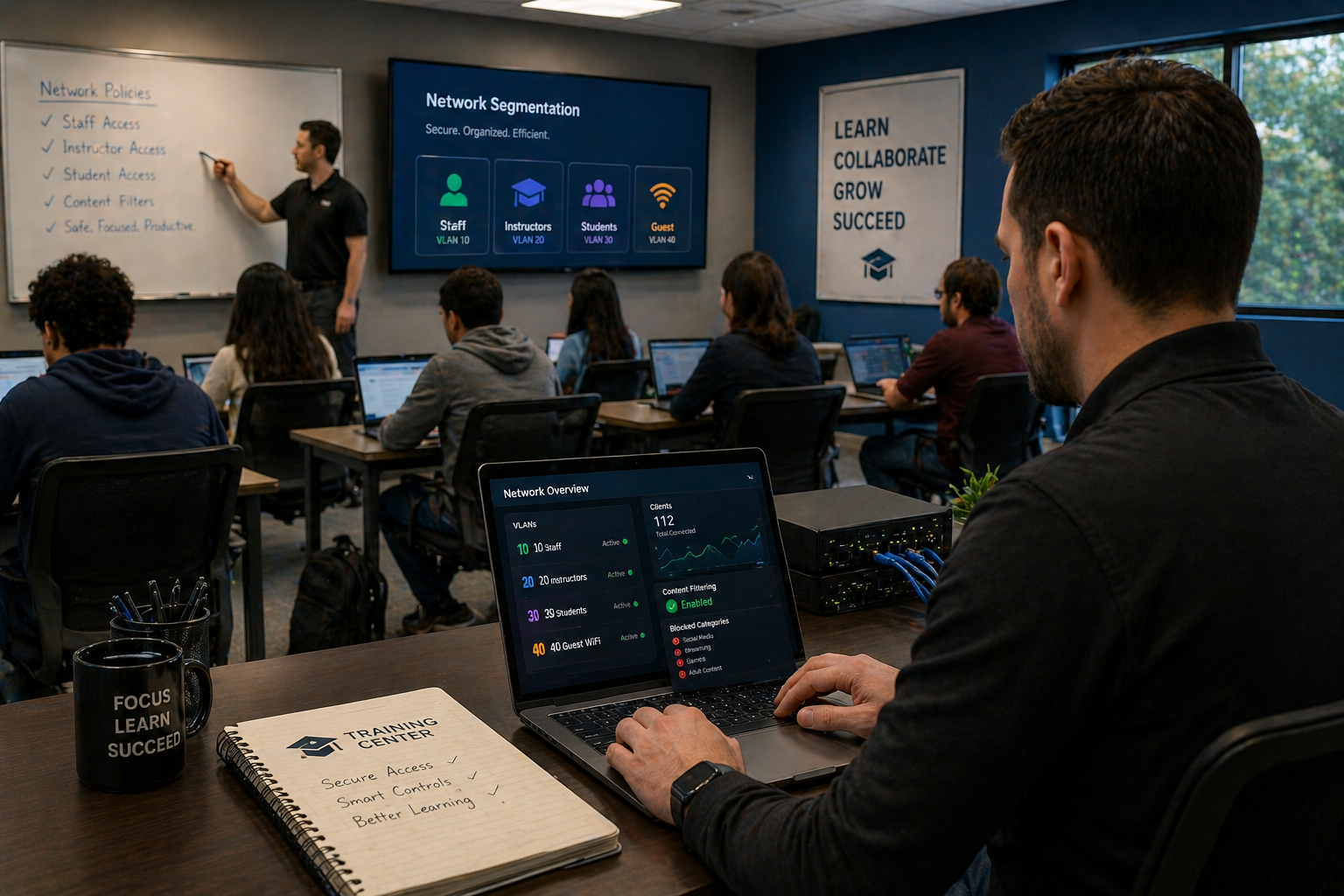
- Implemented VLAN segmentation for different user groups
- Separated staff, instructors, and student networks
- Applied content filtering policies based on user roles
- Restricted access to non-relevant or high-risk content
- Maintained open access to required training resources
- Improved network performance through traffic separation
- Implemented monitoring for network usage and policy enforcement
- Documented network structure for ongoing management
The Results
- Improved control over user access and network resources
- Enhanced security through network segmentation
- Reduced risk of inappropriate or unsafe content access
- Better performance across training environments
- Consistent experience for students and instructors
- More manageable and scalable network structure
Related Services Used
This case study connects to Network & Infrastructure , Cybersecurity , WiFi Management , Managed IT Services , Help Desk .
Background
The training center relied on shared network access for staff, instructors, and students. As usage increased, the need for better control and security became clear.
Separating traffic and managing access became necessary.
The Business Risk
A shared and unfiltered network created several risks:
- Exposure of internal systems to all users
- Lack of control over content access
- Potential access to inappropriate or unsafe websites
- Reduced network performance during peak usage
- Difficulty managing multiple user groups
Without segmentation and controls, these issues could impact both security and the learning experience.
ITAD4Me’s Approach
ITAD4Me evaluated the network and user requirements to design a structured solution.
VLAN segmentation was implemented to separate user groups and control access. Content filtering policies were applied to restrict non-relevant or high-risk content while maintaining access to training materials.
Monitoring tools were introduced to ensure performance and policy enforcement.
The goal was to create a secure and controlled environment without disrupting users.
Outcome
The training center now operates with a structured and controlled network.
Users have appropriate access, content is managed effectively, and performance is improved. The environment supports both security and a positive learning experience.
Services Connected to This Case Study
This engagement directly relates to Network & Infrastructure, Cybersecurity, WiFi Management, and Managed IT Services.
Segmenting networks and controlling access helps organizations maintain security while supporting their operational goals.