Why Backup Encryption Matters
Backups are designed to protect your data.
But without encryption, they can become a major security risk.
If backups are accessed by unauthorized users:
- sensitive data can be exposed
- regulatory requirements may be violated
- business risk increases significantly
Unencrypted backups are just copies of your data — not protected versions of it.
What Backup Encryption Actually Does
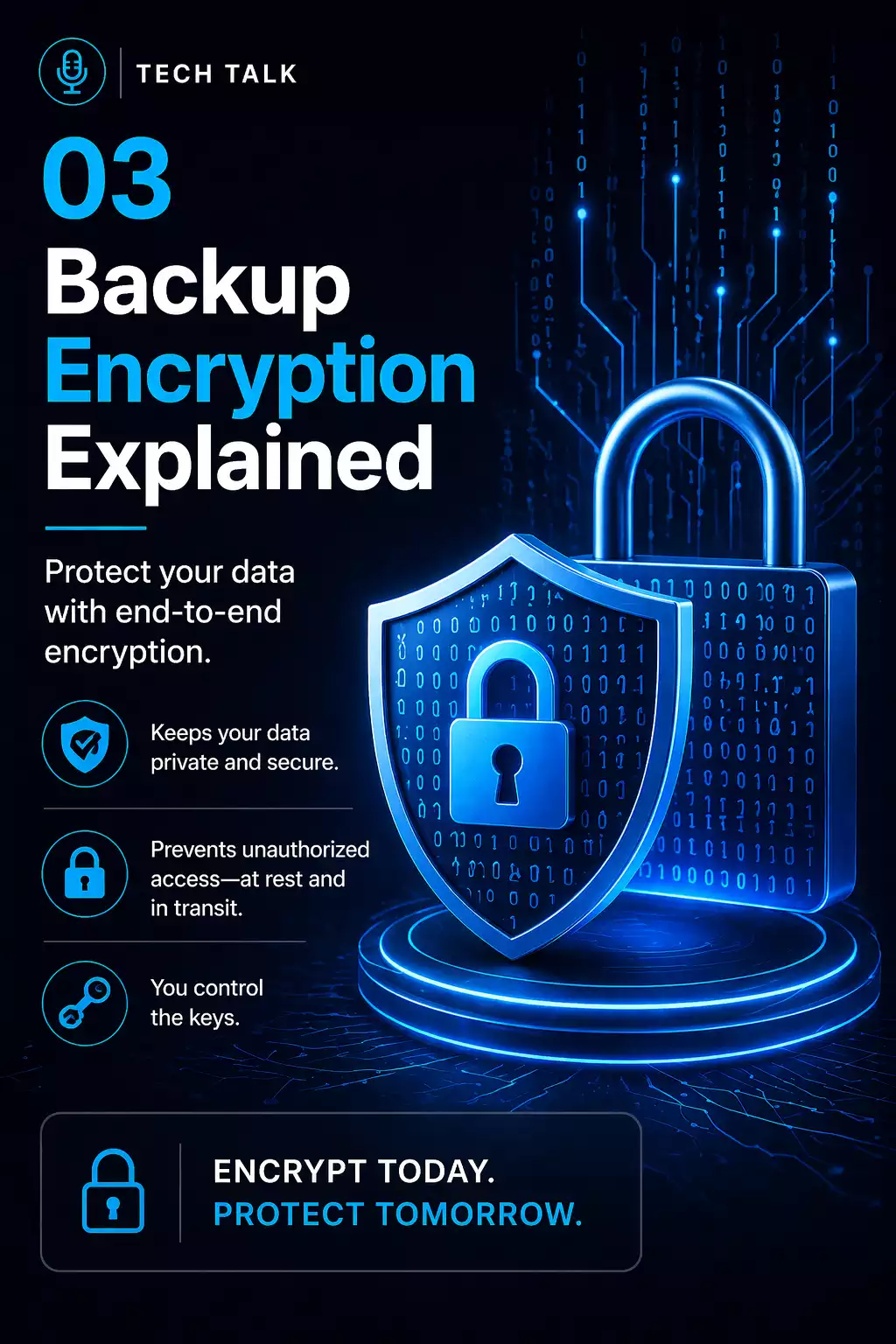
Encryption converts data into an unreadable format.
Only users or systems with the correct key can access it.
This means:
- even if data is accessed
- even if systems are compromised
the data remains unusable without decryption.
Encryption protects data even when other security controls fail.
What a Real Data Exposure Scenario Looks Like
A typical situation:
- backup data is stored in the cloud or on a device
- credentials are compromised or access is misconfigured
- attackers gain access to backup storage
- data is downloaded
If backups are not encrypted:
- data is immediately readable
- sensitive information is exposed
If backups are encrypted:
- data cannot be used without keys
Without encryption, backup access becomes data exposure.
Encryption at Rest vs In Transit
There are two critical types of encryption.
Encryption at Rest
Protects data while it is stored.
This includes:
- cloud storage
- backup appliances
- disks and servers
👉 Prevents unauthorized access to stored data
Encryption in Transit
Protects data while it is being transferred.
This includes:
- backups sent over the internet
- replication between systems
👉 Prevents interception during transfer
Both at-rest and in-transit encryption are required for complete protection.
Why Encryption Is Critical for Backups
Backups often contain:
- customer data
- financial information
- internal documents
- system configurations
If exposed, this data can lead to:
- regulatory penalties
- reputational damage
- financial loss
Encryption vs Backup Protection (Important Difference)
Encryption protects data from being read.
It does NOT protect against:
- deletion
- corruption
- ransomware encryption
Encryption protects confidentiality — not availability.
This is why encryption must work alongside:
The Hidden Risk: Key Management
Encryption introduces a critical responsibility:
👉 managing encryption keys
If keys are:
- lost → data cannot be recovered
- compromised → encryption is ineffective
Improper key management can make backups unusable — even if data is intact.
Performance and Operational Tradeoffs
Encryption adds overhead.
This may impact:
- backup speed
- restore performance
- system resources
However:
- modern systems minimize this impact
- the security benefit outweighs performance cost
Common Encryption Mistakes
Businesses often:
- rely only on provider defaults
- fail to verify encryption is enabled
- mismanage encryption keys
- assume encryption solves all backup risks
These gaps can lead to backup failures.
How Encryption Fits Into a Full Strategy
Encryption is one layer of protection.
A complete strategy includes:
- encryption (confidentiality)
- redundancy (availability)
- immutability (protection from change)
- testing (validation)
This aligns with a full
backup strategy.
How to Know If Your Backups Are Not Secure
You may be at risk if:
- backups are not encrypted
- encryption settings are unknown
- keys are not properly managed
- access controls are weak
If your backups can be accessed and read without restriction, they are not secure.
What This Means for Your Business
Backup encryption is not optional.
It is a fundamental requirement for protecting sensitive data.
Data protection is not complete unless backups are both recoverable and secure.
Final Thoughts
Backups protect your data from loss.
Encryption protects your data from exposure.
You need both.
Need help with this topic?
Make sure your backups actually work when it matters.
Most businesses discover backup failures during an outage. We help you validate recovery, reduce downtime risk, and build a system that works under pressure.
- Backup validation and testing
- Recovery time optimization
- Clear recovery documentation