Why a Backup Checklist Matters
Most backup strategies fail for one reason:
👉 something important was overlooked
Not because:
- backups didn’t run
- systems didn’t exist
But because:
- gaps went unnoticed
- assumptions replaced validation
Backup failure is usually the result of missing pieces — not missing systems.
This checklist helps ensure your strategy is complete.
What a Real Failure Looks Like
A typical failure scenario:
- backups are in place
- no one verifies recovery
- retention is too short
- ransomware goes undetected
- clean backups are overwritten
At that point:
- recovery is not possible
- downtime increases
- business impact escalates
Most failures occur because one or more critical elements were missing.
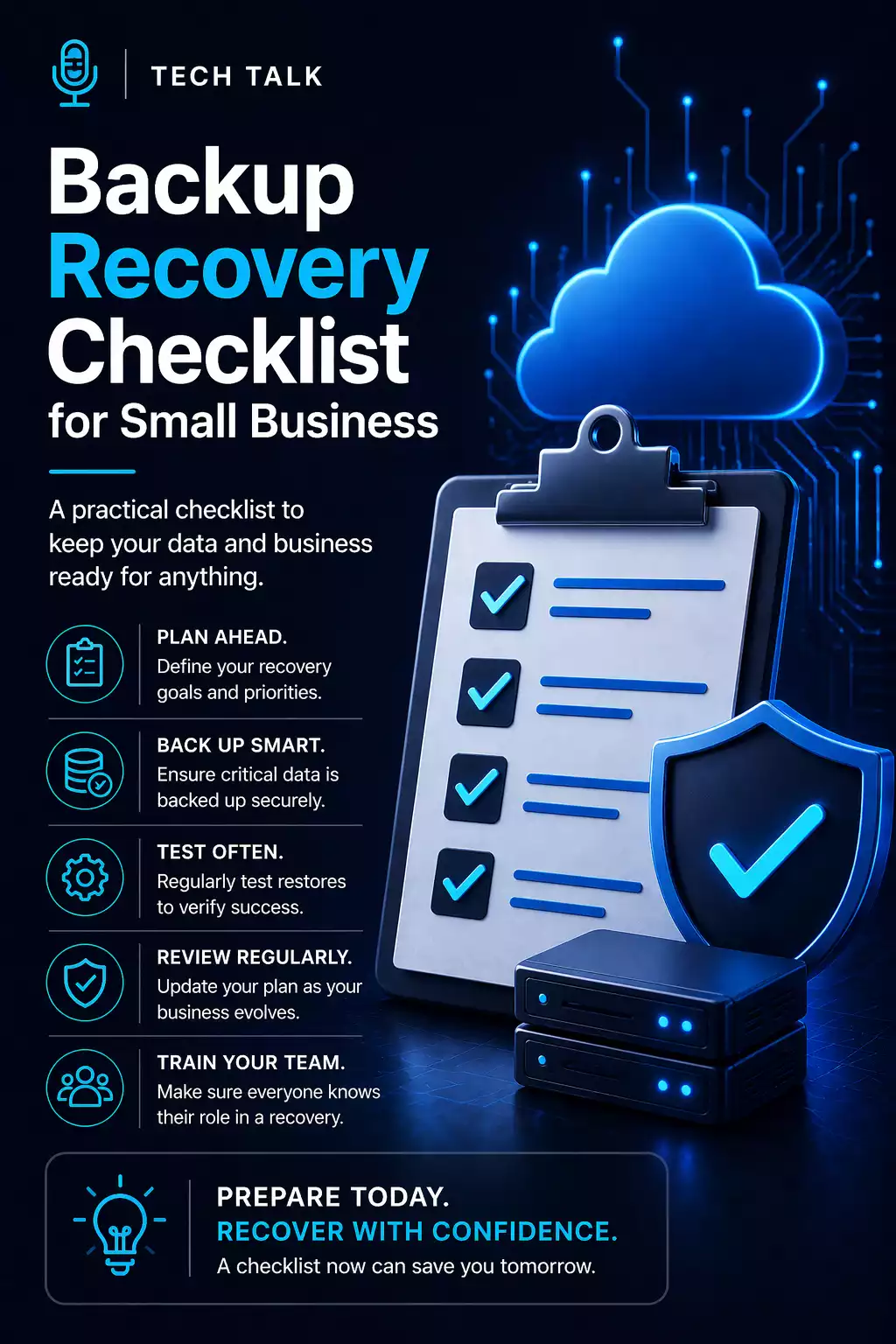
🔍 Backup & Recovery Checklist
Use this to evaluate your current setup.
1. Backup Coverage (Do You Have the Right Data?)
✔ All critical systems are backed up
✔ File data, servers, and applications are included
✔ Cloud platforms (Microsoft 365, Google Workspace) are backed up
✔ New systems are automatically added to backup
If not, see
cloud backup needs
2. Backup Frequency (Are You Backing Up Often Enough?)
✔ Backup frequency matches how often data changes
✔ Critical systems are backed up hourly or continuously
✔ Backup schedules are reviewed regularly
If not, see
backup frequency
3. Backup Retention (How Long Is Data Kept?)
✔ Retention is at least 30–90 days or longer
✔ Retention accounts for delayed detection
✔ Older recovery points are preserved
If not, see
backup retention
4. Backup Locations (Is Data Protected from Disaster?)
✔ Data exists in multiple locations
✔ At least one copy is offsite
✔ Local and cloud backups are used together
If not, see
local vs cloud backup
5. Backup Protection (Can Backups Be Compromised?)
✔ Backups are isolated from production systems
✔ Access is restricted and controlled
✔ Backups cannot be easily deleted or modified
✔ Immutable backups are in place
If not, see
immutable backups
6. Backup Security (Is Data Protected from Exposure?)
✔ Backups are encrypted at rest
✔ Backups are encrypted in transit
✔ Encryption keys are securely managed
If not, see
backup encryption
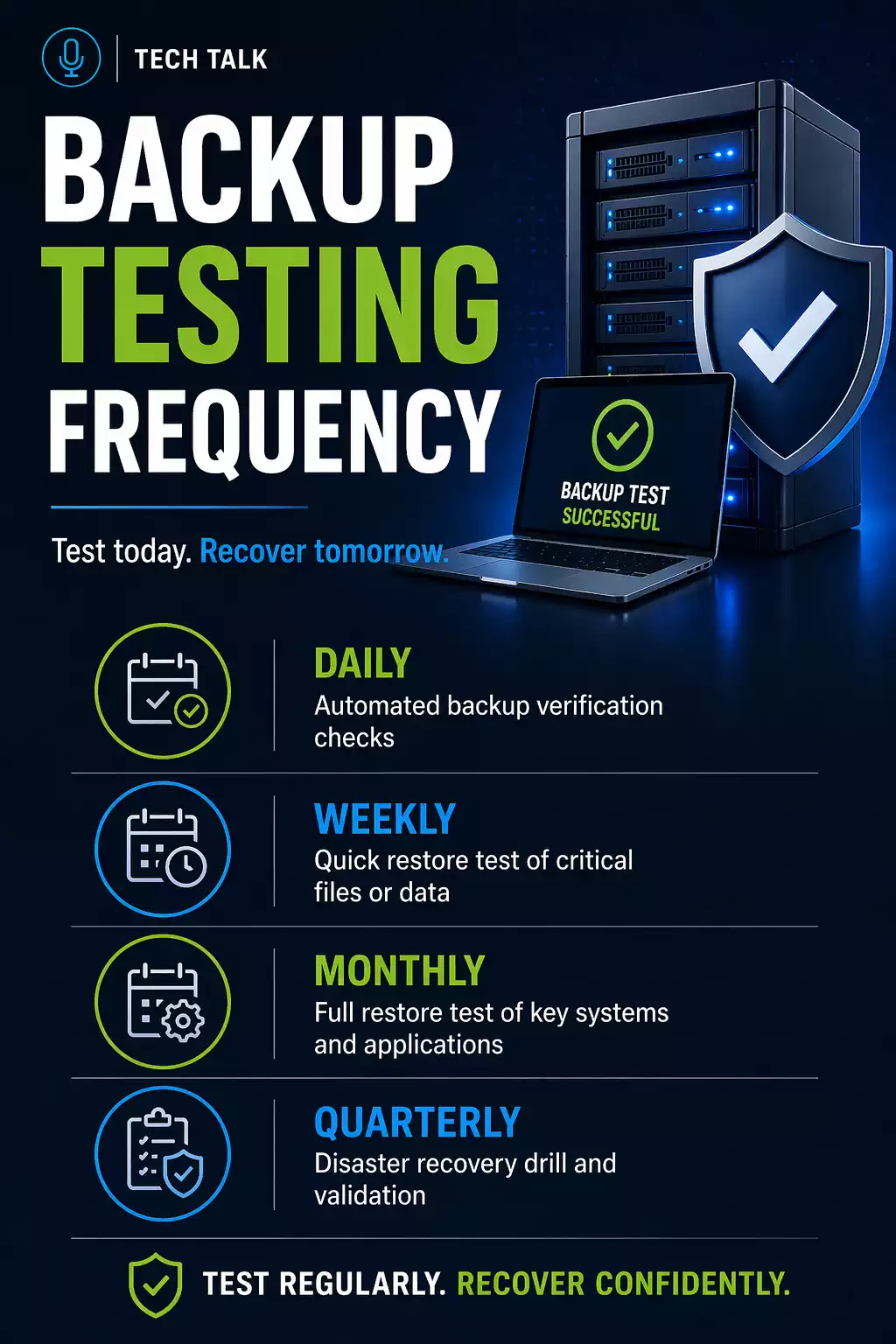
7. Backup Testing (Do You Know It Works?)
✔ File-level restores have been tested
✔ Full system restores have been tested
✔ Recovery timelines are measured
If not, see
backup monitoring vs testing
8. Disaster Recovery Planning (Can You Execute Recovery?)
✔ A documented recovery plan exists
✔ Systems are prioritized for recovery
✔ Roles and responsibilities are defined
If not, see
disaster recovery vs backup
9. Recovery Time and Data Loss (Are Expectations Defined?)
✔ RTO (recovery time) is clearly defined
✔ RPO (data loss tolerance) is defined
✔ Systems meet these requirements
If not, see
RTO and RPO explained
10. Recovery Execution (Can You Recover Under Pressure?)
✔ Full recovery has been simulated
✔ Dependencies are understood
✔ Recovery steps are documented
If not, see
disaster recovery testing
11. Ransomware Readiness (Can You Recover After an Attack?)
✔ Backups are protected from deletion
✔ Clean recovery points are preserved
✔ Recovery has been tested under realistic scenarios
If not, see
ransomware recovery
12. Monitoring and Visibility (Do You Know What’s Happening?)
✔ Backup jobs are monitored
✔ Alerts are configured
✔ Failures are investigated immediately
If not, see
backup monitoring vs testing
13. Ongoing Review (Is Your Strategy Still Valid?)
✔ Backup strategy is reviewed regularly
✔ Changes in systems are reflected in backups
✔ Growth and new risks are accounted for
🚨 How to Use This Checklist
If you:
- checked everything → strong foundation
- missed a few → moderate risk
- missed several → high risk
Even a few missing items can significantly impact your ability to recover.
What This Means for Your Business
Backup strategy is not one decision.
It is a system made up of multiple components.
Recovery success depends on how well all parts of your strategy work together.
Final Thoughts
This checklist represents a complete backup and recovery strategy.
If any part is missing:
- risk increases
- recovery becomes uncertain
Need help with this topic?
Make sure your backups actually work when it matters.
Most businesses discover backup failures during an outage. We help you validate recovery, reduce downtime risk, and build a system that works under pressure.
- Backup validation and testing
- Recovery time optimization
- Clear recovery documentation