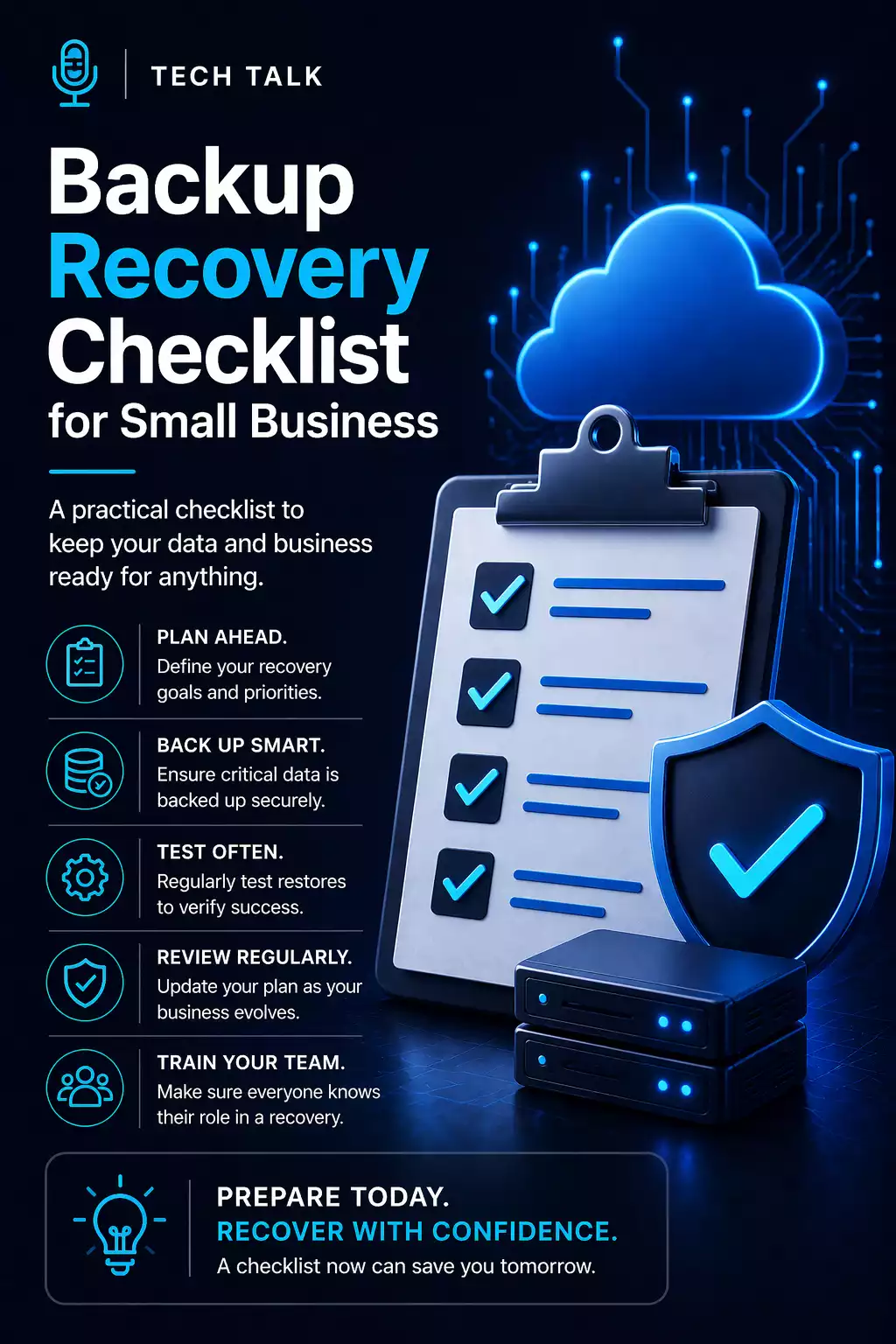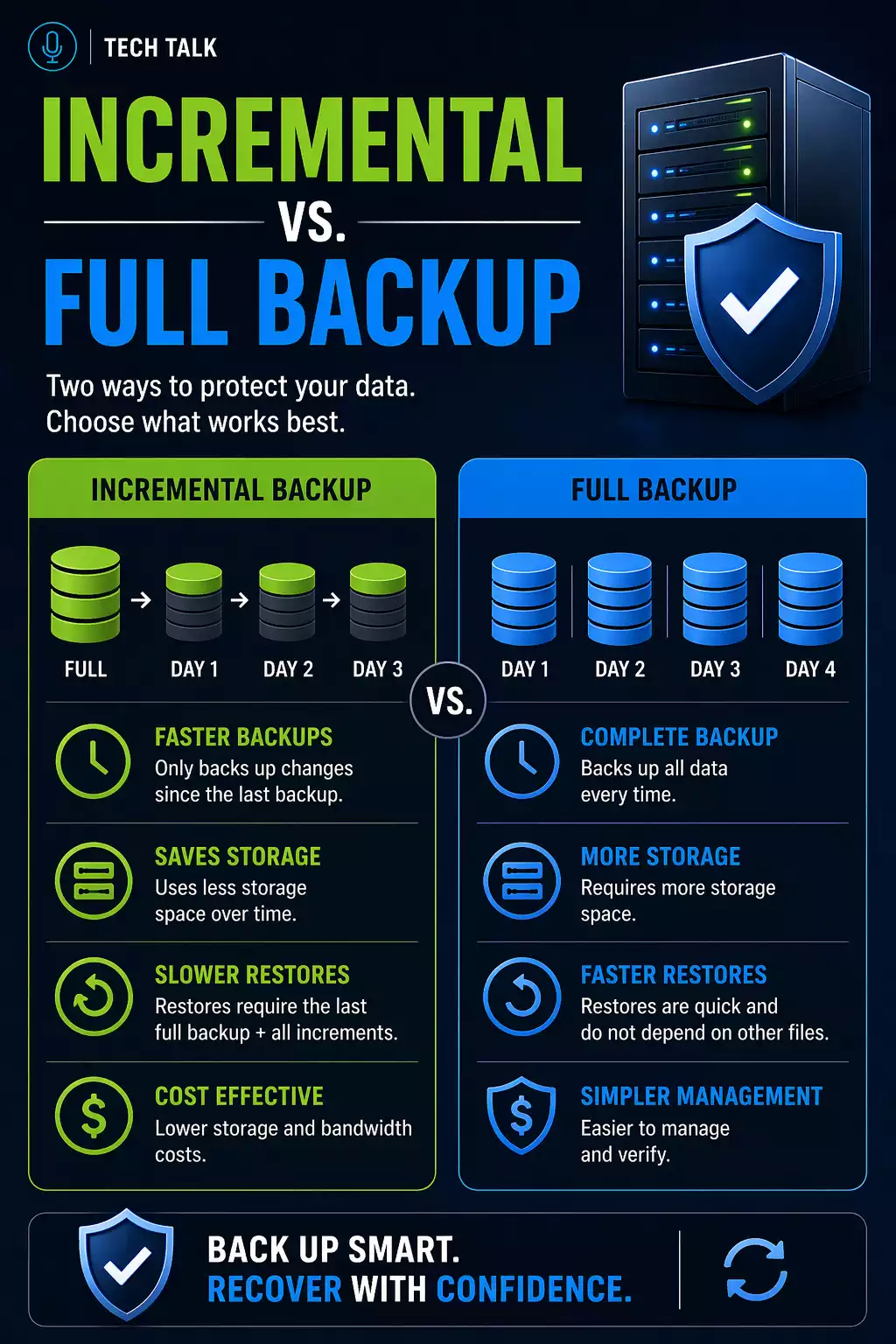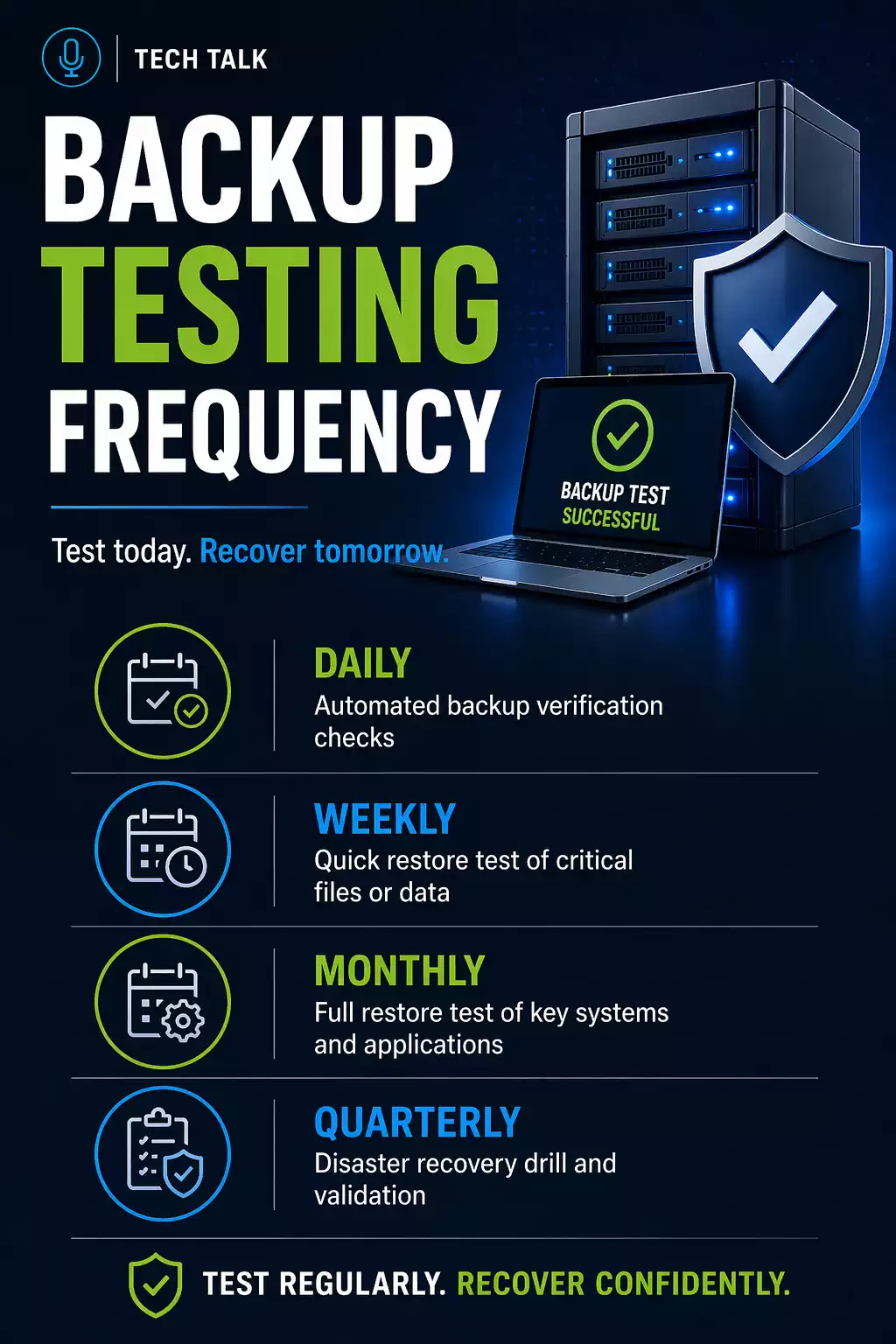
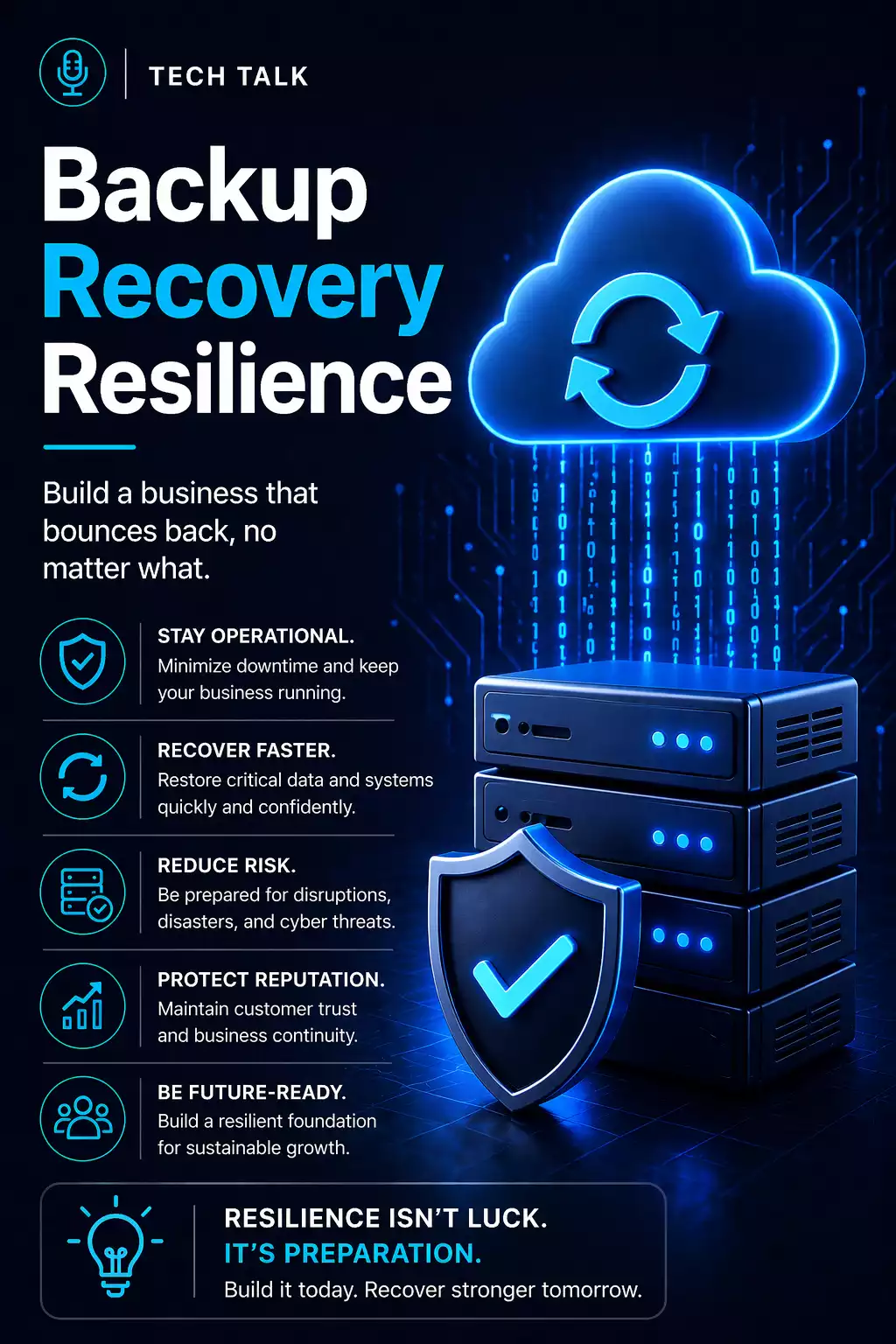
Why Resilience Matters More Than Ever
Most businesses focus on backups.
Fewer focus on whether recovery will actually work.
That difference defines resilience.
Having backups does not mean your business is resilient.
Resilience is about:
- surviving disruption
- recovering quickly
- maintaining operations
What a Real Failure Looks Like Without Resilience
A typical scenario:
- backups exist
- an incident occurs
- recovery begins
- issues appear (slow restore, missing data, unclear process)
- recovery takes longer than expected
At that point:
- downtime increases
- business impact grows
- confidence drops
Backup alone does not guarantee recovery — resilience does.
What Backup & Recovery Resilience Actually Means
Resilience is the ability to:
👉 consistently recover from disruption under real-world conditions
It combines:
- data protection
- recovery processes
- system design
- operational readiness
Backup vs Resilience (Critical Difference)
Backup
- Creates copies of data
- Focuses on storage
- Ensures data exists
Resilience
- Ensures recovery works
- Focuses on execution
- Ensures business continuity
Backup is a component of resilience — not the full solution.
The Core Components of Resilience
A resilient strategy includes multiple layers.
1. Redundancy
- multiple copies of data
- multiple storage locations
2. Protection
- immutability
- access control
- isolation
3. Retention
- preservation of historical data
- protection against delayed detection
4. Recovery Processes
- documented procedures
- defined roles
- clear execution steps
5. Testing and Validation
- full recovery testing
- validation of timelines
- verification of data integrity
6. Performance
- recovery speed
- infrastructure capability
- system scalability
Why Modern Threats Require Resilience
Threats have evolved.
Today’s risks include:
- ransomware
- insider threats
- cloud misconfigurations
- delayed detection
These require more than backup.
Modern threats are designed to exploit weaknesses in recovery — not just data storage.
The Hidden Risk: Assumptions
Many strategies rely on:
- “we have backups”
- “we should be able to recover”
These assumptions are rarely tested.
Resilience cannot be assumed — it must be proven.
What Breaks Resilience
Common gaps include:
- lack of testing
- short retention
- weak protection
- unclear recovery processes
These issues lead to
backup failures
What a Resilient Architecture Looks Like
A modern design includes:
- local backup for fast recovery
- cloud backup for redundancy
- immutable storage for protection
- documented recovery processes
- regular testing
Each layer addresses a different risk.
Resilience is built through layers — not a single solution.
How to Measure Resilience
Resilience is measured by:
- recovery time (RTO)
- data loss (RPO)
- recovery success rate
- operational continuity
If these are unknown:
- resilience is unproven
How to Know If You Lack Resilience
You may have a gap if:
- you rely only on backups
- recovery has never been tested
- processes are undocumented
- timelines are unclear
If your recovery strategy has not been validated, your resilience is uncertain.
What This Means for Your Business
Resilience determines:
- how well your business handles disruption
- how quickly you recover
- how much impact you experience
The difference between disruption and disaster is resilience.
Final Thoughts
Backup is where resilience starts.
Not where it ends.
Need help with this topic?
Make sure your backups actually work when it matters.
Most businesses discover backup failures during an outage. We help you validate recovery, reduce downtime risk, and build a system that works under pressure.
- Backup validation and testing
- Recovery time optimization
- Clear recovery documentation