How Backup and Disaster Recovery Planning Work Together
Backup and disaster recovery are often treated as the same thing — but they are not.
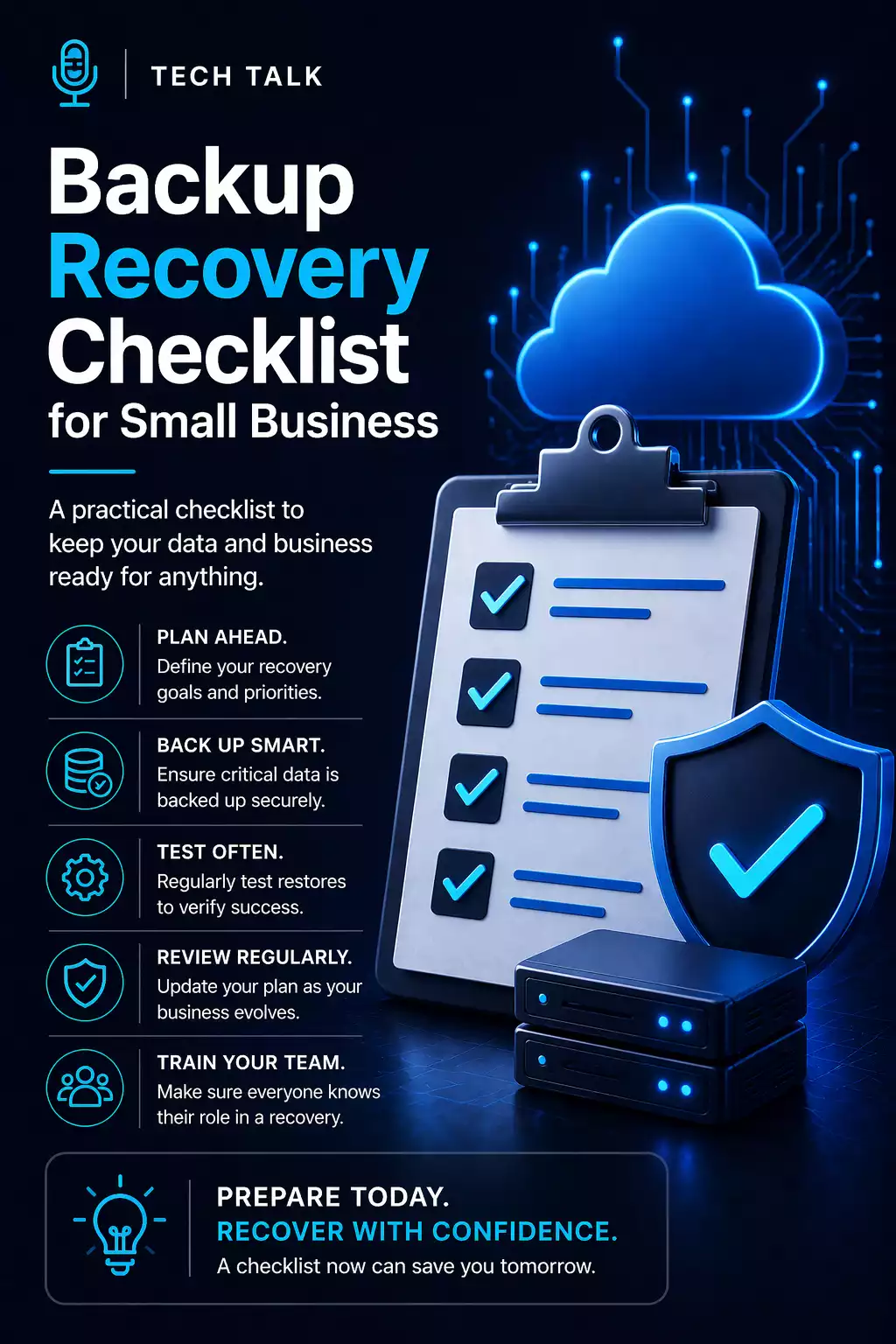
Backup protects your data.
Disaster recovery ensures your business can continue operating.
Without both working together, businesses remain exposed to downtime, data loss, and operational disruption.
What Is Backup?
Backup is the process of copying and storing data so it can be restored if something goes wrong.
This includes:
- Files and documents
- Email systems
- Databases
- Application data
Effective backup and recovery systems ensure your data is available when you need it.
But backup alone does not solve the bigger problem.
What Is Disaster Recovery?
Disaster recovery focuses on restoring systems, operations, and access after a disruption.
This includes:
- Restoring servers and infrastructure
- Re-establishing connectivity
- Recovering applications
- Maintaining business operations
Disaster recovery is closely tied to business continuity planning, which ensures your organization can function during and after an incident.
The Key Difference
- Backup = Data protection
- Disaster Recovery = Business restoration
You can have backups and still experience major downtime.
You can also have a recovery plan that fails if data is not properly protected.
They must work together.
Why Backup Alone Is Not Enough
Many businesses assume that having backups means they are protected.
In reality, they often face:
- Slow recovery times
- Unclear restoration processes
- Missing or incomplete data
- Extended downtime
This is because backup without recovery planning does not address how systems are restored or how long it takes.
Recovery speed is often dependent on failover and redundancy strategies, not just data availability.
How Backup and Disaster Recovery Work Together
A complete strategy includes both:
1. Backup Systems
- Protect critical data
- Ensure recoverability
- Maintain multiple versions
2. Recovery Planning
- Define how systems are restored
- Establish recovery timelines (RTO/RPO)
- Identify dependencies between systems
3. Infrastructure Readiness
- Ensure systems can be rebuilt quickly
- Maintain connectivity and access
- Support recovery environments
This often involves integration with managed IT services to maintain consistency and readiness.
4. Testing and Validation
- Test backups regularly
- Validate recovery processes
- Identify gaps before real incidents
Without testing, recovery plans often fail when they are needed most.
Common Gaps Businesses Overlook
Even with backup and recovery in place, businesses often miss:
- Lack of documented recovery procedures
- No clear ownership during incidents
- Inconsistent backup monitoring
- No testing or validation
These gaps lead to confusion and delays during real-world incidents.
How This Impacts Business Operations
When backup and disaster recovery are not aligned:
- Downtime increases
- Data may be lost or corrupted
- Recovery takes longer than expected
- Productivity drops significantly
A coordinated approach reduces these risks and ensures faster, more predictable outcomes.
How It Connects to Your IT Environment
Backup and disaster recovery are not isolated systems.
They rely on:
- Managed IT services for monitoring and consistency
- Cybersecurity systems to prevent incidents
- Cloud and infrastructure design for recovery environments
- Network reliability to restore access
If any of these areas are weak, recovery becomes more difficult.
When Businesses Should Review Their Strategy
It may be time to review your backup and disaster recovery approach if:
- You are unsure how long recovery would take
- You have never tested your backups
- Your business relies heavily on digital systems
- You have experienced data loss or downtime before
- Your environment has changed significantly
Final Thoughts
Backup and disaster recovery must work together to protect your business.
Backup ensures your data exists.
Disaster recovery ensures your business continues.
Without both, you are not fully protected.
A structured approach reduces risk, improves recovery speed, and ensures your business can operate even during unexpected events.
Related Services
- Backup & Recovery Services
- Business Continuity Planning
- Failover & Redundancy Solutions
- Managed IT Services
Need help with this topic?
Make sure your backups actually work when it matters.
Most businesses discover backup failures during an outage. We help you validate recovery, reduce downtime risk, and build a system that works under pressure.
- Backup validation and testing
- Recovery time optimization
- Clear recovery documentation