Why Backup Testing Matters
Most businesses believe their backups are working.
They see successful backup reports and assume everything is fine.
That assumption is where risk begins.
Backups often fail silently — and those failures are usually discovered during downtime.
Reports confirm that backups ran.
They do not confirm that recovery will work.
Testing is the only way to validate that your data, systems, and processes will hold up under real conditions.
This is why backup monitoring vs testing is such a critical distinction.
What Backup Testing Actually Confirms
Backup testing validates your ability to recover — not just your ability to store data.
- Data integrity after restore
- System functionality
- Recovery timelines under pressure
Without testing, these remain assumptions.
What a Real Backup Failure Looks Like
A typical failure scenario looks like this:
- backups appear successful for weeks or months
- no full restore is ever performed
- a failure occurs (ransomware, deletion, system crash)
- recovery is attempted
- data is incomplete or corrupted
- recovery takes significantly longer than expected
At that point:
- downtime increases
- business operations are disrupted
- recovery options may be limited
Most businesses discover backup failures only when recovery is already in progress.
How Often Should You Test Backups
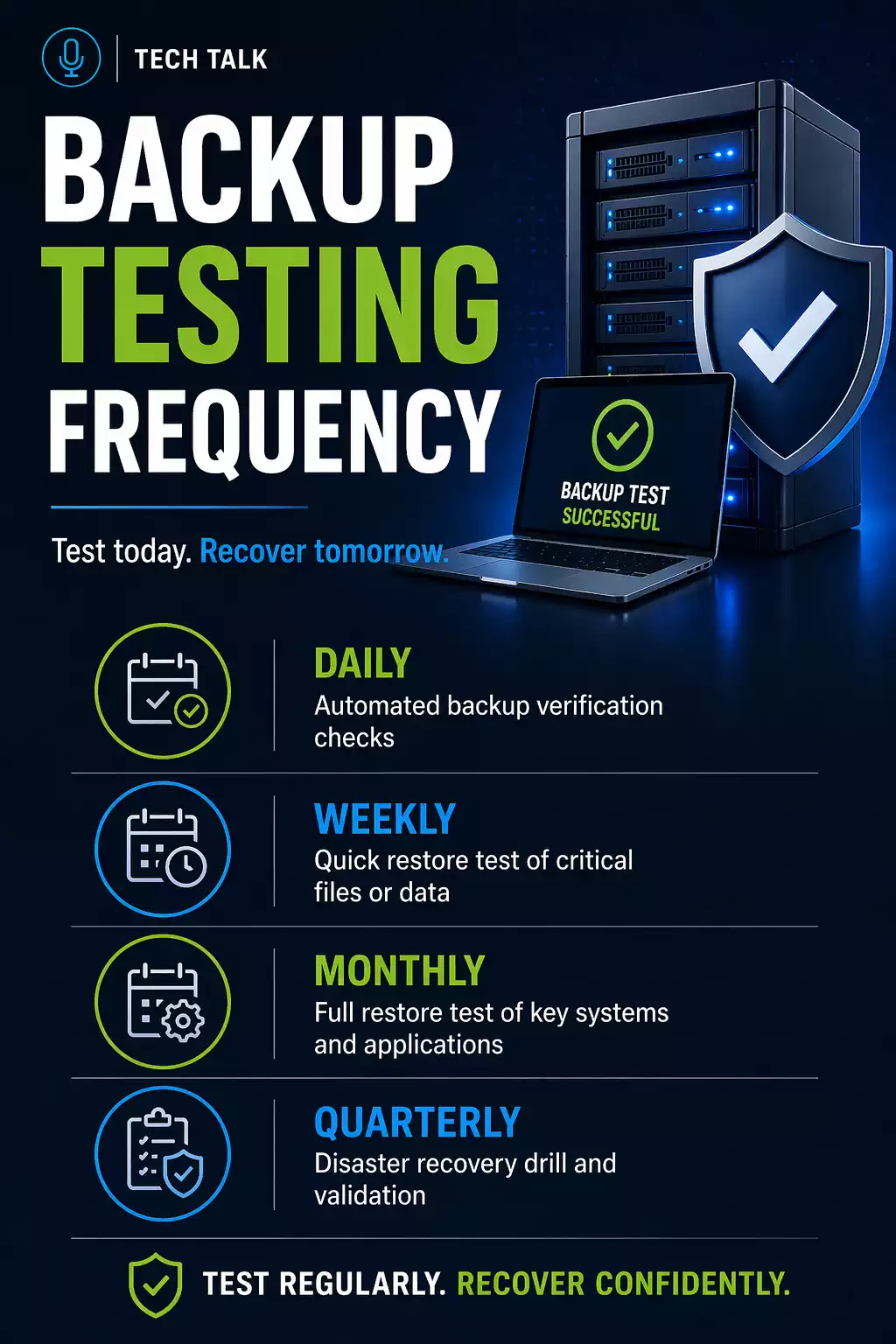
The right testing frequency depends on system criticality — but most businesses test far less than they should.
Practical Guidelines
- Critical systems: at least quarterly (monthly preferred)
- Moderate systems: at least semi-annually
- Lower-risk systems: at least annually
Testing frequency should be based on business impact — not convenience.
These are minimums.
If downtime carries financial or operational risk, testing should be more frequent.
How Testing Frequency Connects to RTO
Testing is directly tied to recovery expectations.
If your business requires:
- fast recovery → testing must be frequent
- minimal data loss → validation must be consistent
This is defined by RTO and RPO.
If your testing frequency does not match your recovery expectations, your strategy will fail under pressure.
When You Should Test More Often
Testing should increase when risk increases.
You should test backups immediately when:
- infrastructure changes occur
- new applications are introduced
- backup systems are modified
- security incidents are suspected
- recovery procedures are updated
Testing should be continuous — not occasional.
Types of Backup Testing (This Is Where Depth Matters)
Not all testing is equal.
1. File-Level Testing
- restores individual files
- verifies basic access
2. Application Testing
- restores systems or databases
- verifies functionality
3. Full System Recovery Testing
- restores entire environments
- validates real recovery timelines
File restores confirm access — full system tests confirm business recovery.
How to Know If Your Testing Is Inadequate
You may not be testing enough if:
- you have never performed a full system restore
- you do not know your recovery time
- testing is limited to files only
- recovery procedures are unclear
If you cannot simulate a real recovery, your backups are unproven.
Why Infrequent Testing Creates Risk
Infrequent testing creates false confidence.
When backups fail, the impact is measured in downtime, lost revenue, and operational disruption.
Testing often reveals:
- incomplete backups
- corrupted data
- missing dependencies
- slow recovery processes
These are the same backup failures that go unnoticed until it is too late.
Backup vs Recovery (Why Testing Matters)
Testing is the link between backup and recovery.
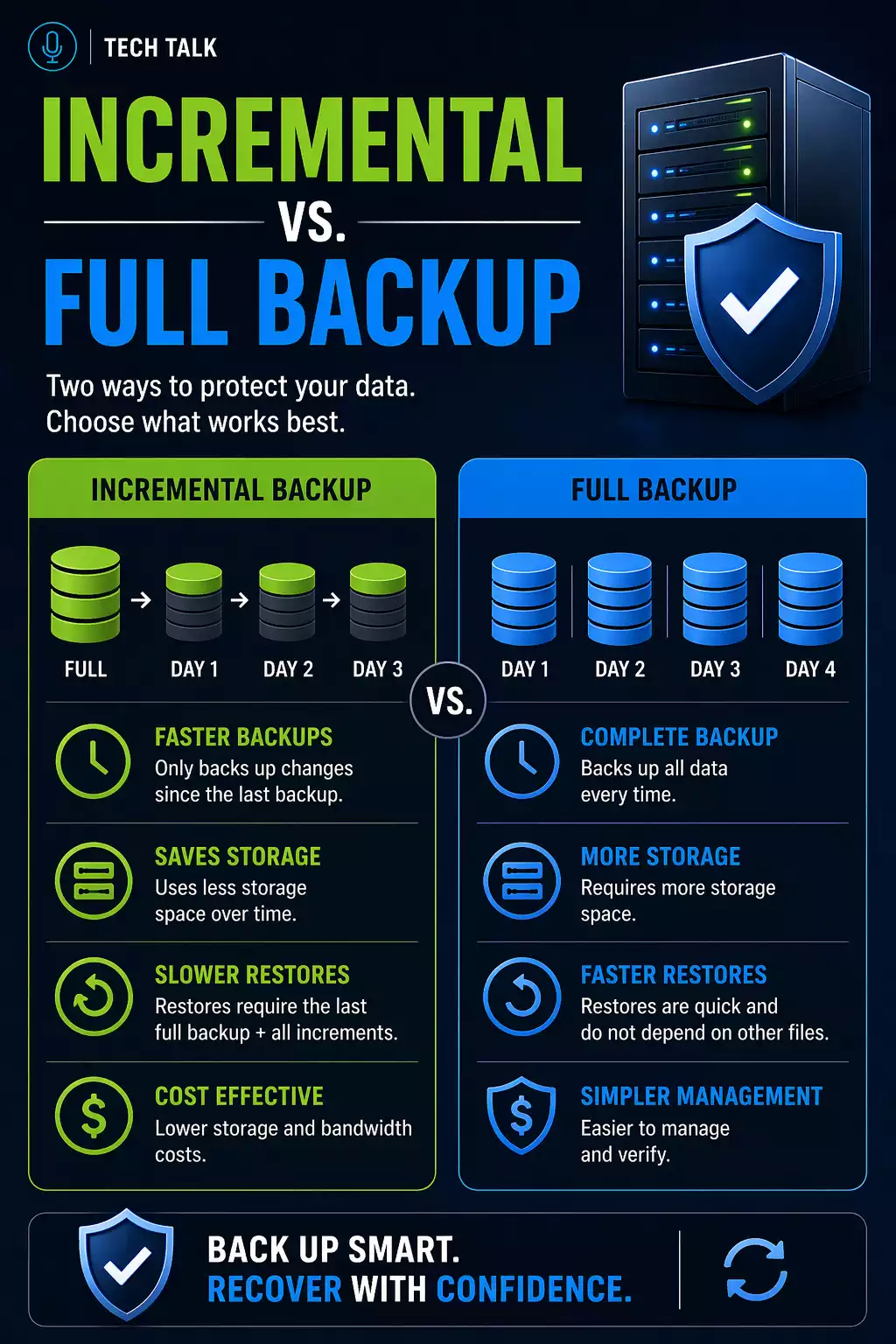
Backup
- Creates copies of data
- Runs automatically
- Focuses on storage
Recovery
- Restores systems and operations
- Requires testing
- Determines downtime impact
If you have never tested a full recovery, you do not know if your business can recover.
How to Build a Real Testing Process
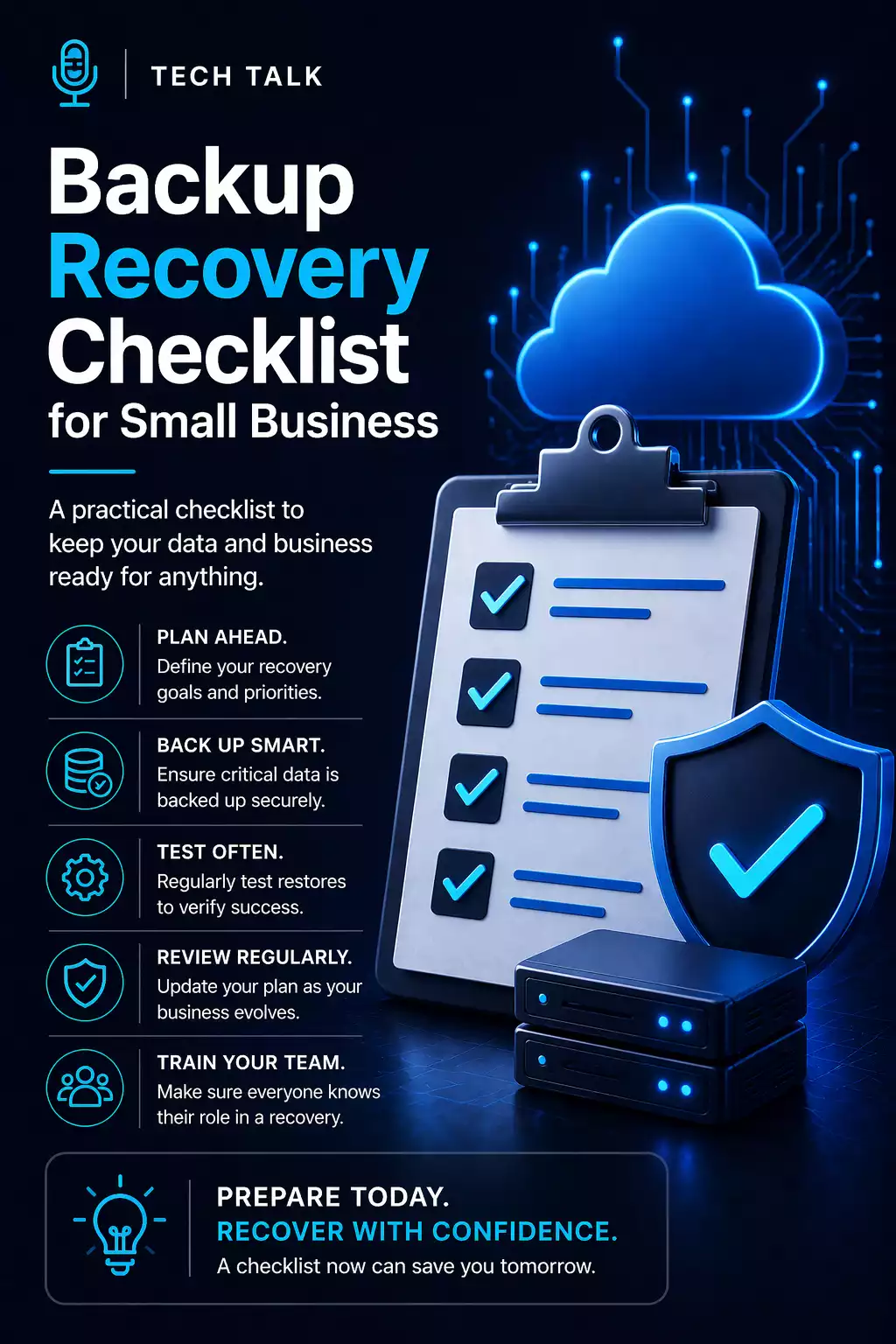
A complete testing process includes:
- defined testing schedules
- documented recovery steps
- assigned responsibilities
- measured recovery times
Start with:
- file-level validation
- expand to system-level recovery
- progress to full environment testing
Over time, this aligns with your backup strategy.
How Testing Impacts Ransomware Recovery
Ransomware exposes weaknesses immediately.
If backups are not tested:
- recovery may fail
- data may be unusable
- downtime increases significantly
Ransomware does not create backup problems — it exposes problems that already exist.
This is why testing is essential to ransomware recovery.
What This Means for Your Business
Backup testing is not optional.
It is the only way to confirm your business can recover under real conditions.
Confidence in your backups comes from validation — not reports.
Final Thoughts
Testing determines whether your backup strategy works when it matters most.
Without it, recovery is uncertain.
Need help with this topic?
Make sure your backups actually work when it matters.
Most businesses discover backup failures during an outage. We help you validate recovery, reduce downtime risk, and build a system that works under pressure.
- Backup validation and testing
- Recovery time optimization
- Clear recovery documentation