The Half Everyone Sees: Backup Jobs
Backups generate comforting signals:
- job completed
- bytes transferred
- “successful” status in an email digest
Those signals answer: Did we copy data?
They do not answer: Can we put Humpty back together fast enough?
Most expensive outages are not missing backups—they are restores that technically start but never reach a productive state before the business runs out of patience.
The Hidden Half: Restore Testing
Restore testing answers different questions:
- Do we have the right boot media, hypervisor tools, and driver packs?
- Does the database come online cleanly with application accounts?
- Do firewall and DNS assumptions still match the day the backup was taken?
- Can finance validate numbers after a partial rollback?
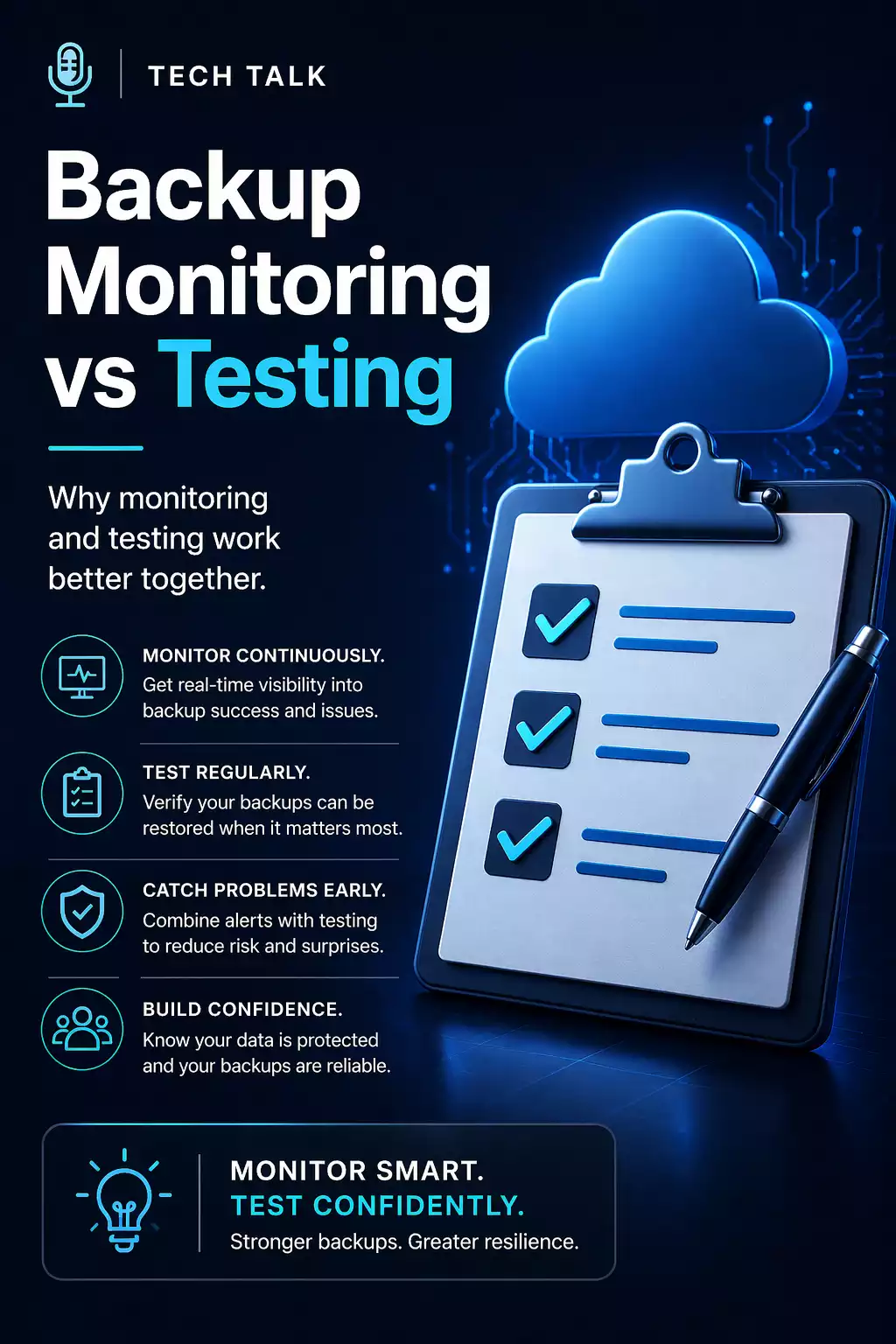
This is why teams pair monitoring with drills described in backup monitoring vs testing.
Real-World Example
A nonprofit had pristine cloud backup reports.
During a ransomware event, restores stalled because nobody had tested large-scale egress from the backup vendor while production VLANs were isolated.
The data existed—but throughput made the recovery plan fiction.
Tie Testing to Business Outcomes
- Backup & recovery services should include evidence of tested restores—not only installed agents.
- Resilience improvements connect technical work to downtime tolerance leadership already claims.
For a broader narrative, revisit how backup and disaster recovery planning work together.
Final Thoughts
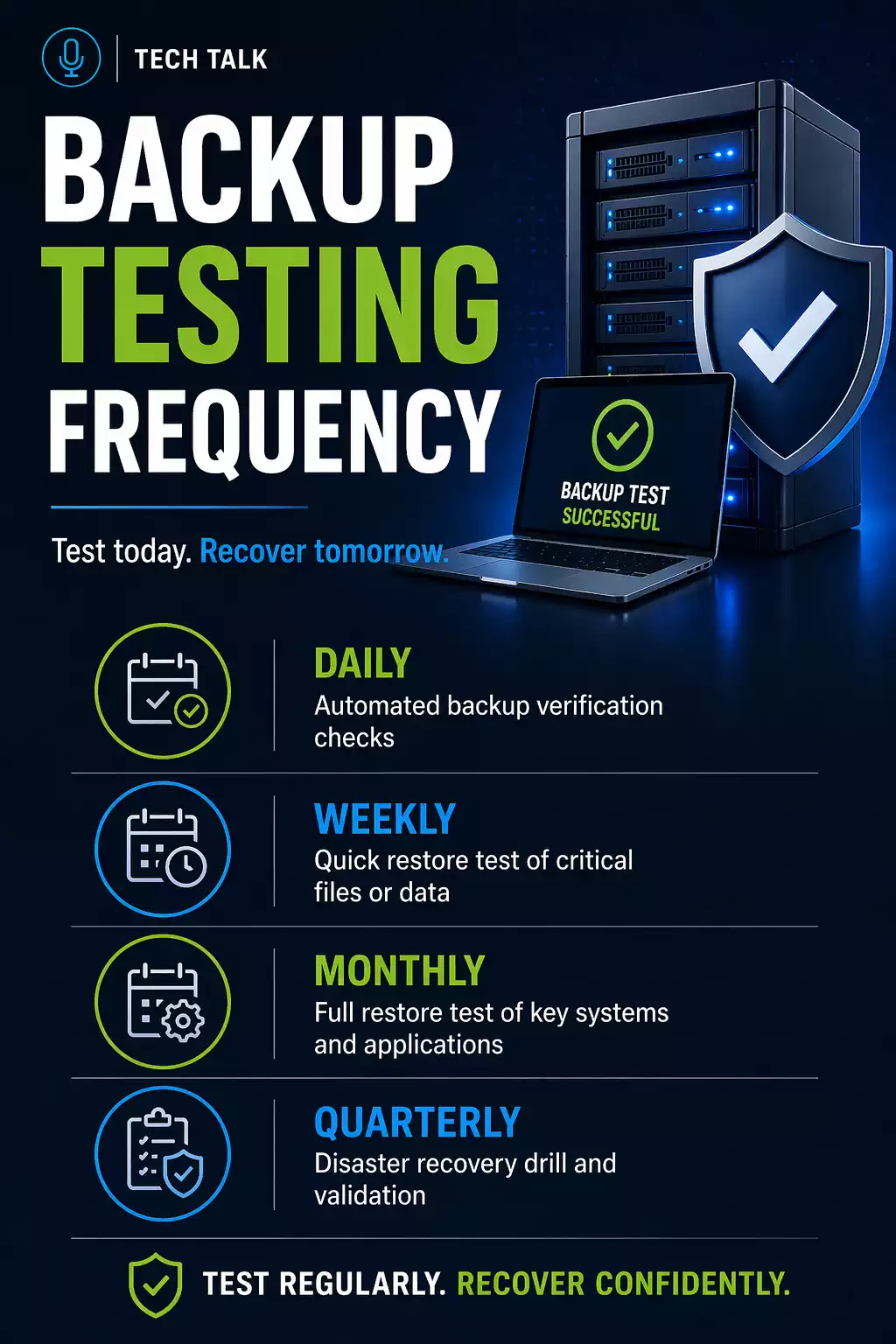
If you can only fund one improvement this quarter, fund a timed restore rehearsal with a named executive observer.
You will learn more in four hours than in four years of green backup notifications—and you will finally know which half of the job was missing.
Need help with this topic?
Make sure your backups actually work when it matters.
Most businesses discover backup failures during an outage. We help you validate recovery, reduce downtime risk, and build a system that works under pressure.
- Backup validation and testing
- Recovery time optimization
- Clear recovery documentation