Why Network Segmentation Matters
Cybersecurity is often treated as a perimeter problem.
Firewalls, antivirus, and endpoint protection are designed to:
- keep threats out
- block unauthorized access
But what happens when something gets in?
👉 That’s where network segmentation becomes critical
Without segmentation:
- attackers move freely
- systems trust each other
- one compromise can affect everything
Once inside a flat network, attackers often face little resistance moving between systems.
What Is Network Segmentation?
Network segmentation is the practice of:
👉 dividing a network into smaller, isolated segments
Each segment:
- has controlled access
- limits communication
- enforces security boundaries
This ensures:
- systems do not fully trust each other
- access must be explicitly allowed
Why Segmentation Is Essential for Modern Security
Modern cyber threats are designed to:
- bypass perimeter defenses
- exploit internal trust
- move laterally across systems
Without segmentation:
- malware spreads quickly
- attackers escalate privileges
- sensitive systems are exposed
With segmentation:
- movement is restricted
- access is controlled
- breaches are contained
Segmentation transforms a network from a wide-open environment into a controlled, defensible system.
The Problem with Flat Networks
A flat network is one where:
- all devices are on the same network
- minimal internal restrictions exist
- systems communicate freely
This creates:
- excessive trust
- lack of visibility
- easy lateral movement
Typical flat network risks:
- ransomware spreads across all systems
- compromised devices access critical infrastructure
- backups and servers are exposed
How Network Segmentation Works
Segmentation introduces:
- boundaries between systems
- access controls between segments
- inspection points for traffic
Instead of:
➡️ everything talking to everything
You get:
➡️ controlled communication between defined zones
Types of Network Segmentation
1. VLAN Segmentation
- logical separation within the same physical network
- commonly used in business environments
- isolates departments or system types
2. Physical Segmentation
- completely separate networks or hardware
- used for highly sensitive environments
- provides strong isolation
3. Microsegmentation
- granular control at the application or workload level
- often implemented in cloud environments
- supports advanced security frameworks
Real-World Scenario: With vs Without Segmentation
Without Segmentation
- employee device is compromised
- attacker accesses internal network
- moves to servers and sensitive systems
Result:
- widespread compromise
- major operational disruption
With Segmentation
- compromised device is isolated
- cannot access critical systems
- movement is restricted
Result:
- limited impact
- faster containment
- reduced downtime
The Role of Segmentation in Zero Trust
Modern security models like Zero Trust depend on segmentation.
Core principle:
👉 never trust, always verify
This means:
- no implicit trust between systems
- every request is validated
- access is tightly controlled
Segmentation provides:
- the structure
- the enforcement points
- the isolation required
Common Network Segmentation Mistakes
Avoid these common issues:
- maintaining a flat network
- no separation between users and servers
- guest WiFi connected to internal systems
- overly permissive firewall rules
- lack of monitoring between segments
These lead to:
- increased attack surface
- rapid threat propagation
- reduced visibility
Poor segmentation allows a small breach to escalate into a full-network incident.
Best Practices for Effective Segmentation
To implement strong segmentation:
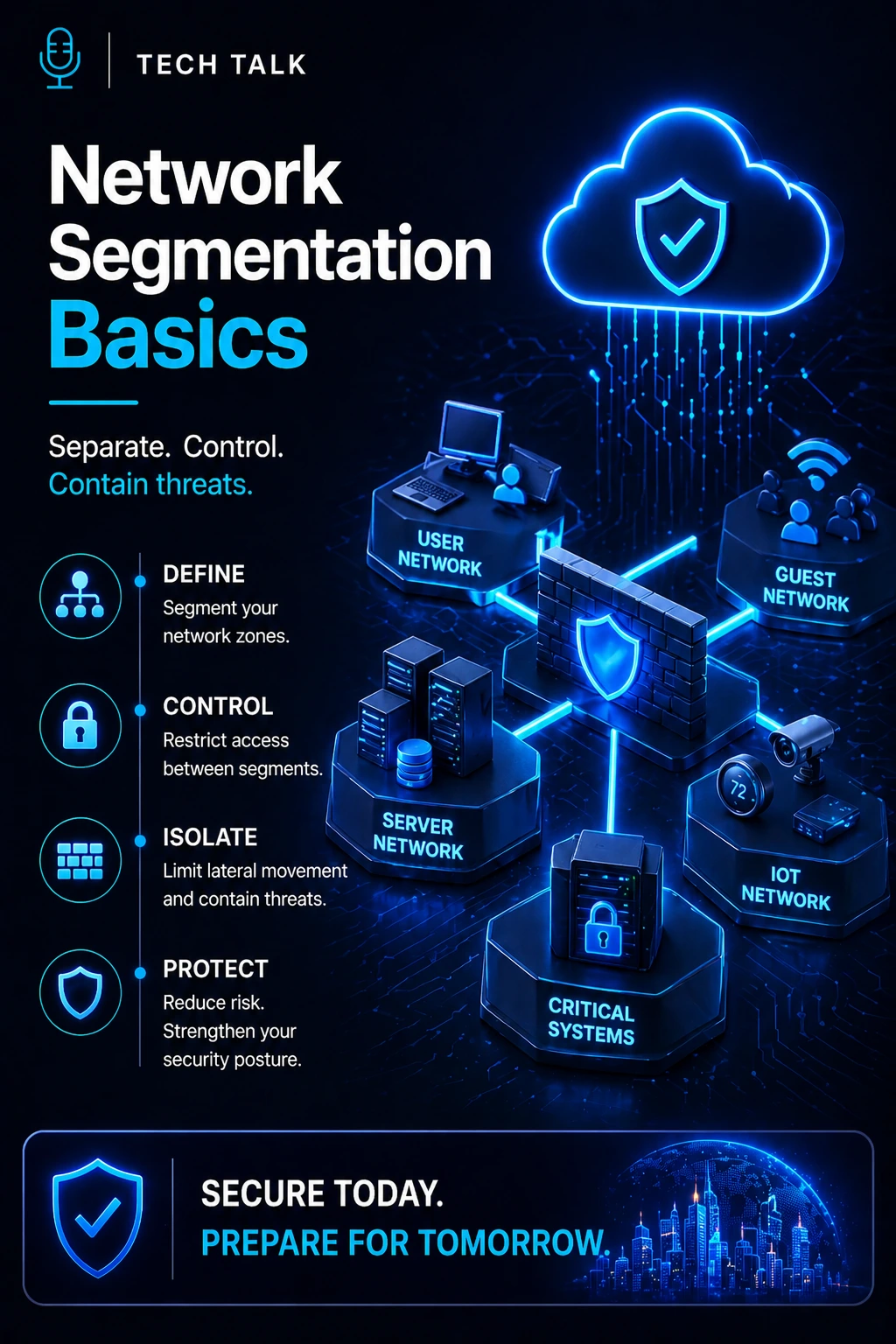
- separate user devices from servers
- isolate critical systems and sensitive data
- create dedicated guest and IoT networks
- apply least-privilege access controls
- monitor traffic between segments
- regularly review and update access rules
How Segmentation Supports Business Continuity
Segmentation is not just about security.
It directly supports:
- operational resilience
- system availability
- incident containment
Related concepts:
Without segmentation:
- disruptions spread faster
- recovery becomes more complex
With segmentation:
- incidents are isolated
- systems remain operational
How to Know If Your Network Is at Risk
Warning signs include:
- all devices share the same network
- users can access sensitive systems freely
- no internal access restrictions exist
- guest networks are not isolated
If one compromised device can access everything, your network is not properly segmented.
What This Means for Your Business
Network segmentation determines:
- how far an attacker can move
- how much damage a breach can cause
- how quickly systems can recover
Segmentation does not prevent every breach—but it prevents breaches from becoming disasters.
Final Thoughts
Cybersecurity is not just about keeping threats out.
It is about:
👉 limiting the impact when they get in
Without segmentation:
- one breach can affect everything
With segmentation:
- threats are contained
- systems remain stable
- operations continue
Next Step
If your network has never been segmented—or hasn’t been reviewed recently—you may have hidden risks.
Now is the time to:
- evaluate your network structure
- identify unnecessary access
- implement proper segmentation
Need help with this topic?
Make sure your backups actually work when it matters.
Most businesses discover backup failures during an outage. We help you validate recovery, reduce downtime risk, and build a system that works under pressure.
- Backup validation and testing
- Recovery time optimization
- Clear recovery documentation