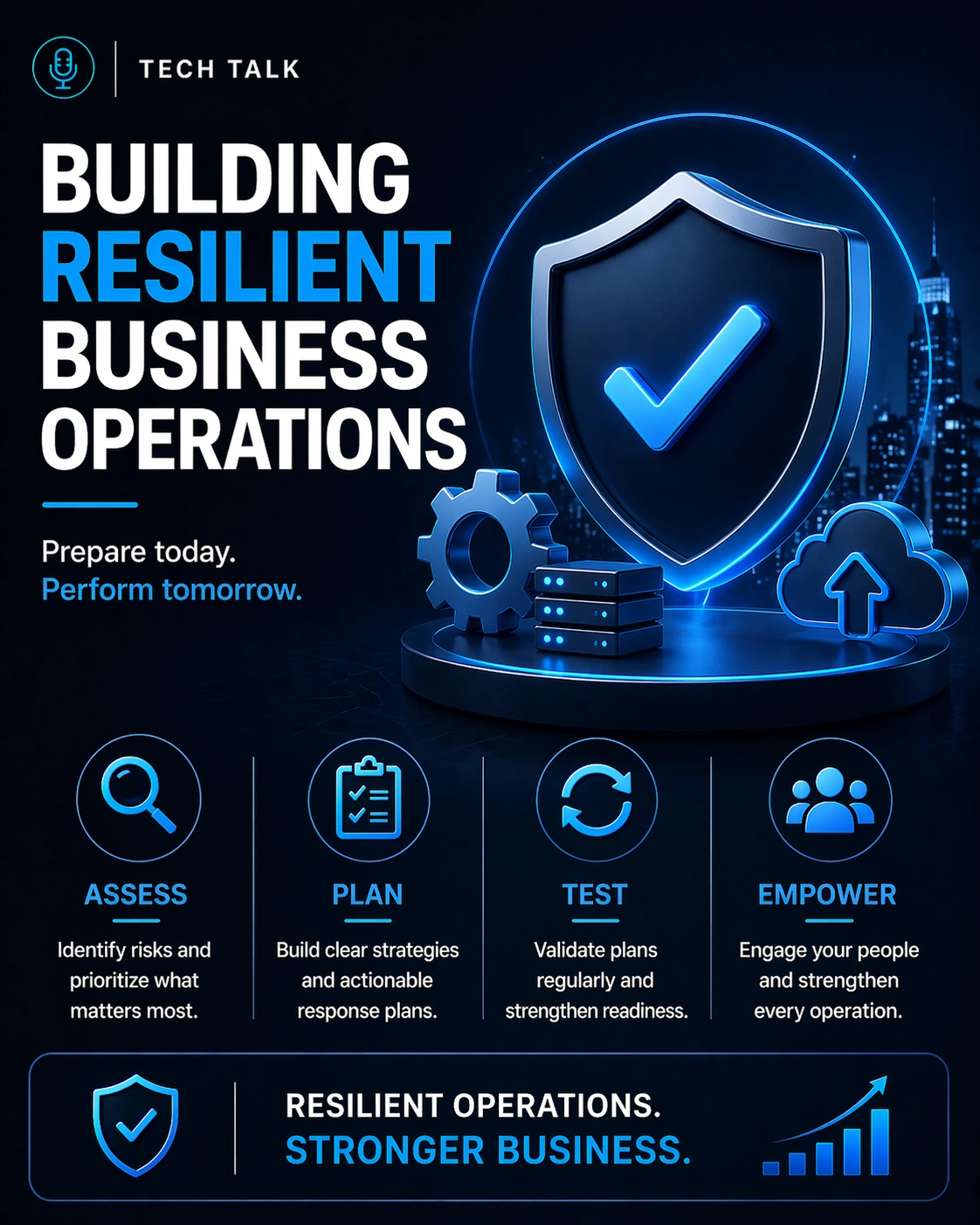
Why Resilient Operations Matter
Disruption is no longer a rare event.
Organizations face:
- cyber attacks
- system failures
- cloud outages
- supply chain disruptions
Many businesses focus on:
- preventing incidents
- recovering systems
But resilience requires more.
👉 It requires the ability to continue operating during disruption
Recovery brings systems back — resilience keeps your business running while they are down.
What Are Resilient Business Operations?
Resilient business operations are:
👉 the ability of an organization to maintain critical functions under adverse conditions
They combine:
- business continuity
- recovery capabilities
- adaptive processes
- coordinated teams
Resilience answers:
👉 Can your business continue to function when conditions are not normal?
The Core Components of Operational Resilience
Resilience is built across multiple areas.
1. Systems Resilience
Ensures:
- high availability
- redundancy and failover
- reliable recovery
Focus:
👉 keeping systems accessible or recoverable
2. Process Resilience
Ensures:
- workflows can adapt
- fallback procedures exist
- operations continue even with limitations
Focus:
👉 maintaining function without full system support
3. People and Team Resilience
Ensures:
- roles are clearly defined
- teams can act under pressure
- decision-making is effective
Focus:
👉 human execution during disruption
4. Communication Resilience
Ensures:
- clear internal coordination
- consistent external messaging
- reliable communication channels
Focus:
👉 alignment during disruption
5. Dependency Resilience
Ensures:
- vendor and supplier risks are managed
- alternative options are available
- external disruptions are accounted for
Focus:
👉 reducing reliance on single points of failure
Resilience is not a single capability — it is the integration of systems, processes, and people.
How Resilient Operations Work in Practice
During disruption:
-
Incident Occurs
- systems fail or become unavailable
-
Continuity Activates
- fallback processes begin
- operations continue at reduced capacity
-
Recovery Runs in Parallel
- systems are restored
- infrastructure is stabilized
-
Operations Adapt
- teams adjust workflows
- priorities shift
-
Return to Normal
- systems fully restored
- operations normalized
Resilience allows your business to operate in a degraded state — instead of stopping completely.
Why Most Operations Are Not Resilient
Common gaps include:
- reliance on single systems
- lack of fallback processes
- poor communication planning
- limited testing
- unrecognized dependencies
These weaknesses lead to:
- operational breakdown during disruption
- slow recovery
- increased business impact
Operations fail when they are designed only for normal conditions.
How to Build Resilient Operations
To improve resilience:
1. Identify Critical Functions
Determine:
- essential operations
- priority processes
- acceptable downtime
This ensures:
👉 focus during disruption
2. Design for Failure
Assume:
- systems will go down
- dependencies will fail
- disruptions will occur
Plan for:
- degraded operation
- partial system availability
3. Build Redundancy and Flexibility
Implement:
- system redundancy
- alternative workflows
- backup communication methods
4. Strengthen Coordination
Ensure:
- clear roles and responsibilities
- strong communication planning
- cross-team alignment
5. Test and Validate Regularly
Simulate:
- system outages
- cyber incidents
- operational disruptions
Testing reveals:
- weaknesses
- gaps in execution
6. Measure and Improve
Track:
- response times
- recovery performance
- operational continuity
Use insights to:
👉 continuously improve resilience
What Happens Without Resilience
Without resilient operations:
- disruption stops business activity
- teams struggle to respond
- recovery takes longer
- impact increases
Even minor incidents can:
👉 become major disruptions
Without resilience, your business depends entirely on systems working perfectly — which is unrealistic.
How to Know If Your Operations Are Resilient
You are likely resilient if:
- critical functions can continue during disruption
- fallback processes are defined
- teams can operate under pressure
- dependencies are managed
- testing is performed regularly
If not:
👉 your resilience is limited
If your operations stop when systems fail, your business is not resilient.
What This Means for Your Business
Operational resilience determines:
- how well your business performs during disruption
- how quickly operations stabilize
- how customers experience outages
- how competitive your organization remains
Resilience is the difference between disruption and downtime.
Final Thoughts
Building resilient operations is no longer optional.
It is essential.
With resilience:
- disruption is manageable
- operations continue
- impact is reduced
Without it:
- downtime increases
- risk grows
Need help with this topic?
Make sure your backups actually work when it matters.
Most businesses discover backup failures during an outage. We help you validate recovery, reduce downtime risk, and build a system that works under pressure.
- Backup validation and testing
- Recovery time optimization
- Clear recovery documentation