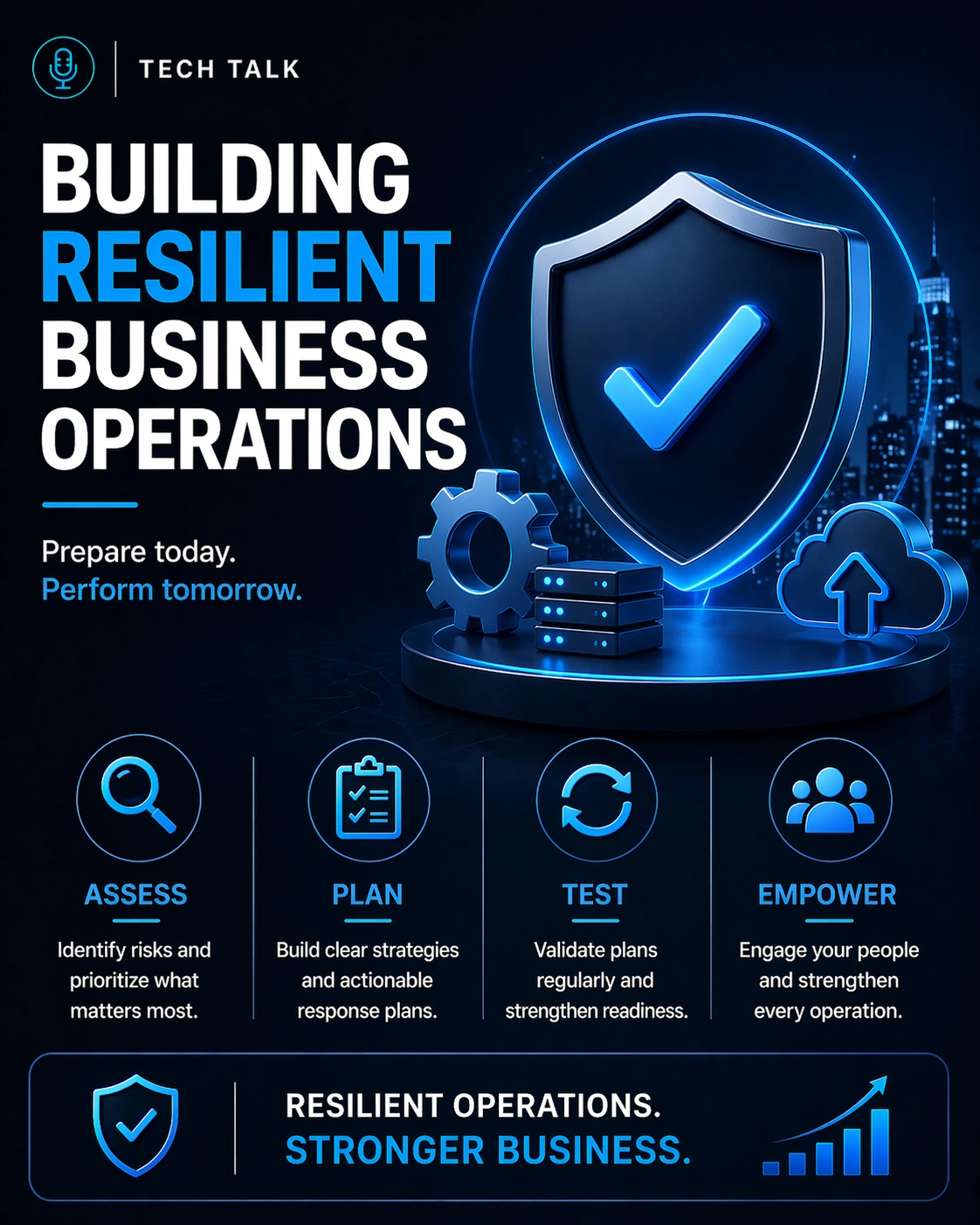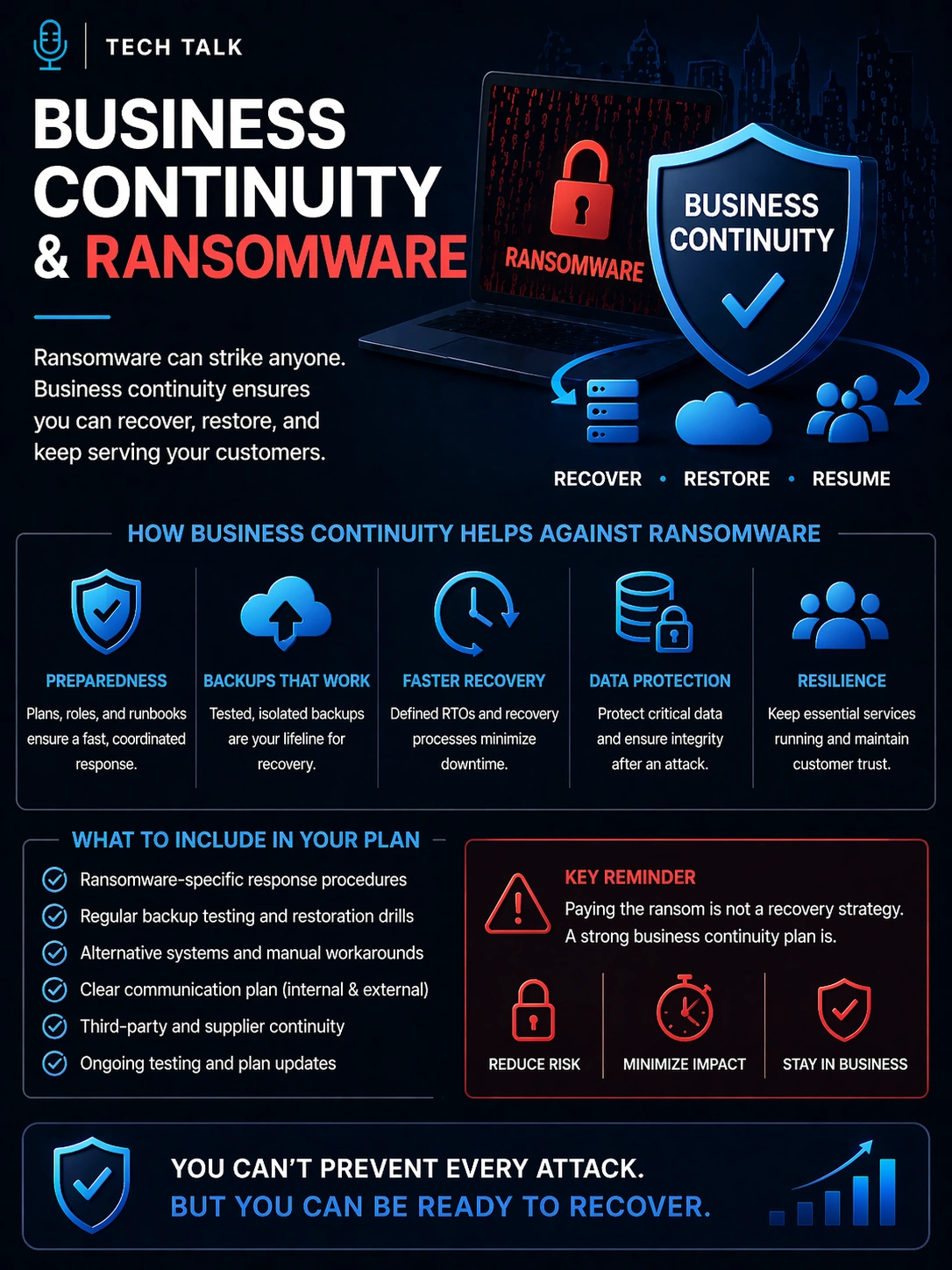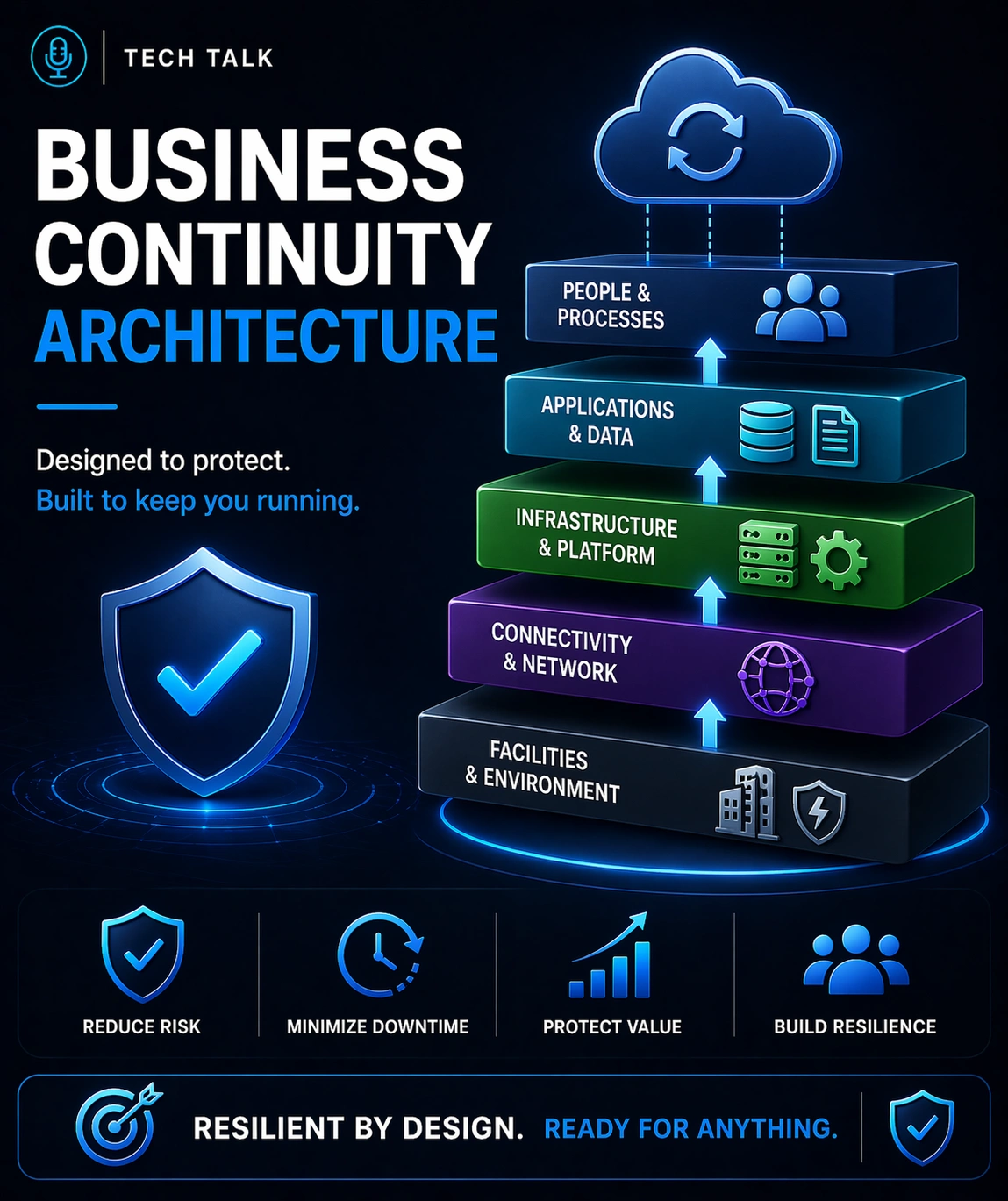
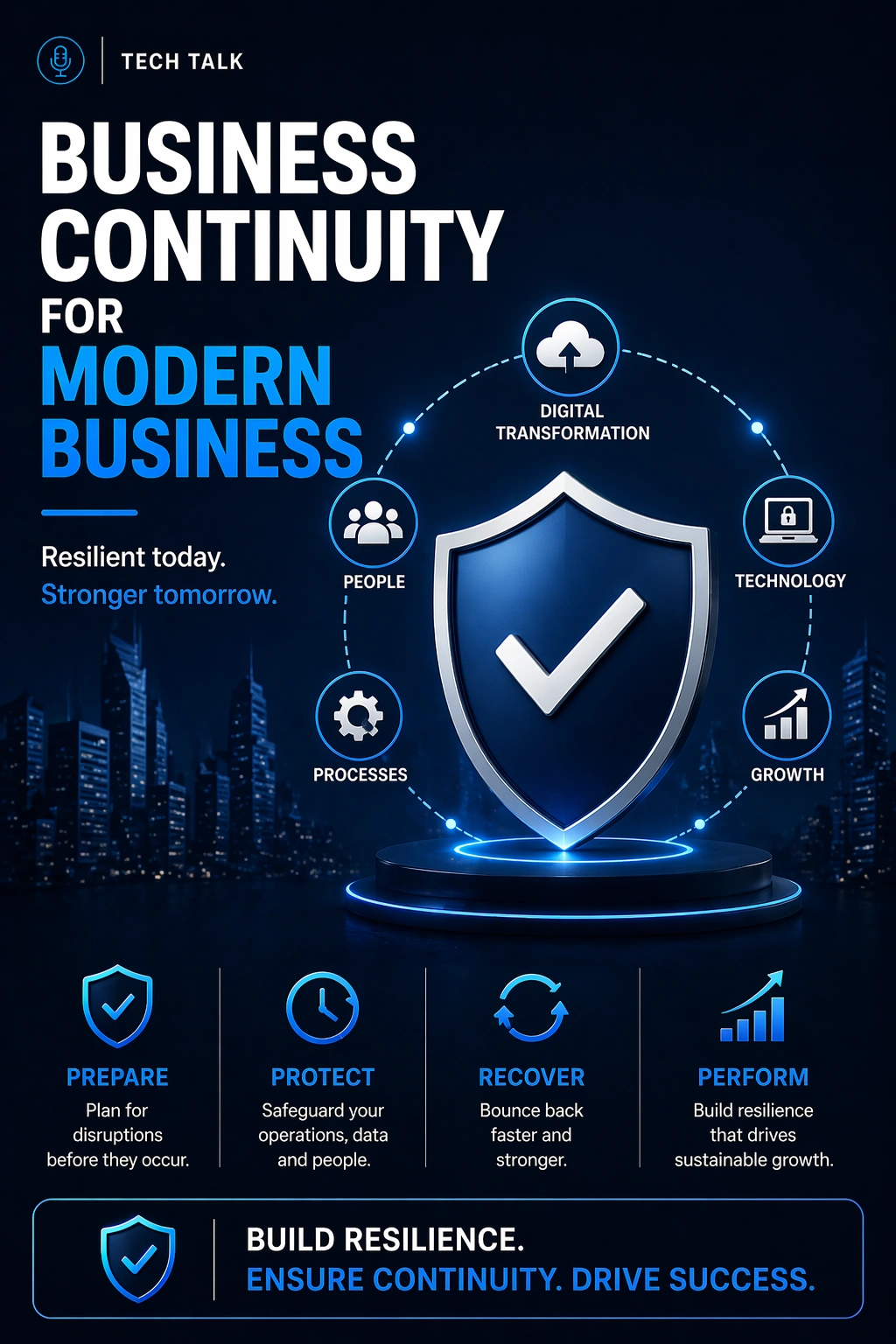
Why Modern Continuity Is Different
Business continuity has changed.
Traditional approaches focused on:
- physical disasters
- data center failures
- localized disruptions
Modern businesses face:
- cyber attacks
- cloud outages
- distributed teams
- complex dependencies
Modern disruption is faster, more complex, and more interconnected than ever before.
What Defines a Modern Business Environment
Today’s businesses operate in environments that are:
- highly digital
- cloud-dependent
- interconnected with vendors and platforms
- distributed across locations and teams
This creates:
👉 new types of risk and complexity
The Key Differences in Modern Continuity
1. Cyber Threats Are Central
Modern continuity must address:
- ransomware
- system compromise
- data breaches
Unlike traditional risks:
- cyber incidents can spread quickly
- impact is often immediate
2. Cloud Dependency Is Critical
Many businesses rely on:
- SaaS platforms
- cloud infrastructure
- hosted applications
This means:
- outages are outside your control
- access is dependent on providers
3. Distributed Workforces
Teams may be:
- remote
- hybrid
- geographically dispersed
Continuity must ensure:
- employees can work from anywhere
- communication remains effective
4. Increased Dependency Complexity
Modern businesses depend on:
- multiple vendors
- integrated systems
- external services
This creates:
👉 more points of failure
5. Faster Pace of Disruption
Disruption now happens:
- more frequently
- with less warning
- with greater impact
Continuity must be faster, more flexible, and more integrated than ever before.
Why Traditional Continuity Approaches Fall Short
Older strategies often:
- focus only on disaster recovery
- assume centralized systems
- ignore cyber and cloud risks
This leads to:
- incomplete preparation
- gaps in response
- increased disruption
Traditional continuity planning does not fully address modern business risks.
What Modern Business Continuity Requires
To be effective today, continuity must include:
1. Integrated Cyber Resilience
- detect and respond to threats
- coordinate with continuity processes
2. Cloud Continuity Planning
- plan for cloud outages
- define fallback options
- understand provider limitations
3. Operational Flexibility
- enable remote and hybrid work
- support alternative workflows
4. Dependency Management
- map and manage vendor risks
- prepare for supply chain disruptions
5. Continuous Testing and Validation
- simulate modern scenarios
- validate integrated response
6. Real-Time Communication
- maintain coordination across teams
- ensure consistent messaging
How Modern Continuity Works in Practice
During disruption:
-
Threat or Incident Occurs
- cyber, cloud, or operational disruption
-
Continuity Activates
- fallback processes begin
- operations continue
-
Teams Adapt Quickly
- remote or alternative workflows are used
-
Recovery Runs in Parallel
- systems are restored
-
Operations Stabilize
- normal conditions return
Modern continuity is dynamic — it adapts in real time to changing conditions.
Common Modern Continuity Mistakes
Organizations often:
- rely too heavily on cloud providers
- focus only on recovery
- ignore cyber scenarios
- overlook distributed workforce needs
- fail to test real-world conditions
These mistakes lead to:
- incomplete readiness
- increased disruption
- slower recovery
How to Know If Your Strategy Is Outdated
Warning signs include:
- continuity plans do not include cyber incidents
- cloud outages are not addressed
- remote work is not considered
- dependencies are unclear
- testing is limited or outdated
If your continuity strategy does not reflect modern risks, it is likely incomplete.
What This Means for Your Business
Modern continuity determines:
- how well your organization adapts to disruption
- how effectively operations continue
- how quickly recovery occurs
- how resilient your business becomes
Continuity must evolve with your business — or it will fail when needed most.
Final Thoughts
Business continuity is no longer static.
It must evolve with:
- technology
- threats
- operations
Modern businesses require modern strategies.
Need help with this topic?
Make sure your backups actually work when it matters.
Most businesses discover backup failures during an outage. We help you validate recovery, reduce downtime risk, and build a system that works under pressure.
- Backup validation and testing
- Recovery time optimization
- Clear recovery documentation