Why Continuity Matters for Small Businesses
Small businesses often believe:
- continuity planning is for large enterprises
- they do not have enough resources
- disruption will be manageable
But in reality:
- small businesses are often more vulnerable
- downtime has a greater impact
- recovery resources are limited
Small businesses are more likely to be severely impacted by disruption — not less.
What Business Continuity Means for Small Businesses
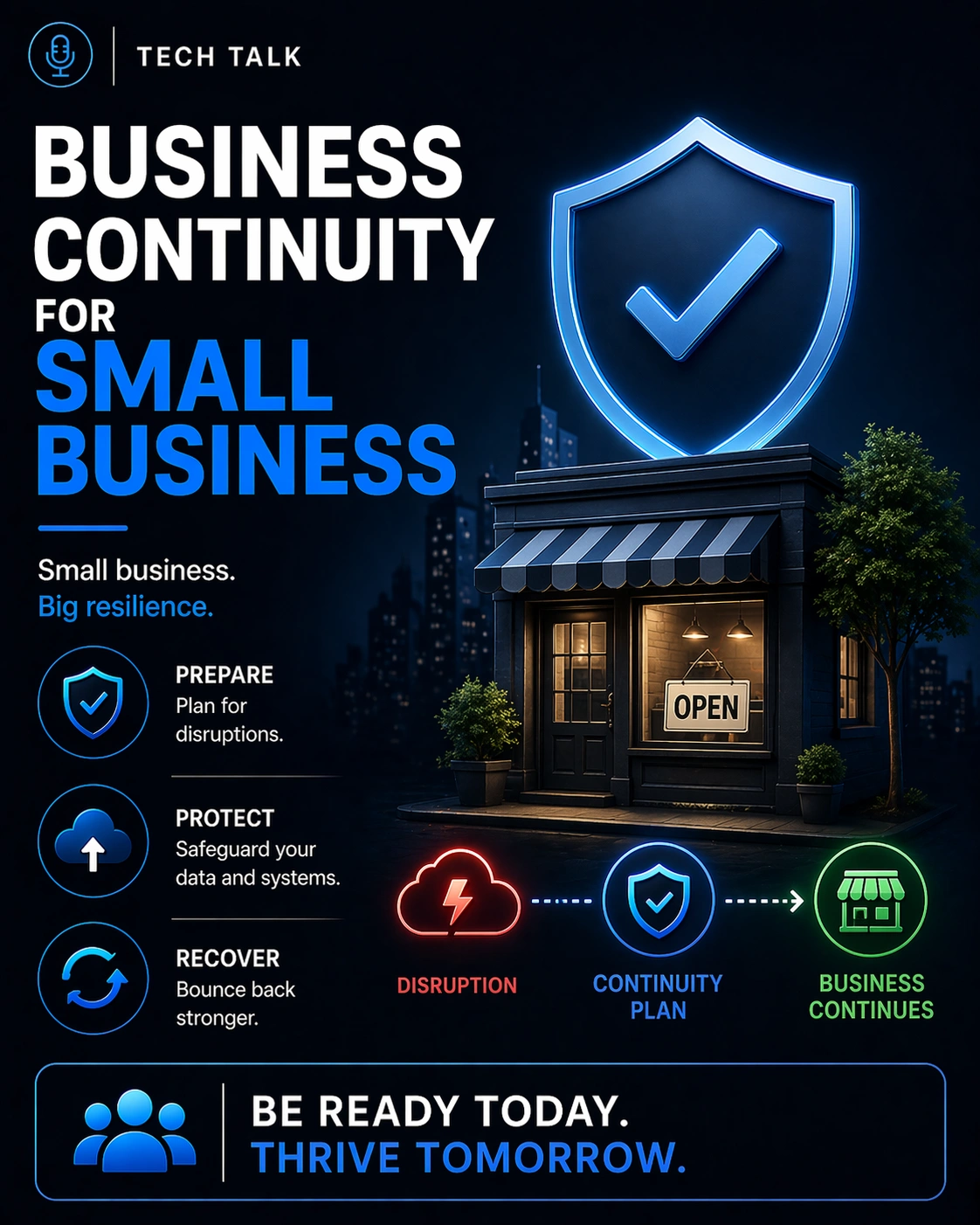
For small businesses, continuity is:
👉 the ability to keep essential operations running during disruption
It focuses on:
- maintaining revenue-generating activities
- keeping customers served
- ensuring employees can continue working
Continuity does not require:
- complex enterprise systems
- large teams
- expensive infrastructure
Why Small Businesses Are at Higher Risk
Small businesses often:
- rely on fewer systems and people
- lack redundancy
- have limited recovery capabilities
- depend heavily on key individuals
This creates:
👉 higher exposure to disruption
Even minor issues can:
- stop operations
- impact revenue immediately
Common Disruptions for Small Businesses
Small businesses face risks such as:
- cyber attacks (especially ransomware)
- internet or system outages
- cloud service disruptions
- vendor or supplier issues
- employee unavailability
These events can:
👉 quickly disrupt daily operations
What Happens Without a Continuity Plan
Without planning:
- operations stop during disruption
- employees do not know what to do
- recovery takes longer
- customer impact increases
This can lead to:
- lost revenue
- damaged reputation
- long-term business impact
For small businesses, even short disruptions can have long-lasting consequences.
What a Simple Continuity Plan Looks Like
A small business continuity plan does not need to be complex.
At a minimum, it should include:
1. Critical Functions
Identify:
- essential operations
- revenue-generating activities
Focus on:
👉 what must continue
2. Fallback Processes
Plan for:
- manual workarounds
- alternative tools
- reduced operations
3. Roles and Responsibilities
Define:
- who makes decisions
- who communicates
- who manages response
4. Communication Plan
Ensure:
- employees stay informed
- customers receive updates
5. Basic Recovery Strategy
Include:
- backups
- system restoration plans
- recovery priorities
Practical Continuity Strategies for Small Businesses
To improve resilience:
Keep It Simple
- focus on critical operations
- avoid unnecessary complexity
Use Cloud Wisely
- leverage cloud tools for flexibility
- understand their limitations
Protect Your Data
- implement regular backups
- test recovery processes
Plan for People, Not Just Systems
- ensure team members know their roles
- prepare for key staff unavailability
Test Your Plan
- run simple scenarios
- walk through response steps
A simple plan that is tested is more effective than a complex plan that is not.
Common Small Business Mistakes
Small businesses often:
- rely on backups alone
- assume disruption will be minor
- avoid planning due to perceived complexity
- fail to test their plans
These mistakes lead to:
- unprepared response
- increased downtime
- greater impact
How to Know If You Are at Risk
You may be at risk if:
- operations stop when systems fail
- there is no clear response process
- employees are unsure what to do
- backups are your only strategy
If your business cannot operate during disruption, you need a continuity plan — regardless of size.
What This Means for Your Business
For small businesses, continuity determines:
- whether you can continue generating revenue
- how customers experience disruption
- how quickly you recover
- how resilient your operations are
Continuity is not about size — it is about survival.
Final Thoughts
Business continuity is not just for large organizations.
It is essential for every business.
For small businesses:
- planning reduces risk
- preparation improves response
- resilience protects your future
Need help with this topic?
Make sure your backups actually work when it matters.
Most businesses discover backup failures during an outage. We help you validate recovery, reduce downtime risk, and build a system that works under pressure.
- Backup validation and testing
- Recovery time optimization
- Clear recovery documentation