Why This Difference Matters
Many businesses believe they are prepared for disruption.
They have:
- backups
- recovery tools
- restoration processes
But when disruption occurs:
- operations stop
- teams wait for systems to return
- productivity drops to zero
That gap exists because:
👉 disaster recovery restores systems — business continuity keeps the business running
If your plan starts after systems fail, your business is already down.
What Is Business Continuity?
Business continuity is the ability to:
👉 maintain critical operations during and after a disruption
It focuses on:
- keeping essential functions active
- maintaining service delivery
- adapting processes in real time
Continuity answers:
👉 How does the business keep operating when systems are unavailable?
What Is Disaster Recovery?
Disaster recovery is the ability to:
👉 restore systems, data, and infrastructure after a failure
It focuses on:
- restoring IT systems
- recovering lost data
- returning to normal operations
Recovery answers:
👉 How quickly can systems be brought back online?
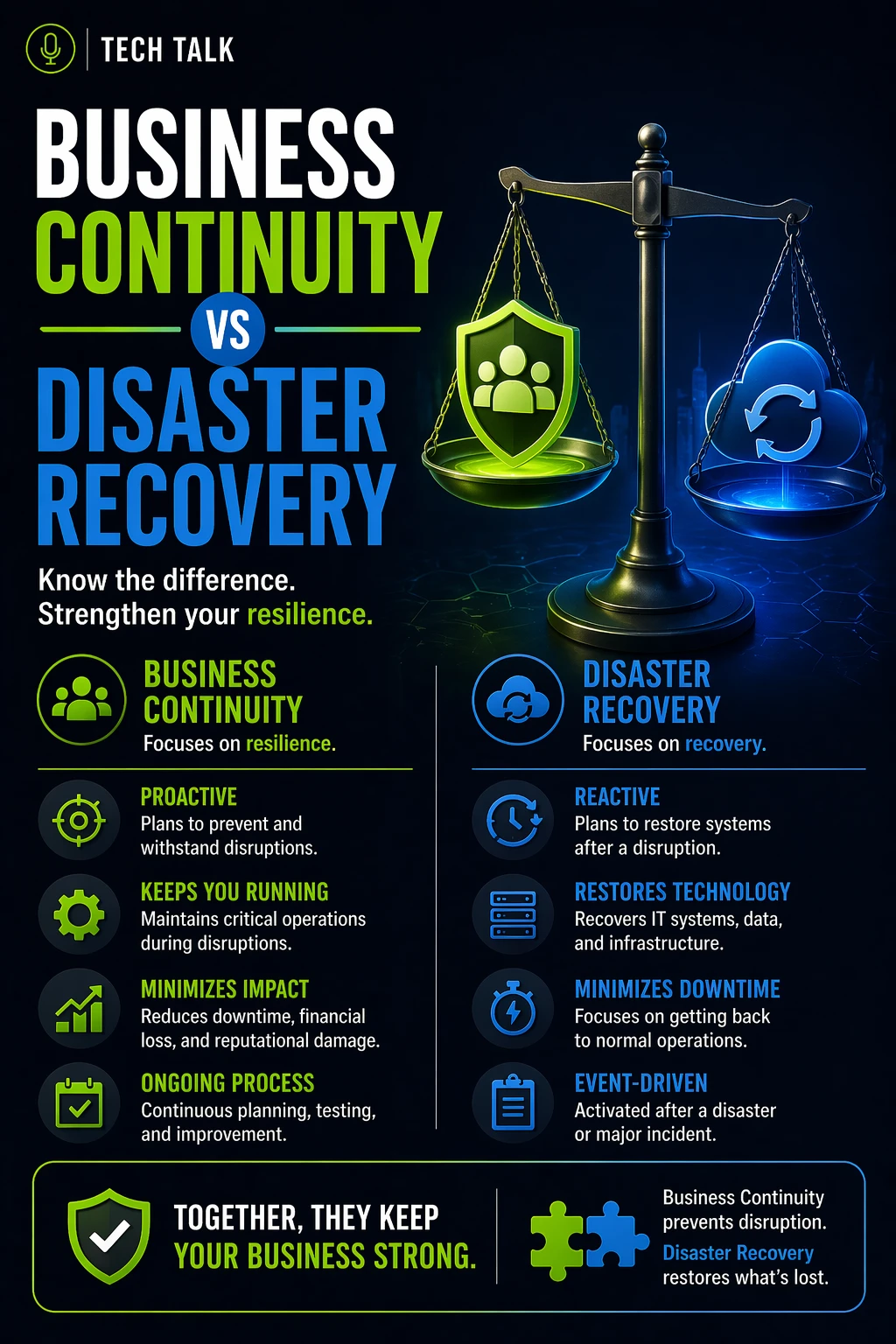
Business Continuity vs Disaster Recovery (Core Difference)
Business Continuity
- Maintains operations during disruption
- Focuses on people, processes, and systems
- Ensures business continues functioning
- Active during the incident
Disaster Recovery
- Restores systems after disruption
- Focuses on IT infrastructure and data
- Returns systems to normal
- Begins after failure occurs
Disaster recovery without continuity means your business stops while you recover.
What Happens in a Real Incident
Consider a real-world scenario:
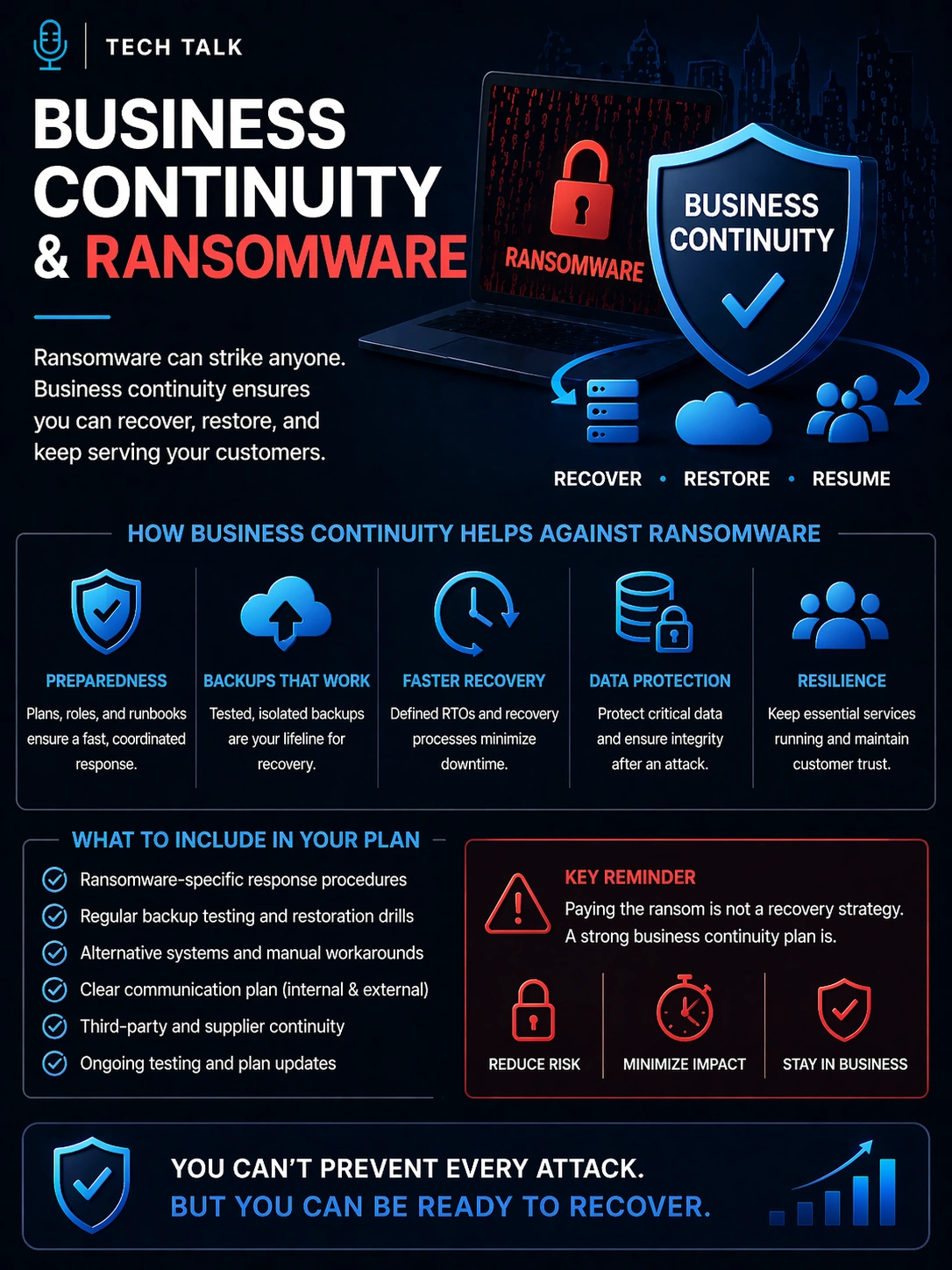
- ransomware disables core systems
- applications become inaccessible
- employees cannot perform their work
Without Business Continuity:
- operations stop immediately
- teams wait for systems to be restored
- revenue impact begins instantly
With Business Continuity:
- alternative processes are activated
- critical functions continue manually or through fallback systems
- customer impact is reduced
Meanwhile:
- disaster recovery works in parallel
- systems are restored in the background
Continuity keeps the business alive — recovery brings systems back.
Why Disaster Recovery Alone Is Not Enough
Many strategies focus heavily on recovery.
They include:
- backups
- recovery plans
- restoration tools
But they often lack:
- operational fallback processes
- communication plans
- defined roles during disruption
This leads to:
- confusion during incidents
- delayed decision-making
- extended downtime
Recovery plans solve technical problems — continuity plans solve business problems.
How They Work Together
Business continuity and disaster recovery are not competing strategies.
They are complementary.
- continuity keeps operations running
- recovery restores systems
- together, they minimize disruption
A coordinated approach ensures:
- minimal downtime
- reduced financial impact
- faster return to normal operations
The Timeline of a Disruption
Understanding timing is critical.
-
Disruption Occurs
- systems fail
- access is lost
-
Continuity Activates
- fallback processes begin
- operations continue at reduced capacity
-
Disaster Recovery Begins
- systems are restored
- data is recovered
-
Return to Normal Operations
- continuity processes phase out
- full functionality resumes
Continuity starts immediately — recovery takes time.
Where Most Businesses Get It Wrong
Common misconceptions include:
- “We have backups, so we’re covered”
- “Recovery will be fast enough”
- “Downtime won’t be significant”
In reality:
- recovery takes longer than expected
- operations cannot simply pause
- customers expect continuity
Businesses plan for system recovery — but not for operating without those systems.
What a Complete Strategy Looks Like
A complete approach includes:
Business Continuity
- documented fallback processes
- operational prioritization
- communication planning
- role definition
Disaster Recovery
- backup systems
- recovery infrastructure
- restoration procedures
- recovery testing
Together, they create:
👉 resilience
How to Know If You Have a Gap
You may be relying too heavily on disaster recovery if:
- operations stop during outages
- employees cannot work without systems
- continuity processes are undefined
- recovery is your only plan
If your business cannot operate during disruption, disaster recovery alone is not enough.
What This Means for Your Business
The difference between continuity and recovery determines:
- how long your business is down
- how customers experience disruption
- how much revenue is lost
- how resilient your operations are
Recovery determines how you restart — continuity determines whether you stop.
Final Thoughts
Disaster recovery is essential.
But it is only part of the solution.
Business continuity ensures your business survives the disruption itself.
Need help with this topic?
Make sure your backups actually work when it matters.
Most businesses discover backup failures during an outage. We help you validate recovery, reduce downtime risk, and build a system that works under pressure.
- Backup validation and testing
- Recovery time optimization
- Clear recovery documentation