The Short Answer
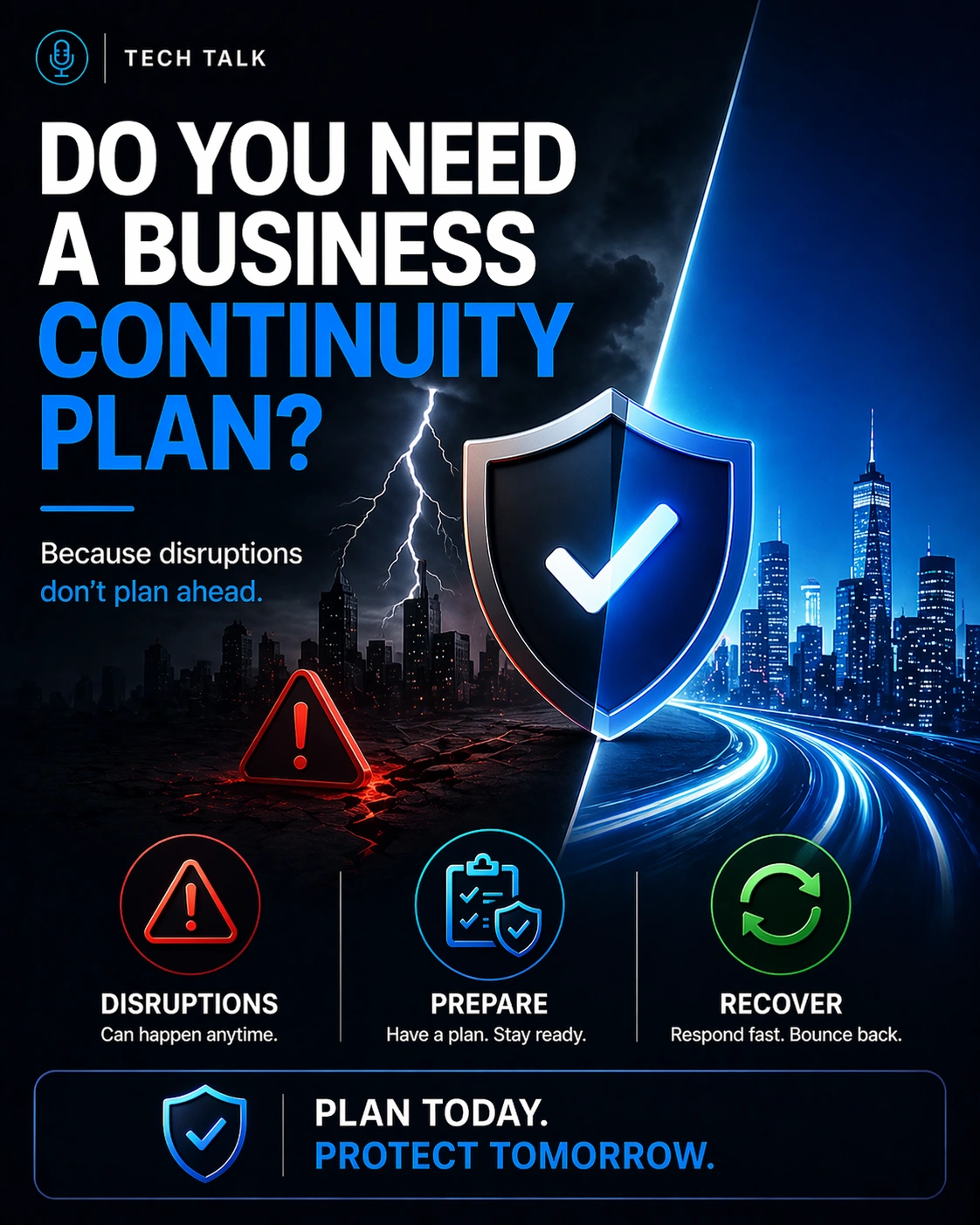
👉 Yes — if your business depends on systems, people, or processes to operate, you need a business continuity plan.
The real question is not:
- Do you need a plan?
It is:
👉 How prepared are you when disruption actually happens?
Why This Question Matters
Many organizations assume:
- they are too small to need a plan
- disruption is unlikely
- recovery will be simple
But disruption is not rare.
It includes:
- cyber attacks
- system outages
- cloud failures
- vendor disruptions
- human error
Disruption is not a possibility — it is an eventual certainty.
What a Business Continuity Plan Actually Does
A business continuity plan ensures:
👉 your business can continue operating during and after disruption
It defines:
- how critical functions continue
- how teams respond
- how systems and processes adapt
Without it:
- operations stop
- teams improvise
- impact increases
When You Definitely Need a Continuity Plan
You need a business continuity plan if:
- your business relies on technology
- downtime affects revenue or operations
- you serve customers who expect availability
- you depend on vendors or cloud services
- your team needs coordination during incidents
In reality:
👉 this applies to almost every business
What Happens If You Don’t Have One
Without a continuity plan:
- teams do not know what to do
- communication breaks down
- recovery is delayed
- operations stop or degrade significantly
This leads to:
- lost revenue
- customer dissatisfaction
- reputational damage
Without a continuity plan, disruption becomes chaos instead of a managed event.
Common Reasons Businesses Avoid Continuity Planning
Organizations often say:
- “We’re too small”
- “We have backups”
- “We’ve never had a major incident”
These assumptions are risky because:
- size does not reduce exposure
- backups do not maintain operations
- past success does not predict future events
Continuity vs “We’ll Figure It Out”
Some businesses rely on improvisation.
They assume:
- teams will adapt
- decisions will be made quickly
- recovery will be enough
In reality:
- uncertainty slows response
- coordination breaks down
- impact increases
Improvisation works in small situations — not during complex disruption.
How to Know If You Are at Risk
You may need a continuity plan if:
- operations stop when systems fail
- employees cannot work without access to tools
- there is no clear response process
- communication during incidents is unclear
- dependencies are not documented
If disruption would cause your business to stop, you need a continuity plan.
What a Simple Continuity Plan Includes
At a minimum:
- identification of critical operations
- fallback processes
- defined roles and responsibilities
- communication plan
- recovery coordination
Even a basic plan:
👉 is better than no plan
Why Every Business Benefits
A continuity plan helps:
- reduce downtime
- improve response speed
- maintain customer trust
- protect revenue
- increase operational confidence
It turns disruption into:
👉 a manageable event instead of a crisis
What This Means for Your Business
The need for a continuity plan is not about size.
It is about:
- dependency
- risk
- operational impact
If your business depends on anything to function:
👉 you need a plan for when it fails
Final Thoughts
The question is not:
- Do you need a business continuity plan?
The question is:
👉 Can your business afford not to have one?
Need help with this topic?
Make sure your backups actually work when it matters.
Most businesses discover backup failures during an outage. We help you validate recovery, reduce downtime risk, and build a system that works under pressure.
- Backup validation and testing
- Recovery time optimization
- Clear recovery documentation