Why a Layered Strategy Matters
Many organizations rely on a single solution for continuity.
They invest in:
- backups
- failover systems
- cloud infrastructure
They assume:
- redundancy solves the problem
- systems will remain available
- recovery will be enough
But in real-world scenarios:
- systems fail in unexpected ways
- dependencies break
- processes are disrupted
No single solution can protect your business from all types of disruption.
What Is a Layered Continuity Strategy?
A layered continuity strategy is:
👉 an approach that combines multiple levels of protection to ensure business operations continue during disruption
It includes:
- technical resilience
- operational continuity
- recovery capabilities
- communication planning
The goal is:
👉 to prevent a single point of failure from stopping the business
Why Single-Layer Strategies Fail
Relying on one layer creates risk.
Examples:
- backups without continuity → operations stop during recovery
- failover without process planning → systems are up, but work cannot continue
- cloud-only strategies → outages still disrupt operations
This leads to:
👉 gaps that appear during disruption
Single-layer strategies fail because they do not account for all types of disruption.
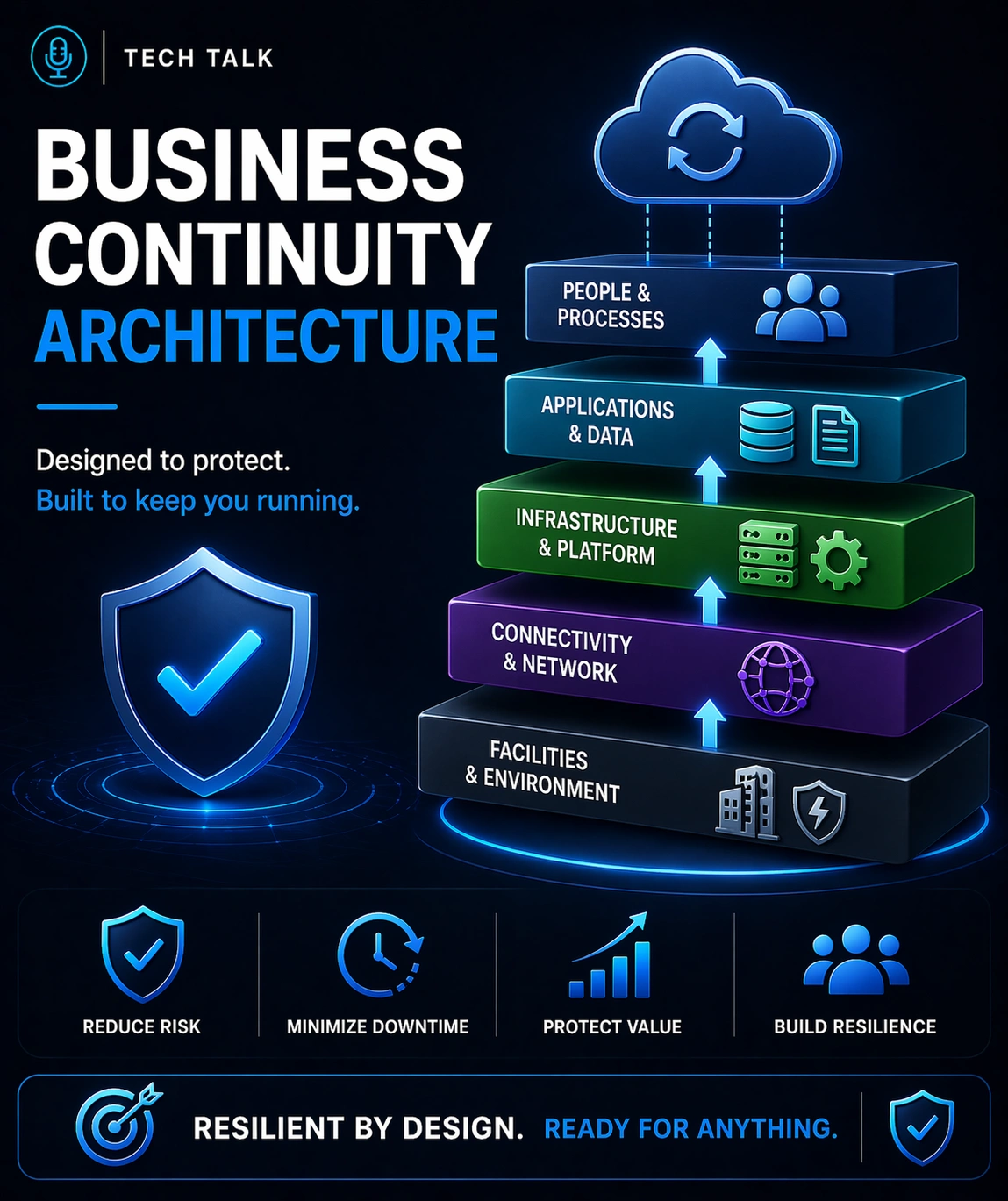
The Core Layers of a Continuity Strategy
A strong strategy is built across multiple layers.
1. Prevention and Risk Reduction Layer
Focuses on:
- minimizing likelihood of disruption
- identifying and mitigating risks
Includes:
- security controls
- risk assessments
- monitoring systems
2. Availability and Redundancy Layer
Focuses on:
- keeping systems accessible
Includes:
- failover systems
- redundant infrastructure
- cloud availability strategies
3. Operational Continuity Layer
Focuses on:
- maintaining business functions
Includes:
- fallback workflows
- manual processes
- operational prioritization
4. Recovery Layer
Focuses on:
- restoring systems and data
Includes:
- backup and recovery
- disaster recovery processes
- system restoration
5. Communication Layer
Focuses on:
- coordination during disruption
Includes:
- internal communication plans
- stakeholder updates
- escalation paths
6. Testing and Validation Layer
Focuses on:
- ensuring all layers work together
Includes:
- continuity testing
- validation exercises
- performance measurement
Each layer addresses a different type of failure — together they create resilience.
How Layered Continuity Works in Practice
During disruption:
-
Prevention Layer Reduces Risk
- attempts to stop the incident
-
Availability Layer Maintains Access
- failover or redundancy activates
-
Continuity Layer Maintains Operations
- fallback processes begin
-
Recovery Layer Restores Systems
- systems are rebuilt or recovered
-
Communication Layer Coordinates Response
- teams stay aligned
-
Validation Layer Ensures Effectiveness
- performance is evaluated
Layered strategies ensure that if one layer fails, others continue to protect the business.
Benefits of a Layered Approach
A layered continuity strategy provides:
- reduced single points of failure
- improved operational resilience
- faster response and recovery
- better coordination across teams
It ensures:
👉 multiple safeguards are in place
Common Layering Mistakes
Organizations often:
- focus only on technology layers
- neglect operational processes
- fail to integrate layers together
- skip testing across layers
These mistakes result in:
- disconnected strategies
- ineffective response
- increased disruption
How to Build a Layered Continuity Strategy
To implement layering effectively:
1. Identify All Risk Areas
Consider:
- technical failures
- operational disruptions
- external dependencies
2. Define Layers for Each Risk
Ensure:
- each type of disruption is addressed
- no critical gap exists
3. Integrate Layers Together
Align:
- systems
- processes
- teams
4. Test Across Layers
Simulate:
- multi-layer failure scenarios
- real-world disruptions
5. Continuously Improve
Refine:
- based on testing
- based on incidents
- based on changing risks
Layered strategies evolve over time as new risks and dependencies emerge.
What Happens Without Layering
Without a layered strategy:
- single failures cause major disruption
- gaps go unnoticed
- response is inconsistent
Even strong individual systems cannot:
👉 protect the entire business alone
Without layers, your continuity strategy has hidden weaknesses that appear during disruption.
How to Know If Your Strategy Is Layered
You likely have a layered strategy if:
- multiple protection levels exist
- systems, processes, and teams are aligned
- fallback processes are defined
- testing includes integrated scenarios
If not:
👉 your strategy may have critical gaps
If your continuity strategy relies on one solution, it is not fully resilient.
What This Means for Your Business
A layered continuity strategy determines:
- how well your business withstands disruption
- how effectively operations continue
- how quickly recovery occurs
- how resilient your organization becomes
Resilience is built in layers — not in a single solution.
Final Thoughts
Business continuity is complex.
No single approach is enough.
A layered strategy ensures:
- protection across multiple levels
- reduced risk
- improved resilience
Need help with this topic?
Make sure your backups actually work when it matters.
Most businesses discover backup failures during an outage. We help you validate recovery, reduce downtime risk, and build a system that works under pressure.
- Backup validation and testing
- Recovery time optimization
- Clear recovery documentation