Why Measuring Continuity Matters
Many organizations believe they are prepared.
They have:
- documented plans
- recovery strategies
- testing procedures
But they cannot answer:
- how effective those plans are
- how quickly they can respond
- how well operations will continue
Without measurement:
- readiness is unclear
- gaps remain hidden
- improvement is inconsistent
Business continuity that is not measured cannot be trusted.
What It Means to Measure Business Continuity
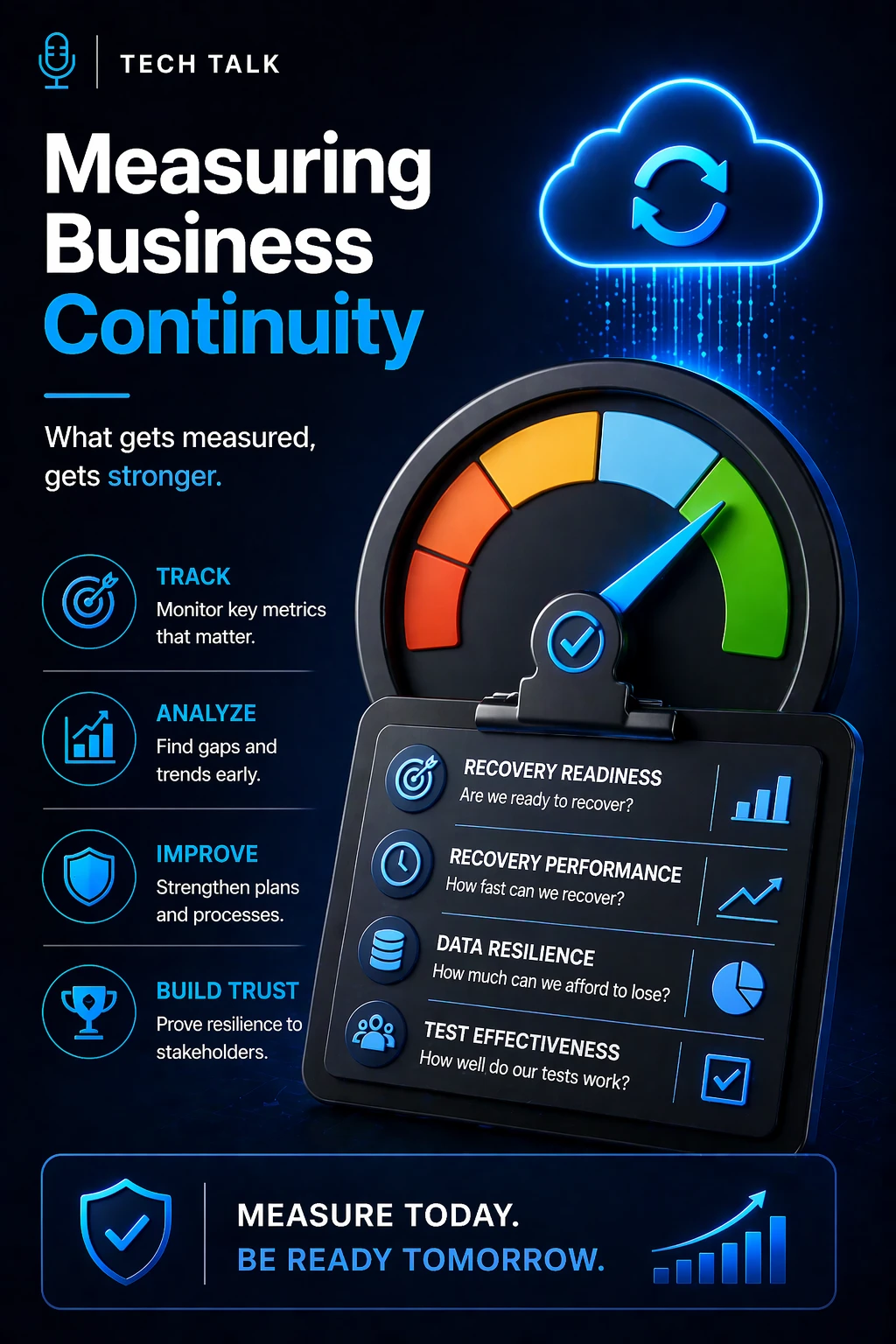
Measuring business continuity means:
👉 tracking the performance, effectiveness, and reliability of your continuity strategy
It focuses on:
- response performance
- operational continuity
- recovery effectiveness
- overall resilience
Measurement answers:
👉 How well can your business perform during disruption?
The Key Areas to Measure
Continuity measurement should cover multiple dimensions.
1. Response Time
How quickly your organization reacts to disruption.
Measured by:
- time to detect incidents
- time to initiate response
- time to activate continuity processes
2. Recovery Performance
How effectively systems are restored.
Measured by:
- recovery time (RTO performance)
- recovery success rate
- system restoration timelines
3. Data Protection
How well data is preserved during incidents.
Measured by:
- data loss (RPO performance)
- backup success rates
- recovery point accuracy
4. Operational Continuity
How well the business continues functioning.
Measured by:
- uptime of critical processes
- ability to maintain service delivery
- productivity levels during disruption
5. Communication Effectiveness
How clearly and consistently information is shared.
Measured by:
- response coordination
- clarity of messaging
- speed of communication
6. Team Readiness
How prepared your teams are to execute the plan.
Measured by:
- training completion
- test participation
- role clarity during exercises
Continuity is not just about systems — it is about people, processes, and performance.
Key Metrics and KPIs for Business Continuity
To measure continuity effectively, track specific metrics.
Common KPIs include:
- Mean Time to Detect (MTTD)
- Mean Time to Respond (MTTR)
- Recovery Time Objective (RTO) performance
- Recovery Point Objective (RPO) performance
- system availability percentage
- incident response time
- continuity test success rate
These metrics provide:
👉 quantifiable insight into readiness
How Measurement Works in Practice
A structured measurement approach includes:
1. Define Metrics
Identify what matters most to your business.
Focus on:
- critical systems
- key processes
- high-impact risks
2. Collect Data
Gather information from:
- testing exercises
- real incidents
- monitoring tools
- system logs
3. Analyze Performance
Compare results against:
- defined objectives
- expected performance levels
Identify:
- gaps
- delays
- inefficiencies
4. Report Results
Communicate findings to:
- leadership
- IT teams
- operational teams
This ensures:
👉 visibility and accountability
5. Improve Continuity
Use insights to:
- refine processes
- adjust strategies
- improve systems
- enhance training
Measurement is only valuable if it leads to improvement.
What Happens Without Measurement
Without measurement:
- readiness is assumed, not proven
- performance issues go unnoticed
- improvement is inconsistent
During a real incident, this leads to:
- slower response
- longer downtime
- greater impact
Unmeasured continuity creates blind spots that only appear during disruption.
Common Measurement Mistakes
Organizations often:
- track too few metrics
- focus only on technical performance
- ignore operational impact
- fail to update metrics over time
- do not act on results
These mistakes result in:
- incomplete visibility
- misaligned priorities
- limited improvement
How to Build an Effective Measurement Program
To improve continuity measurement:
- define clear KPIs aligned with business goals
- measure both technical and operational performance
- integrate measurement into testing and validation
- review metrics regularly
- adjust based on changing risks
Measurement should be:
- continuous
- data-driven
- aligned with business priorities
How to Know If Your Measurement Is Inadequate
Warning signs include:
- lack of defined metrics
- inconsistent data collection
- unclear performance benchmarks
- no reporting or analysis
- repeated issues during incidents
If you cannot measure your continuity performance, you cannot reliably improve it.
What This Means for Your Business
Measuring business continuity determines:
- how prepared your organization truly is
- how effectively you respond to disruption
- how quickly operations recover
- how resilient your business becomes
Measurement turns continuity from a concept into a measurable, improvable capability.
Final Thoughts
Business continuity is not just about planning.
It is about performance.
Measurement ensures:
- visibility
- accountability
- improvement
Without it:
- readiness is uncertain
- risk increases
Need help with this topic?
Make sure your backups actually work when it matters.
Most businesses discover backup failures during an outage. We help you validate recovery, reduce downtime risk, and build a system that works under pressure.
- Backup validation and testing
- Recovery time optimization
- Clear recovery documentation