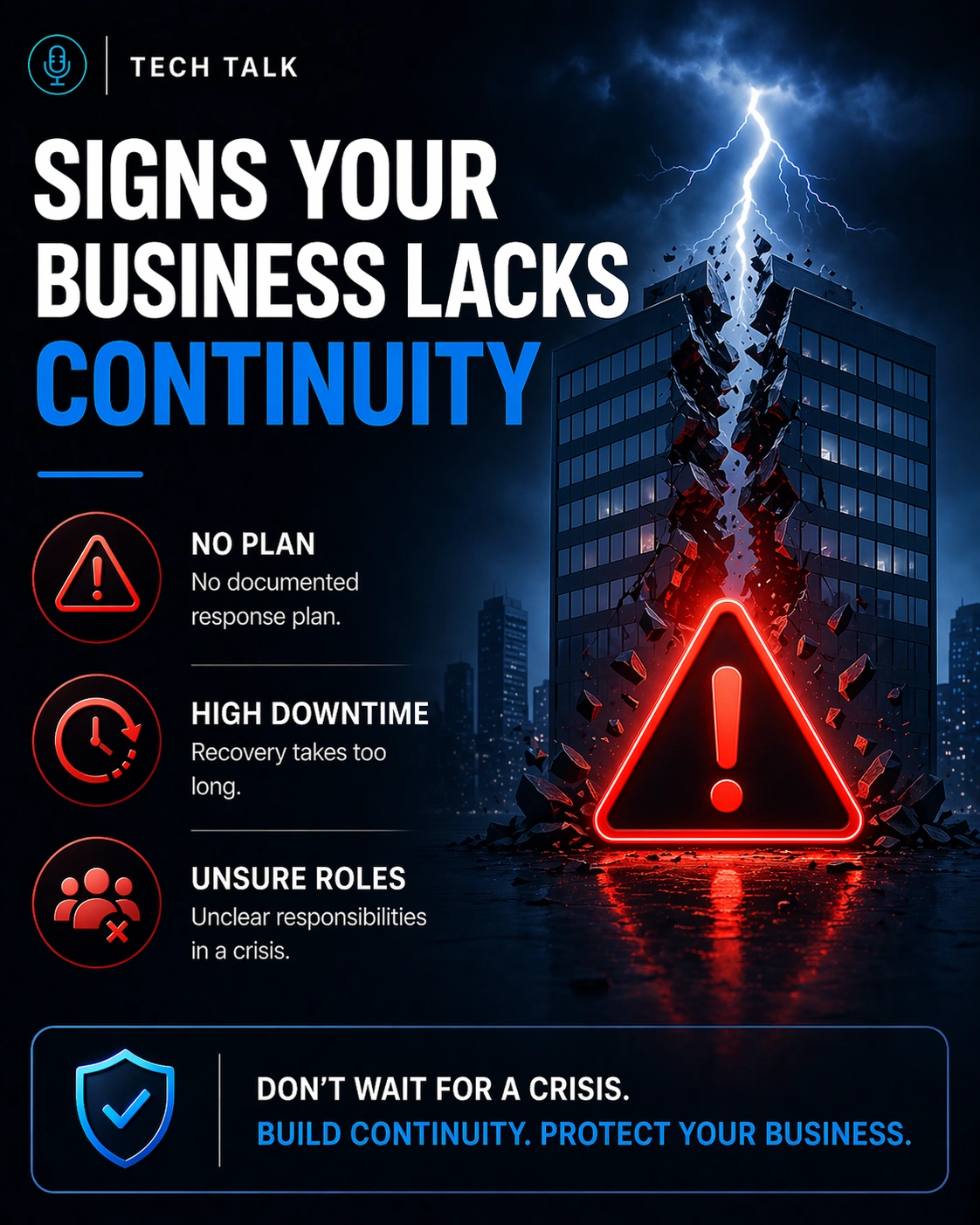
Why These Signs Matter
Many businesses believe they are prepared.
They assume:
- systems are reliable
- teams will respond effectively
- disruption will be manageable
But when incidents occur:
- operations stop
- confusion spreads
- recovery takes longer than expected
This happens because:
👉 continuity gaps exist — even if they are not obvious
Most continuity failures are predictable — the warning signs appear long before the disruption.
The Most Common Warning Signs
1. Operations Stop When Systems Fail
If your business cannot function without systems:
- employees are idle during outages
- workflows depend entirely on technology
This indicates:
👉 no fallback processes exist
2. No Clear Incident Response Process
If teams do not know:
- who leads during disruption
- what actions to take
- how decisions are made
This leads to:
- delayed response
- inconsistent actions
3. Communication Breaks Down During Issues
Signs include:
- inconsistent messaging
- unclear updates
- confusion across teams
This indicates:
👉 lack of communication planning
4. Continuity Plans Do Not Exist — or Are Outdated
If plans are:
- undocumented
- rarely updated
- not aligned with current systems
They are:
👉 unlikely to work during disruption
5. No Testing or Validation
If your plan has:
- never been tested
- not been validated under real conditions
Then:
👉 it is unproven
If you have never tested your plan, you should assume it will fail.
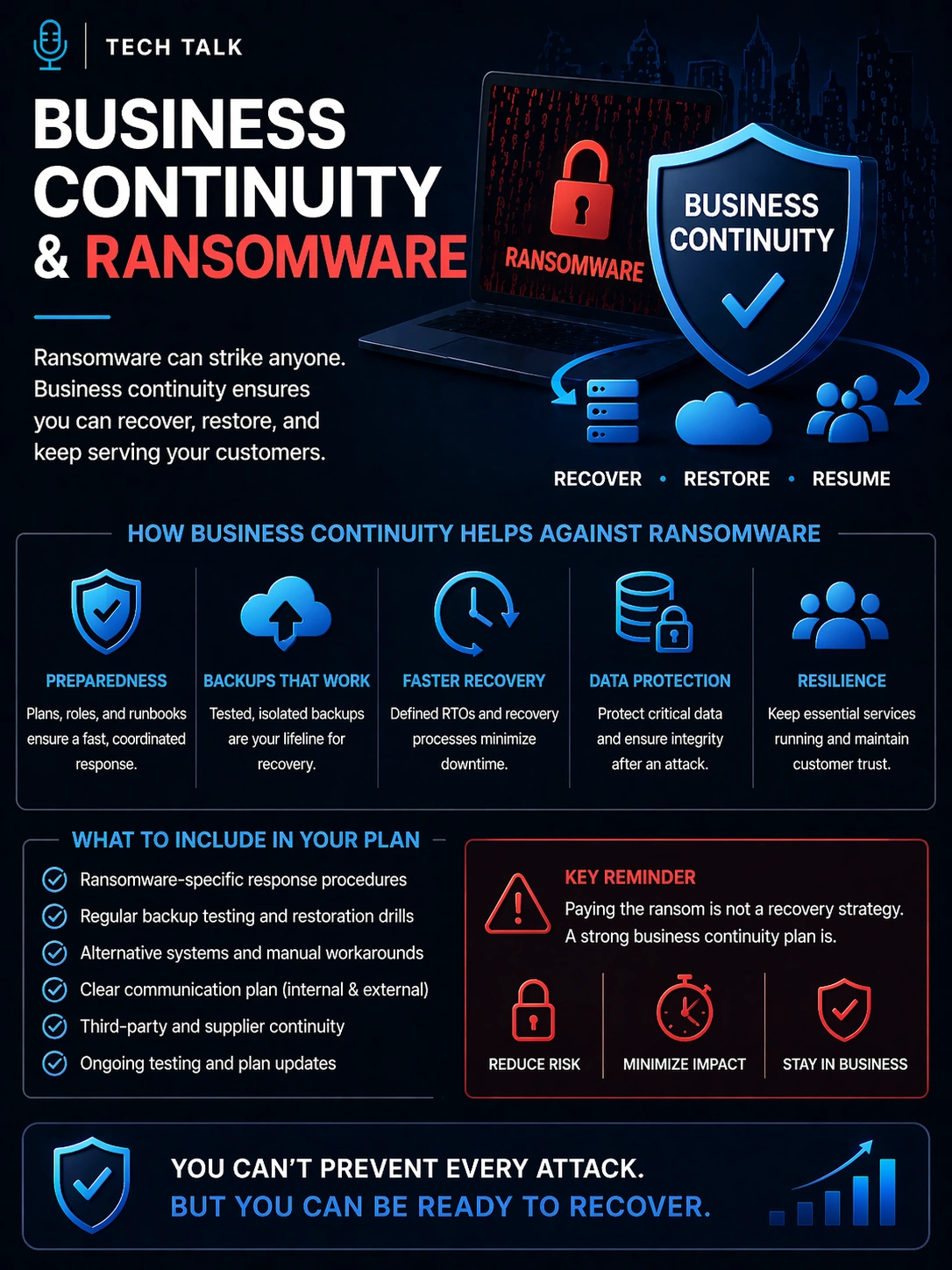
6. Over-Reliance on Backups
If your strategy is:
- “we have backups, so we’re covered”
Then you may lack:
- operational continuity
- fallback processes
Backups restore data — not operations.
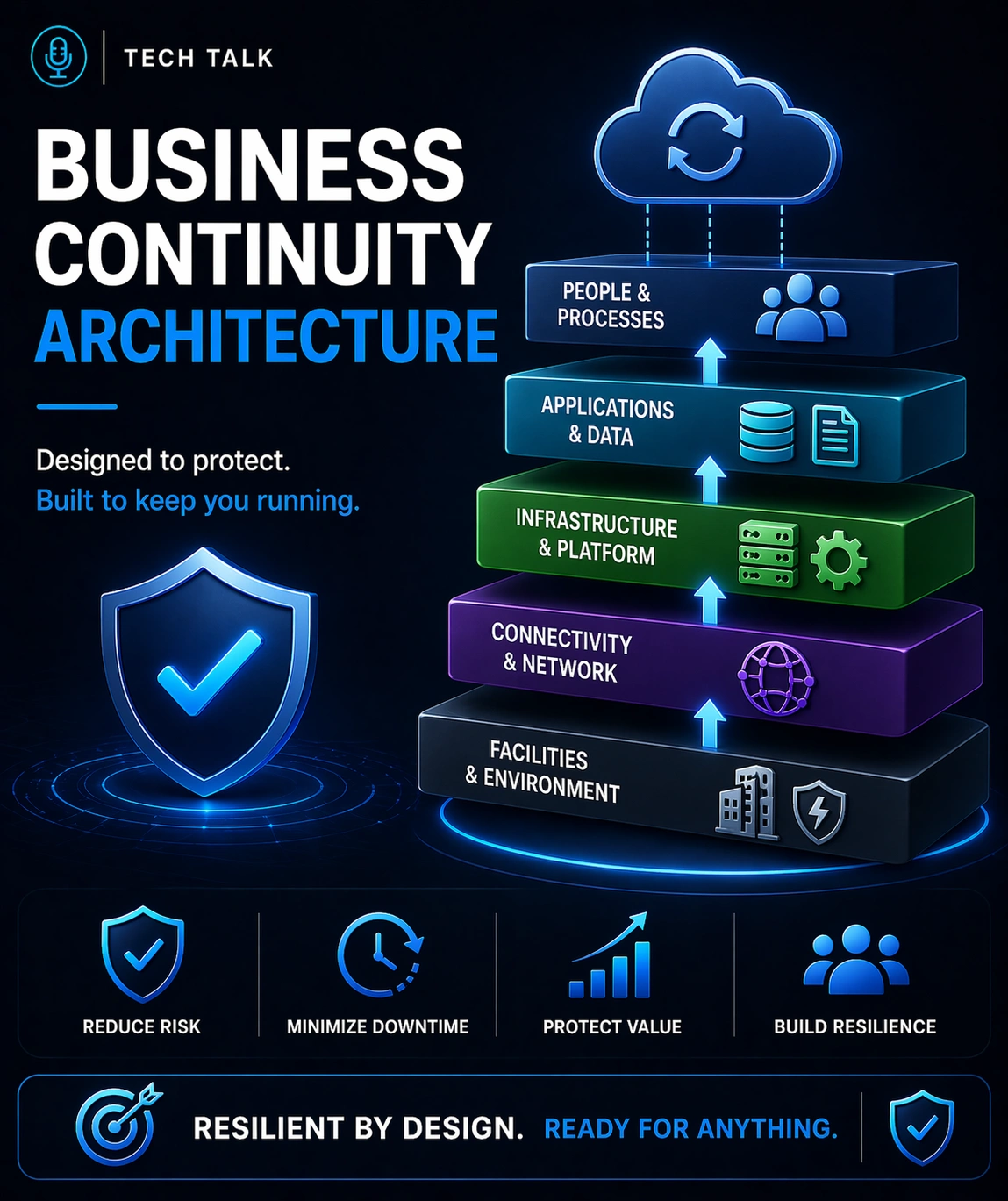
7. Dependencies Are Not Documented
If you do not know:
- which vendors you rely on
- which systems are critical
- how processes connect
Then:
👉 hidden risks exist
8. Recovery Takes Longer Than Expected
If past incidents have shown:
- longer-than-expected downtime
- slow system restoration
- operational delays
This indicates:
👉 misaligned recovery capabilities
9. Teams Are Unfamiliar With Their Roles
If employees:
- are unsure what to do during disruption
- need direction for basic decisions
Then:
👉 training and preparation are insufficient
10. Continuity Is Treated as a One-Time Task
If continuity planning:
- was done once
- is not reviewed regularly
- is not integrated into operations
Then:
👉 your strategy is outdated
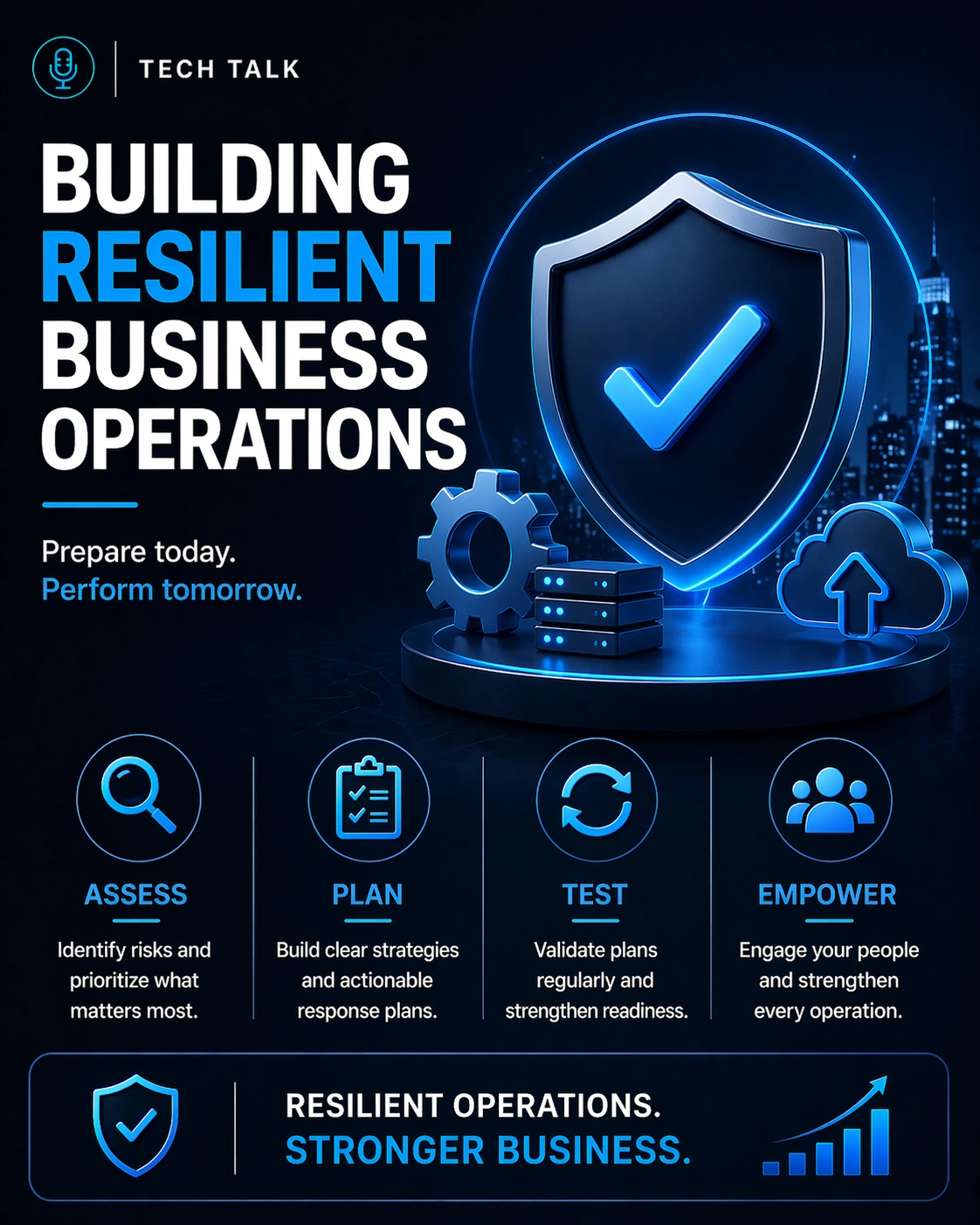
Continuity is not a document — it is an ongoing capability.
What These Signs Mean Together
Individually, these issues are concerning.
Combined, they indicate:
👉 a high likelihood of failure during disruption
Continuity breakdown rarely comes from one issue.
It happens when:
- multiple gaps exist at the same time
Why Businesses Miss These Signs
Organizations often:
- assume things will work
- rely on past experience
- underestimate disruption
They may not recognize:
- early indicators of risk
- gaps in planning and execution
Continuity gaps are often visible — but only if you actively look for them.
How to Address Continuity Gaps
To improve readiness:
- document continuity processes
- define clear roles and responsibilities
- test plans regularly
- identify and manage dependencies
- strengthen communication planning
- align recovery with business needs
Quick Self-Assessment
Ask yourself:
- Can your business operate during system outages?
- Do teams know exactly what to do during disruption?
- Has your plan been tested recently?
- Are dependencies clearly understood?
If the answer to any of these is “no”:
👉 you likely have continuity gaps
If your business cannot confidently answer these questions, your continuity strategy needs improvement.
What This Means for Your Business
Recognizing these signs early allows you to:
- reduce risk
- improve response
- strengthen resilience
- minimize disruption impact
Ignoring them leads to:
- unexpected failure
- increased downtime
- greater financial and operational impact
Continuity gaps do not appear during disruption — they are revealed by it.
Final Thoughts
Business continuity issues rarely happen without warning.
The signs are there.
The question is:
👉 Are you paying attention?
Need help with this topic?
Make sure your backups actually work when it matters.
Most businesses discover backup failures during an outage. We help you validate recovery, reduce downtime risk, and build a system that works under pressure.
- Backup validation and testing
- Recovery time optimization
- Clear recovery documentation