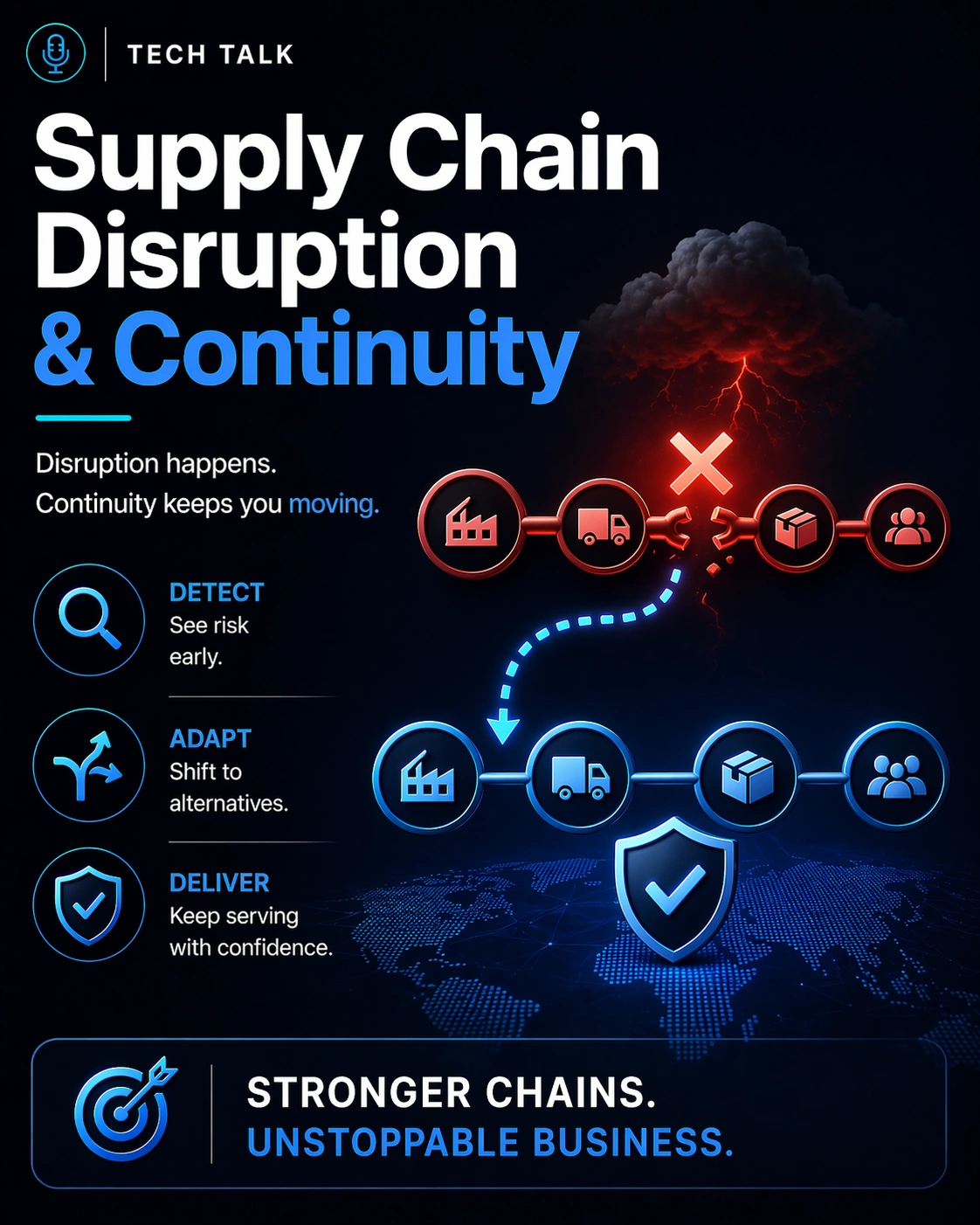
Why Supply Chain Disruptions Matter
Many businesses focus on internal systems when planning for continuity.
They invest in:
- backups
- failover systems
- recovery processes
But they overlook a critical factor:
👉 their dependence on external vendors and suppliers
When a supply chain disruption occurs:
- services may be unavailable
- products may not be delivered
- critical operations may stop
Your business can fail even if your systems are fully operational — if your dependencies are not.
What Is a Supply Chain Disruption?
A supply chain disruption is:
👉 any event that interrupts the flow of goods, services, or resources your business depends on
It can involve:
- vendors and suppliers
- cloud and SaaS providers
- logistics and shipping partners
- third-party service providers
Disruptions can be:
- temporary or prolonged
- localized or widespread
How Supply Chain Disruptions Impact Business Continuity
When dependencies fail:
- critical processes may stop
- services may become unavailable
- customers may be impacted
Even if your internal systems are working:
- operations may still be disrupted
Examples include:
- a vendor outage affecting a key application
- delayed shipments impacting fulfillment
- third-party service failures affecting operations
Why Dependencies Are a Hidden Risk
Dependencies are often:
- distributed across vendors
- poorly documented
- not fully understood
This creates:
👉 hidden points of failure
Organizations may not realize:
- how many processes rely on third parties
- how critical those dependencies are
Unidentified dependencies create risks that only appear during disruption.
The Role of Business Continuity
Business continuity ensures:
👉 your organization can continue operating even when dependencies fail
It includes:
- identifying critical dependencies
- planning for vendor outages
- developing alternative solutions
Continuity answers:
👉 How does the business function when external resources are unavailable?
Internal vs External Disruption
Internal Disruption
- System failures
- Infrastructure outages
- Internal process issues
- Managed internally
Supply Chain Disruption
- Vendor outages
- Supplier delays
- Third-party failures
- Outside your direct control
You can control your systems — but not your suppliers. Continuity planning must account for both.
Common Causes of Supply Chain Disruption
Disruptions can be caused by:
- vendor outages or failures
- cyber attacks on suppliers
- logistics and transportation delays
- geopolitical or economic events
- natural disasters
These events can:
👉 cascade across multiple organizations
How to Prepare for Supply Chain Disruption
To reduce risk, organizations should:
1. Identify Critical Dependencies
Map:
- key vendors
- critical suppliers
- third-party services
Understand:
- which processes rely on them
- the impact if they fail
2. Assess Vendor Risk
Evaluate:
- reliability
- redundancy
- security posture
- recovery capabilities
This ensures:
👉 informed risk management
3. Develop Alternative Options
Prepare:
- backup vendors
- alternate suppliers
- substitute services
4. Create Fallback Processes
Plan for:
- manual workflows
- reduced operations
- temporary solutions
5. Strengthen Communication Planning
Ensure:
- clear vendor communication
- internal coordination
- customer updates
6. Test Supply Chain Scenarios
Simulate:
- vendor outages
- supplier delays
- third-party service failures
Testing reveals:
- hidden dependencies
- operational gaps
You cannot manage supply chain risk unless you understand your dependencies.
What Happens Without Continuity Planning
Without planning:
- operations stop when vendors fail
- teams scramble for alternatives
- customer impact increases
- recovery takes longer
This leads to:
- lost revenue
- operational delays
- reputational damage
Without continuity planning, a supplier failure becomes a business failure.
Common Supply Chain Continuity Mistakes
Organizations often:
- assume vendors are always available
- fail to document dependencies
- lack alternative suppliers
- overlook third-party risks
- do not test disruption scenarios
These mistakes result in:
- unprepared response
- increased impact
- prolonged disruption
How to Know If You Are Prepared
You are likely prepared if:
- dependencies are clearly identified
- vendor risks are assessed
- alternative options exist
- fallback processes are defined
- disruption scenarios are tested
If not:
👉 your organization is vulnerable
If your business depends on external vendors without a backup plan, you are exposed to supply chain risk.
What This Means for Your Business
Supply chain disruptions determine:
- how resilient your operations are
- how quickly you can adapt
- how customers experience disruption
- how effectively your business continues
Your continuity strategy must extend beyond your organization — to every dependency you rely on.
Final Thoughts
Business continuity is not just about internal systems.
It is about:
- people
- processes
- dependencies
Supply chain disruptions test all three.
With the right preparation:
- disruption can be managed
- operations can continue
Need help with this topic?
Make sure your backups actually work when it matters.
Most businesses discover backup failures during an outage. We help you validate recovery, reduce downtime risk, and build a system that works under pressure.
- Backup validation and testing
- Recovery time optimization
- Clear recovery documentation