Why Crisis Management Matters
Disruption creates pressure.
Pressure creates:
- urgency
- uncertainty
- risk
Without clear leadership:
- decisions are delayed
- communication breaks down
- impact escalates
In a crisis, the absence of leadership becomes the biggest risk.
Crisis management ensures:
👉 decisions are made quickly, clearly, and effectively
What Is Crisis Management?
Crisis management is the process of:
👉 leading an organization through a disruptive event while minimizing impact
It focuses on:
- decision-making
- coordination
- communication
- control under pressure
Crisis management answers:
👉 How do we lead the organization through disruption?
How Crisis Management Fits Into Business Continuity
Business continuity and crisis management serve different roles.
- continuity keeps operations running
- crisis management guides the organization
Together:
- continuity executes
- crisis management directs
Continuity handles operations — crisis management handles leadership.
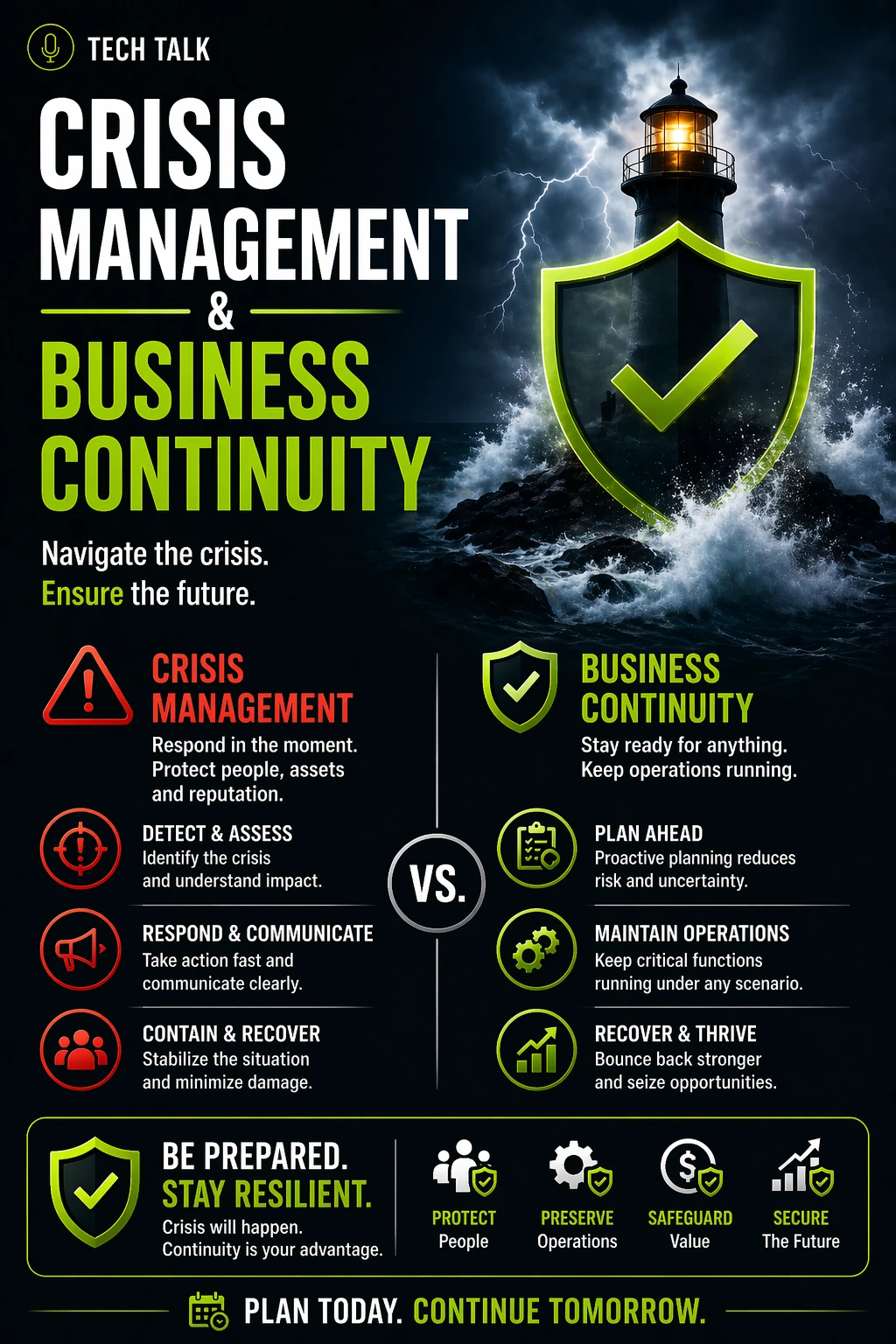
Crisis Management vs Business Continuity
Crisis Management
- Leads response and decision-making
- Focuses on control and coordination
- Communicates with stakeholders
- Operates at the leadership level
Business Continuity
- Maintains operations during disruption
- Focuses on processes and execution
- Keeps business functions running
- Operates across teams and departments
You can have continuity processes — but without crisis management, execution lacks direction.
What Happens Without Crisis Management
A typical scenario:
- disruption occurs
- teams attempt to respond
- decisions are unclear
- communication is inconsistent
At that point:
- response slows
- confusion increases
- impact escalates
Even with continuity plans:
- execution becomes fragmented
The Role of Leadership During Disruption
Effective crisis management requires:
- clear leadership
- fast decision-making
- structured communication
Leaders must:
- assess the situation
- prioritize actions
- allocate resources
- communicate clearly
In a crisis, speed and clarity matter more than perfection.
The Core Components of Crisis Management
A strong crisis management approach includes:
1. Situation Awareness
- understanding what is happening
- identifying scope and impact
- gathering accurate information
2. Decision-Making Structure
- defined leadership roles
- clear authority levels
- rapid decision processes
3. Communication Strategy
- internal communication
- customer communication
- stakeholder updates
4. Coordination
- aligning teams and departments
- ensuring continuity execution
- managing resources
5. Escalation Management
- identifying when to escalate
- involving leadership as needed
- adjusting response based on severity
How Crisis Management Works in a Real Incident
A simplified timeline:
-
Disruption Occurs
- systems or processes are impacted
-
Crisis Management Activates
- leadership takes control
- decisions are made
-
Business Continuity Executes
- fallback processes begin
- operations continue
-
Incident Response and Recovery
- technical issues are addressed
- systems are restored
-
Return to Normal
- crisis management deactivates
- continuity processes phase out
Crisis management directs the response — continuity ensures the business keeps moving.
Common Crisis Management Failures
Common issues include:
- unclear leadership roles
- delayed decision-making
- poor communication
- lack of coordination
- no defined process
These lead to:
- confusion
- slower response
- increased disruption
Without structured crisis management, even strong continuity plans can fail.
How to Strengthen Crisis Management
To improve crisis management:
- define leadership roles clearly
- establish decision-making processes
- build communication frameworks
- align crisis management with continuity plans
- conduct regular simulations and testing
See
business continuity testing
How to Know If You Have a Gap
Warning signs include:
- unclear leadership during disruption
- inconsistent communication
- delayed response
- lack of coordination between teams
If leadership struggles to direct response during disruption, crisis management is not fully developed.
What This Means for Your Business
Crisis management determines:
- how effectively your organization responds
- how quickly decisions are made
- how well disruption is controlled
Continuity keeps your business running — crisis management keeps it under control.
Final Thoughts
Disruption creates uncertainty.
Crisis management creates control.
Without it:
- response is reactive
- impact increases
With it:
- response is structured
- impact is reduced
Need help with this topic?
Make sure your backups actually work when it matters.
Most businesses discover backup failures during an outage. We help you validate recovery, reduce downtime risk, and build a system that works under pressure.
- Backup validation and testing
- Recovery time optimization
- Clear recovery documentation