What Cloud Infrastructure Really Means
Most businesses say they “use the cloud.”
But that usually means they use cloud applications — not that their infrastructure is properly designed.
Cloud infrastructure is the underlying system that powers everything:
- applications
- data storage
- system performance
- user access
- recovery capability
It is the foundation your entire business depends on.
Using cloud tools does not mean your infrastructure is scalable, secure, or resilient.
Why Cloud Infrastructure Matters More Than Ever
Modern businesses are more dependent on technology than ever before.
Every system relies on infrastructure:
- file access
- applications
- customer systems
When infrastructure fails:
- operations stop
- productivity drops
- revenue is impacted
Infrastructure failure is not a technical problem — it is a business problem.
What a Real Infrastructure Failure Looks Like
Infrastructure failures rarely start as major outages.
They typically begin with small issues:
- slower system performance
- intermittent connectivity problems
- delayed application response
Then:
- systems struggle under load
- dependencies break
- failures cascade
At that point:
- downtime increases
- recovery becomes complex
- business impact grows
Infrastructure problems often go unnoticed until they become operational failures.
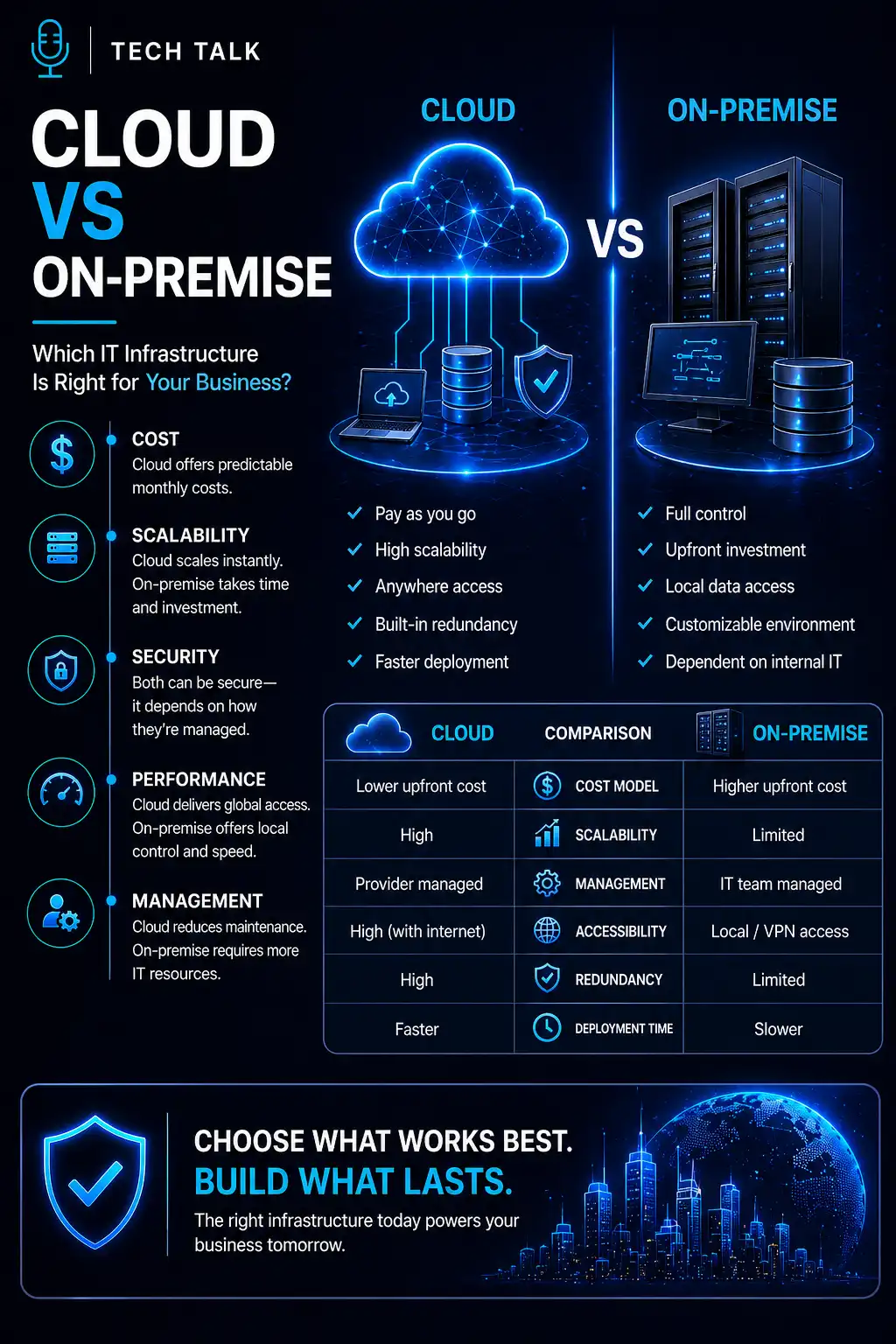
Cloud Infrastructure vs Traditional Infrastructure
Cloud infrastructure replaces physical hardware with virtual systems.
Traditional Infrastructure
- on-site servers
- fixed capacity
- manual scaling
- high upfront cost
Cloud Infrastructure
- virtualized resources
- scalable on demand
- automated management
- usage-based pricing
Cloud removes hardware limits — but introduces architectural complexity.
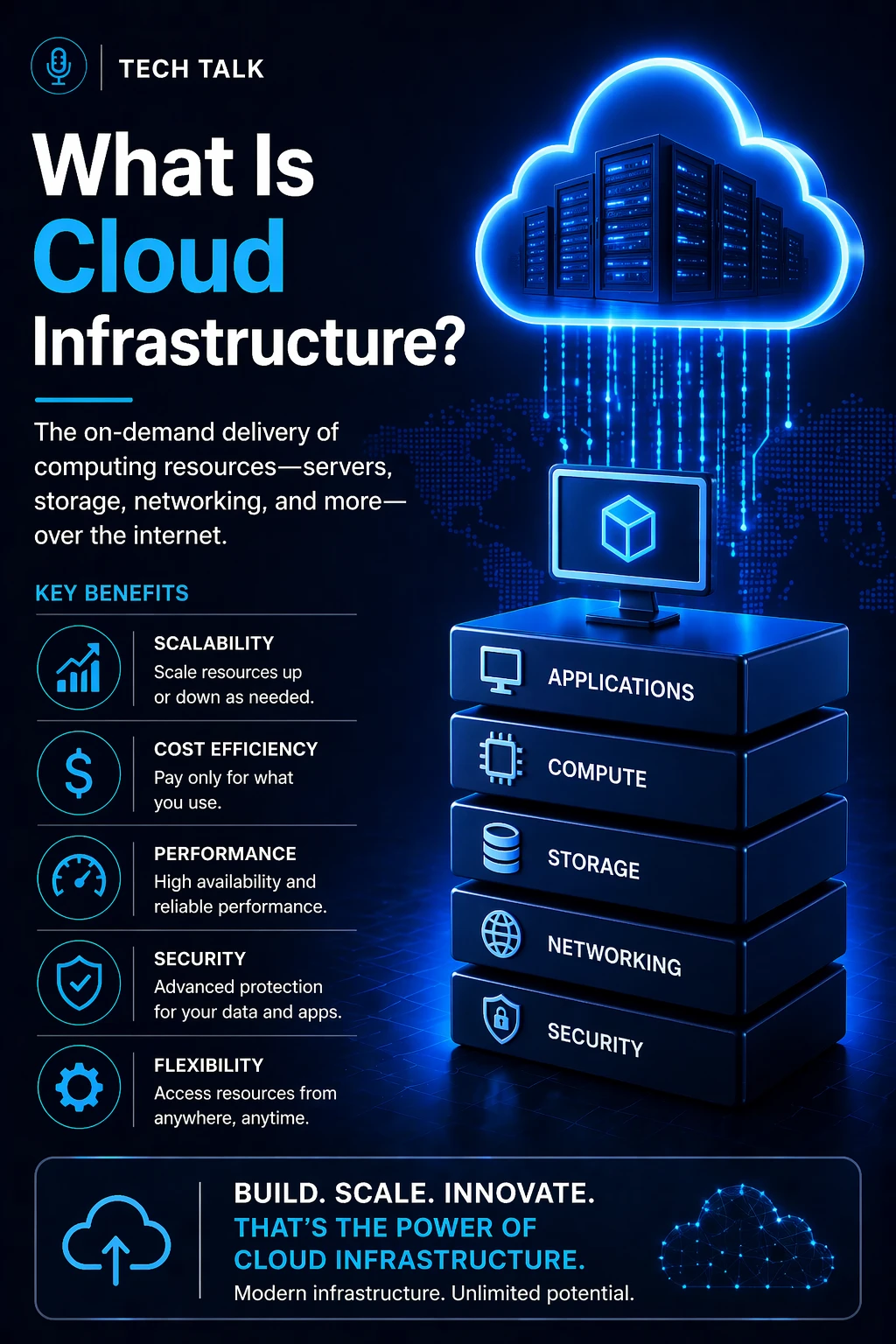
The Core Components of Cloud Infrastructure
Cloud infrastructure is made up of several key components.
Compute
This is where applications run.
Includes:
- virtual machines
- containers
- serverless systems
Storage
This is where data is stored.
Includes:
- file storage
- block storage
- object storage
Networking
This connects systems together.
Includes:
- virtual networks
- firewalls
- load balancers
Security
This protects systems and data.
Includes:
- access control
- encryption
- monitoring
Management
This controls and automates the environment.
Includes:
- monitoring tools
- automation systems
- scaling controls
Cloud infrastructure is not one system — it is a combination of layers that must work together.
The Hidden Risk: Poor Cloud Design
Many cloud environments are:
- built quickly
- poorly documented
- never optimized
Over time, this creates:
- performance issues
- security gaps
- higher costs
- operational risk
Cloud environments become more fragile over time if they are not intentionally designed.
What Breaks Cloud Infrastructure
Most failures come from predictable issues:
- misconfiguration
- lack of redundancy
- poor network design
- insufficient monitoring
These issues often go unnoticed until:
- systems fail
- performance drops
- incidents occur
What a Modern Cloud Environment Looks Like
A well-designed cloud infrastructure includes:
- scalable compute resources
- redundant storage systems
- segmented networks
- strong access controls
- automated monitoring
Modern cloud environments are designed for failure — not just normal operation.
How Cloud Infrastructure Supports Business Growth
Cloud infrastructure enables:
- rapid scaling
- flexible resource allocation
- improved performance
- global accessibility
Without it, businesses face:
- growth limitations
- system bottlenecks
- higher operational overhead
The Cost vs Performance Trade-Off
Cloud infrastructure introduces flexibility — but also complexity.
Poorly designed environments can lead to:
- overspending on resources
- underperforming systems
- inefficient scaling
Cloud does not automatically reduce cost — it shifts cost into design decisions.
How to Know If Your Infrastructure Is at Risk
You may have a gap if:
- systems slow down during growth
- outages occur unexpectedly
- infrastructure is undocumented
- configurations are unclear
If your infrastructure cannot scale or recover reliably, it needs improvement.
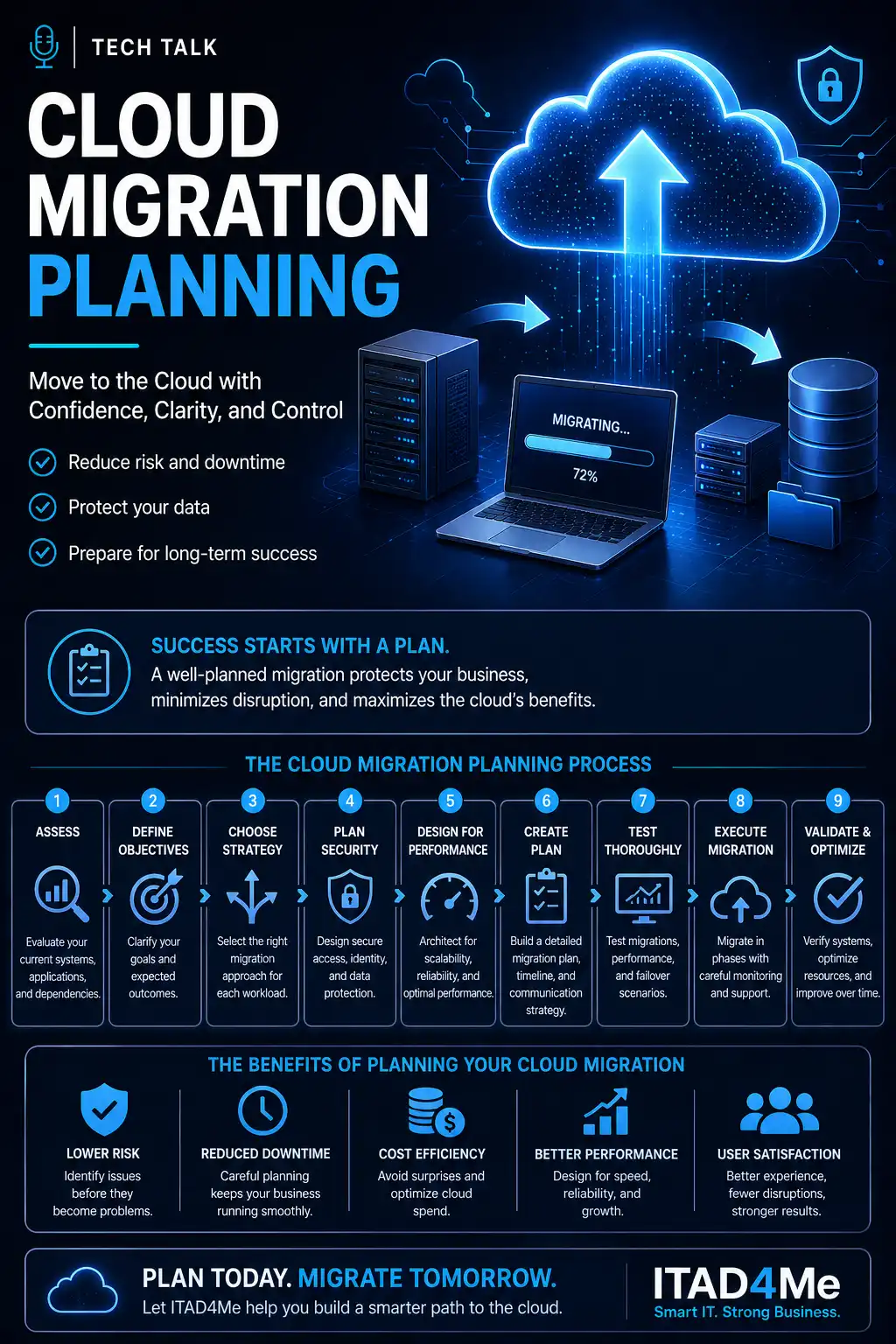
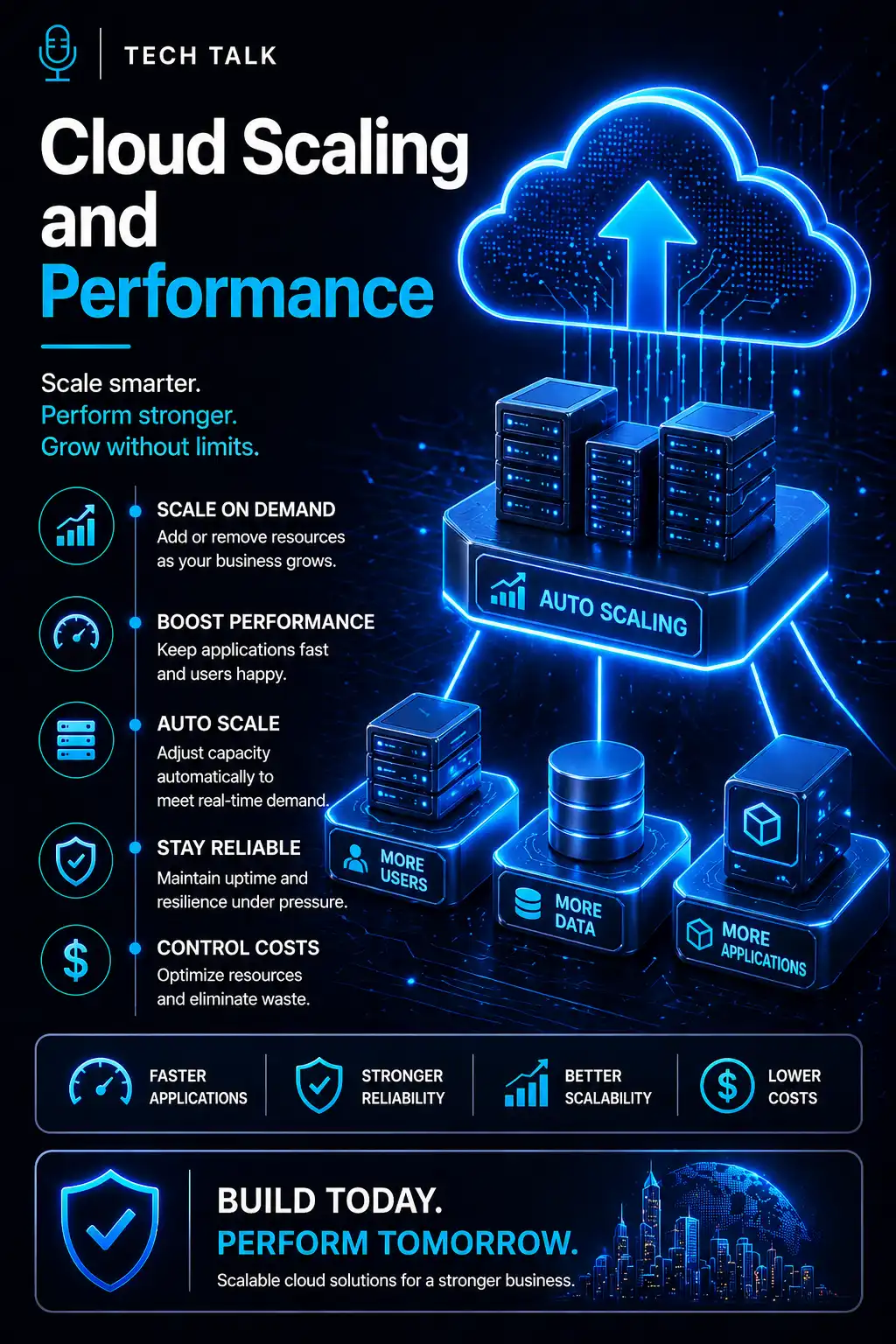
How This Connects to Other Cloud Topics
Cloud infrastructure is the foundation for:
- cloud infrastructure explained
- cloud scaling and performance
- cloud infrastructure security
- cloud vs on-premise
What This Means for Your Business
Infrastructure determines:
- how reliable your systems are
- how fast your team can work
- how well your business handles growth
Your infrastructure is the foundation of your business operations — not just your technology stack.
Final Thoughts
Cloud infrastructure is not just about moving systems to the cloud.
It is about designing an environment that:
- performs under pressure
- scales with demand
- recovers from failure
Need help with this topic?
Make sure your backups actually work when it matters.
Most businesses discover backup failures during an outage. We help you validate recovery, reduce downtime risk, and build a system that works under pressure.
- Backup validation and testing
- Recovery time optimization
- Clear recovery documentation