What Cloud Infrastructure Security Really Means
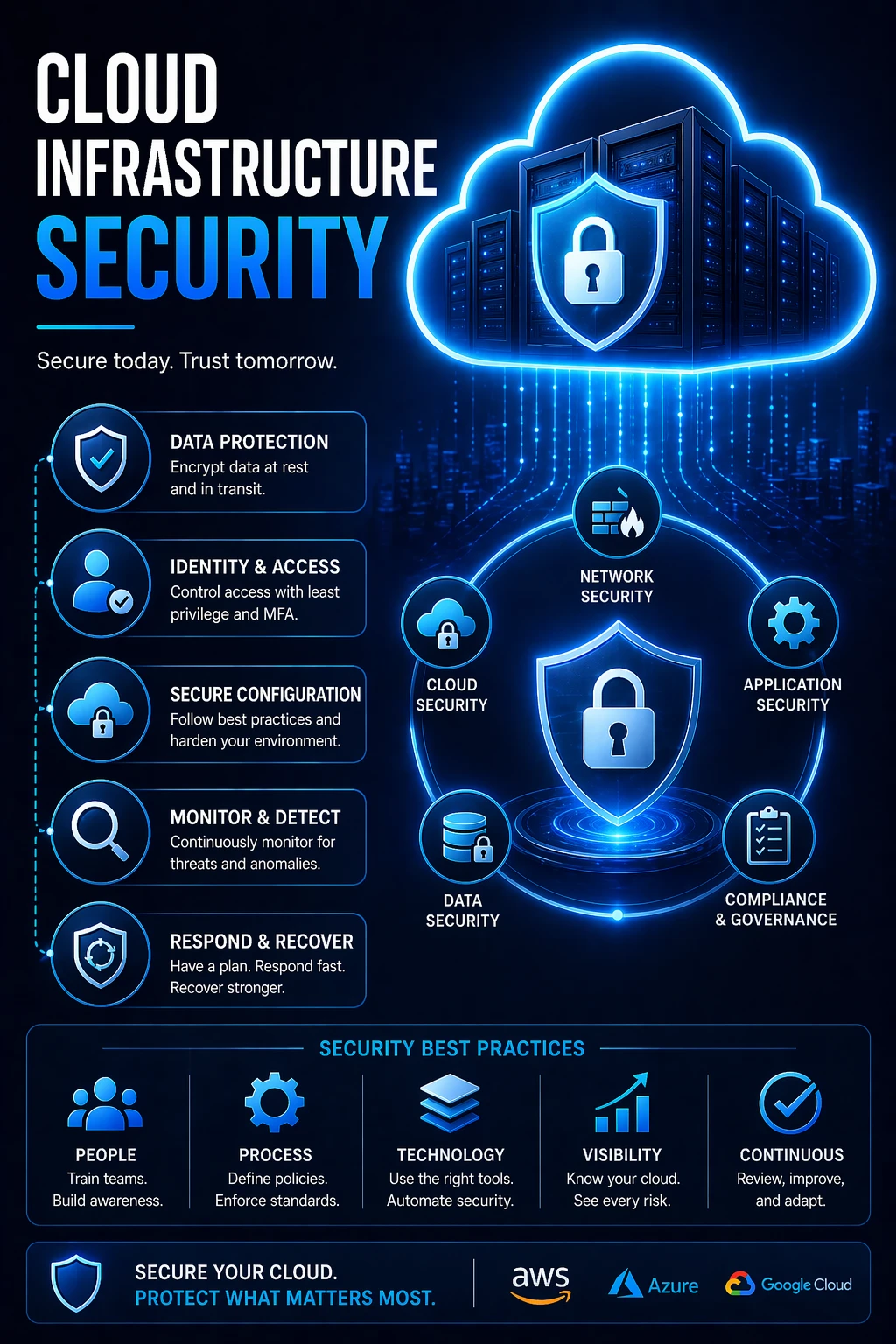
Cloud infrastructure security is how your systems, data, and access are protected within your cloud environment.
It includes:
- controlling who can access systems
- protecting data from exposure
- monitoring for threats
- preventing unauthorized changes
It is not a single tool.
It is a system of controls that must work together.
If you need foundational context, start with what cloud infrastructure is.
Cloud security is not provided by default — it is configured and managed.
The Shared Responsibility Model (Where Most Misunderstand)
Many businesses assume:
- “our cloud provider handles security”
In reality:
- providers secure the platform
- you secure your environment
This includes:
- user access
- data protection
- system configuration
Without understanding this model, businesses create exposure without realizing it.
This gap is often seen in poorly designed cloud infrastructure architecture.
Cloud providers secure the infrastructure — you are responsible for securing how it is used.
What a Real Security Failure Looks Like
A typical scenario:
- access permissions are too broad
- sensitive data is stored without proper controls
- monitoring is limited
- unauthorized access occurs
At that point:
- data may be exposed
- systems may be compromised
- response is delayed
These failures often stem from gaps in cloud infrastructure strategy.
Most cloud security incidents are caused by misconfiguration — not sophisticated attacks.
The Core Areas of Cloud Infrastructure Security
Cloud security is built across multiple layers.
Identity and Access Management (IAM)
This controls who can access systems.
Includes:
- user accounts
- permissions
- roles
What breaks here:
- excessive permissions
- shared accounts
- lack of access control
If access is not controlled, your entire environment is exposed.
Data Protection
This ensures your data is secure.
Includes:
- encryption
- secure storage
- data access controls
This aligns with principles seen in backup and recovery strategies.
What breaks here:
- unencrypted data
- improper access
- exposed storage
Network Security
This controls how systems connect.
Includes:
- firewalls
- network segmentation
- access rules
Networking is a major risk area, especially when not aligned with cloud infrastructure components.
What breaks here:
- open ports
- poor segmentation
- unrestricted access
Monitoring and Visibility
You must detect issues quickly.
Includes:
- logging
- alerts
- activity monitoring
Without visibility:
- threats go unnoticed
- response is delayed
Configuration Management
Security depends on how systems are configured.
Includes:
- system settings
- security policies
- environment configuration
This ties directly to designing cloud infrastructure.
What breaks here:
- default configurations
- inconsistent settings
- lack of oversight
Cloud security is not a single control — it is a combination of identity, data, network, and monitoring protections.
The Hidden Risk: Assuming Security Exists
Many businesses assume:
- “we are in the cloud, so we are secure”
In reality:
- misconfigurations create exposure
- lack of monitoring hides threats
- weak access control increases risk
This is a common issue in environments that lack proper cloud infrastructure planning.
Assumed security is one of the most common causes of cloud exposure.
What Breaks Cloud Infrastructure Security
Most failures come from predictable issues:
- overly broad access permissions
- lack of encryption
- poor network controls
- insufficient monitoring
These issues often go unnoticed until:
- data is exposed
- systems are compromised
- incidents occur
What a Secure Cloud Environment Looks Like
A strong security posture includes:
- strict access control
- encrypted data
- segmented networks
- continuous monitoring
It must also align with overall cloud infrastructure strategy.
Security must be built into infrastructure — not added later.
How Security Impacts Business Risk
Security failures impact more than IT.
They affect:
- customer trust
- operational continuity
- financial stability
Poor security leads to:
- data breaches
- downtime
- reputational damage
Cloud security failures are business failures — not just technical issues.
How to Know If Your Cloud Security Is Weak
You may have a gap if:
- access permissions are unclear
- systems are not monitored
- data is not encrypted
- security processes are undocumented
If you cannot clearly explain your security controls, your environment is at risk.
How This Connects to Other Cloud Topics
Security is part of a complete infrastructure system.
It connects to:
- what is cloud infrastructure
- cloud infrastructure explained
- cloud infrastructure architecture
- cloud infrastructure planning guide
- cloud infrastructure strategy
What This Means for Your Business
Your security determines:
- how protected your data is
- how resilient your systems are
- how much risk your business carries
It is not optional.
It is essential.
Cloud security is not about tools — it is about control, visibility, and design.
Final Thoughts
Cloud infrastructure security is not automatic.
It must be:
- planned
- designed
- maintained
Without it:
- risk increases
- exposure grows
- incidents become more likely
Need help with this topic?
Make sure your backups actually work when it matters.
Most businesses discover backup failures during an outage. We help you validate recovery, reduce downtime risk, and build a system that works under pressure.
- Backup validation and testing
- Recovery time optimization
- Clear recovery documentation