Why Risk Assessment Matters
Every business faces risk.
The difference is not the presence of risk —
it is how well those risks are understood and prepared for.
Without risk assessment:
- planning is based on assumptions
- critical threats are overlooked
- response is reactive
With risk assessment:
- risks are identified
- priorities are clear
- preparation is intentional
You cannot prepare for disruption if you do not understand what could cause it.
What Is Risk Assessment in Business Continuity?
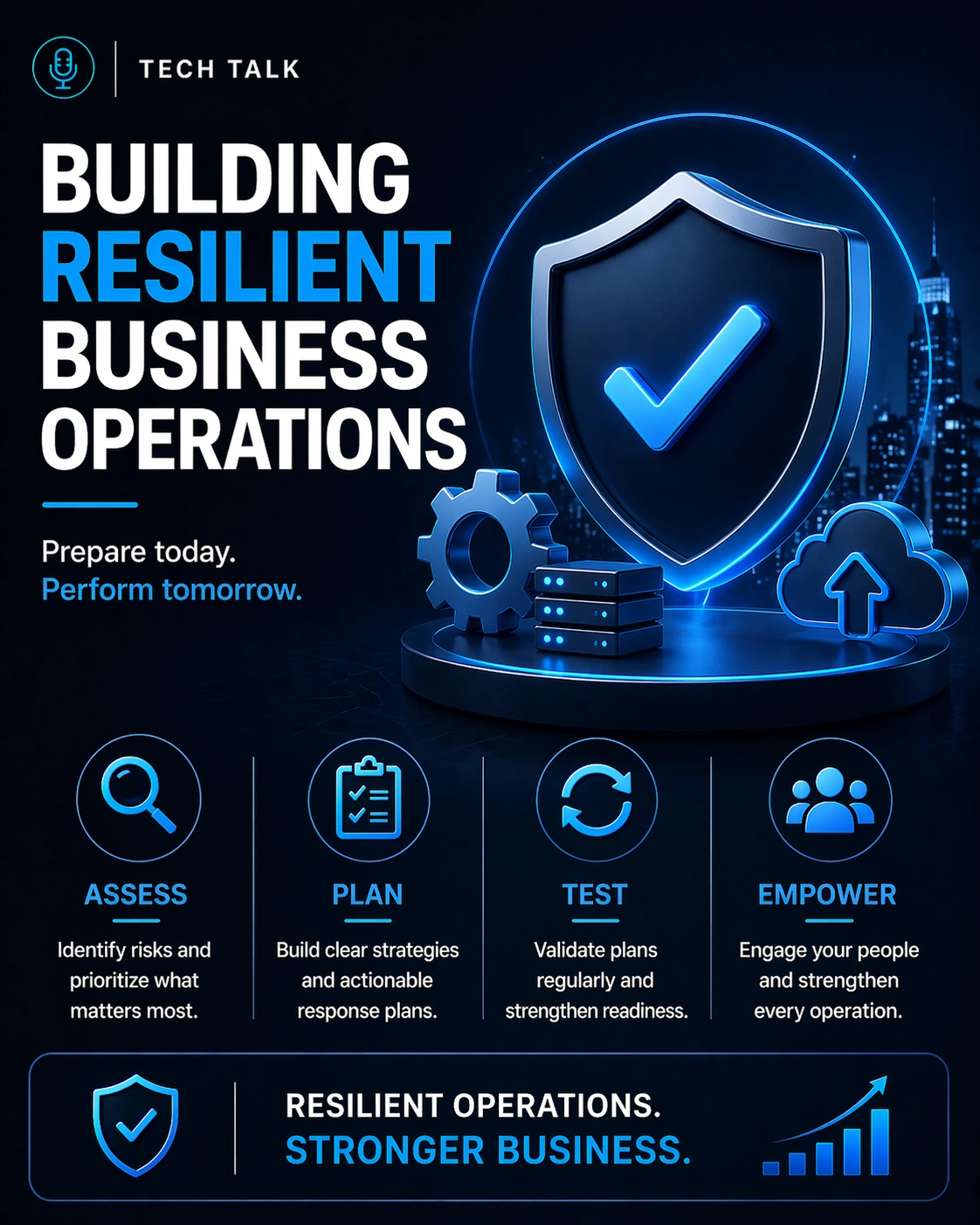
Risk assessment is the process of:
👉 identifying threats, evaluating their likelihood, and understanding their potential impact on business operations
It answers key questions:
- what could go wrong?
- how likely is it to happen?
- what would be affected?
- how severe would the impact be?
Risk assessment ensures:
- continuity planning is realistic
- resources are focused correctly
- vulnerabilities are addressed
What Risk Assessment Is Not
Risk assessment is often misunderstood.
It is not:
- a one-time checklist
- limited to cybersecurity threats
- focused only on IT systems
Risk assessment must consider operational, technical, and external threats — not just IT failures.
Common Types of Business Risks
A comprehensive assessment includes multiple risk categories.
Technology Risks
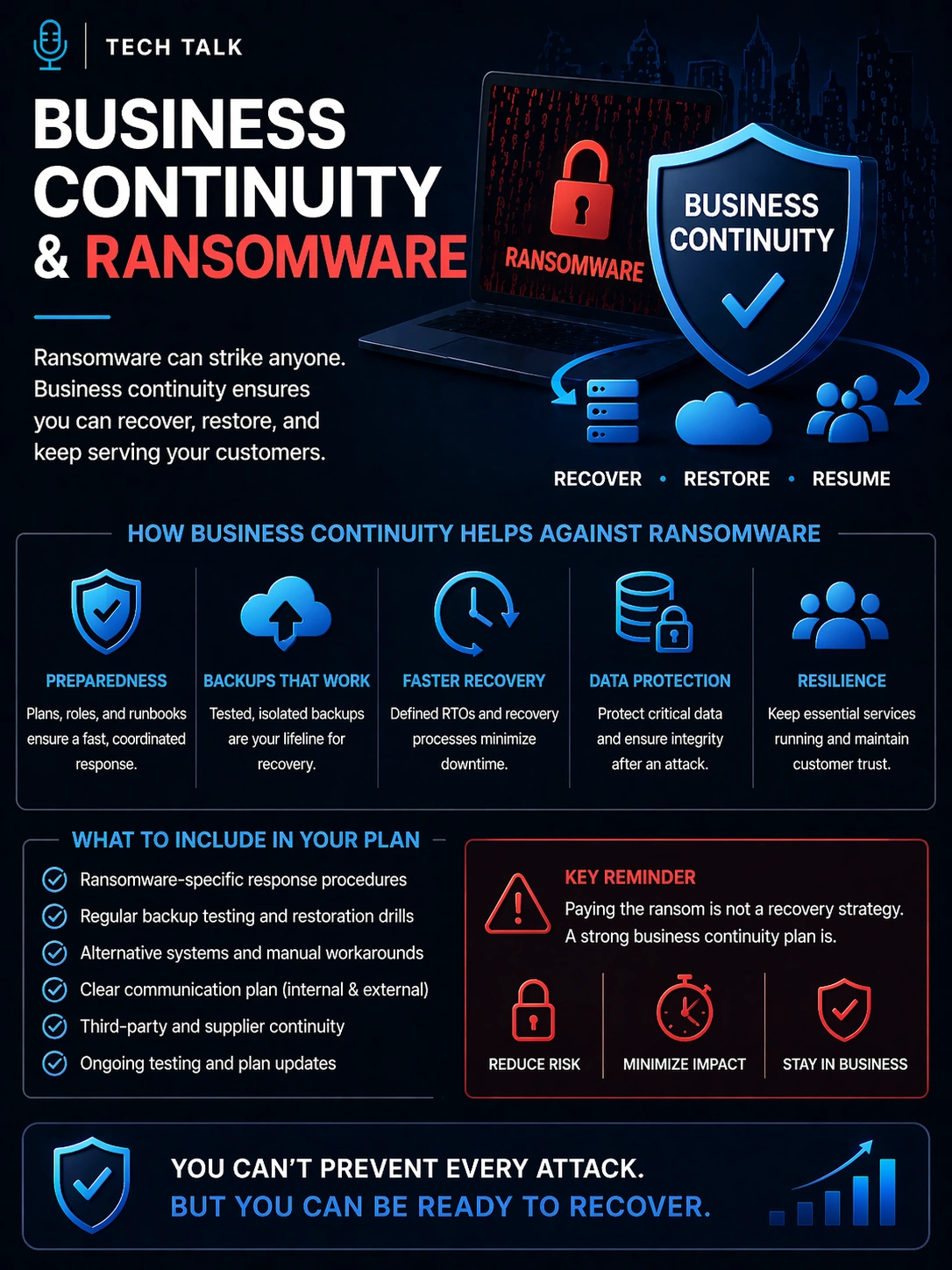
- ransomware and cyberattacks
- system outages
- cloud failures
Operational Risks
- process failures
- human error
- staffing disruptions
Infrastructure Risks
- power outages
- network failures
- hardware issues
External Risks
- supply chain disruptions
- vendor failures
- natural events
Real disruption often involves multiple risks occurring at the same time.
The Core Components of Risk Assessment
A structured risk assessment includes several key elements.
1. Threat Identification
- identify potential disruption scenarios
- include both common and high-impact risks
2. Vulnerability Analysis
- identify weaknesses in systems and processes
- determine where failures are most likely
3. Likelihood Assessment
- estimate how likely each risk is to occur
- prioritize realistic scenarios
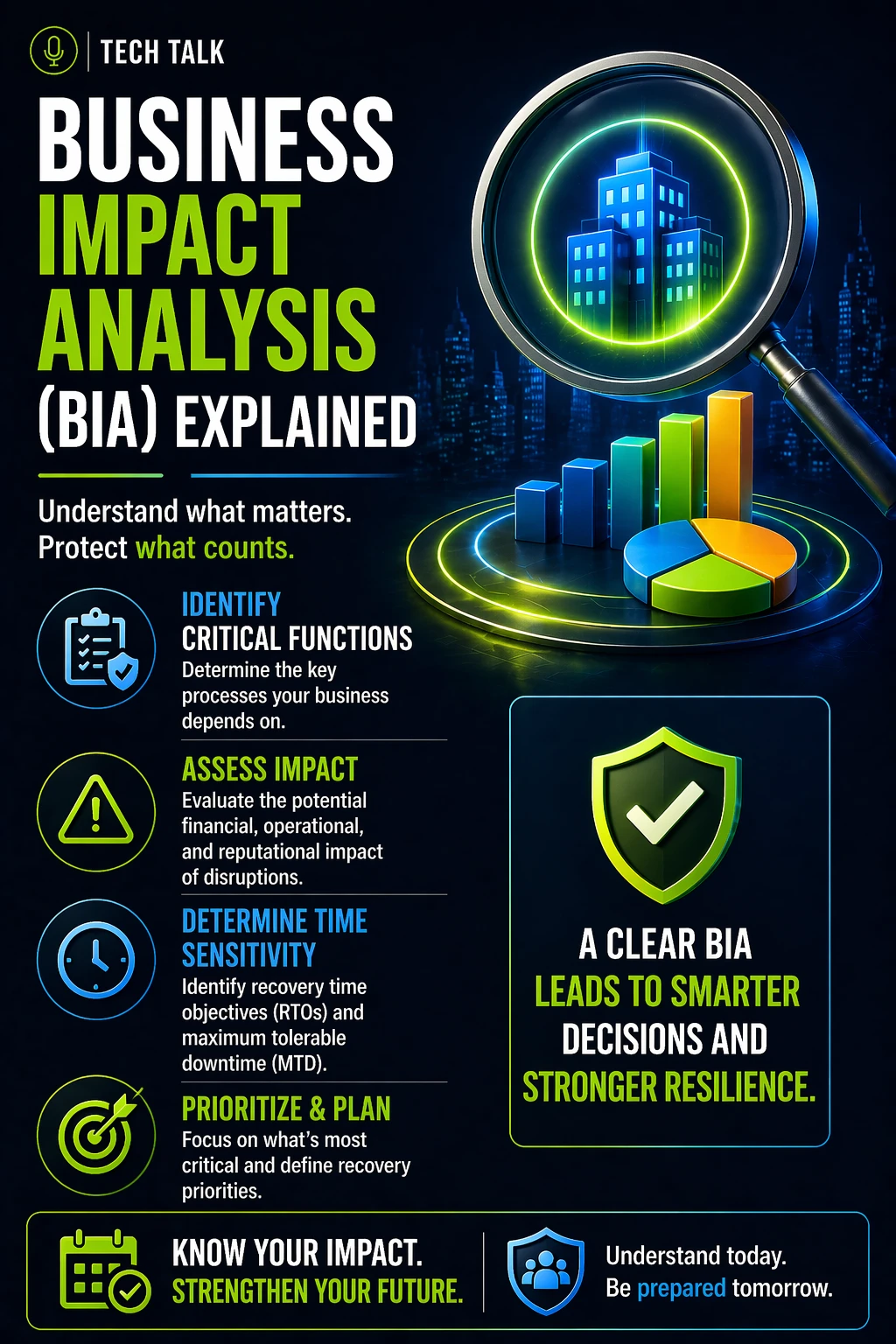
4. Impact Analysis
- evaluate business impact if the risk occurs
- consider operational, financial, and reputational effects
5. Risk Prioritization
- rank risks based on likelihood and impact
- focus on high-probability and high-impact scenarios
6. Mitigation Planning
- define how risks will be reduced or managed
- align with continuity and recovery strategies
How Risk Assessment Supports Business Continuity
Risk assessment is the foundation of:
- business continuity planning
- disaster recovery strategy
- backup and recovery design
It ensures:
- plans address real threats
- strategies are aligned with risk exposure
- resources are used effectively
See:
What Happens Without Risk Assessment
Without risk assessment:
- plans are incomplete
- critical threats are ignored
- response is unprepared
A common scenario:
- disruption occurs from an unplanned risk
- no contingency exists
- response is delayed
At that point:
- impact increases
- recovery becomes more difficult
Unidentified risks become the most damaging disruptions.
Common Mistakes in Risk Assessment
Common issues include:
- focusing only on IT risks
- ignoring operational dependencies
- underestimating likelihood
- failing to update assessments
- treating risk assessment as a one-time task
An outdated or incomplete risk assessment leads to ineffective continuity planning.
What a Strong Risk Assessment Looks Like
An effective risk assessment is:
- comprehensive
- realistic
- regularly updated
- aligned with business operations
- integrated into planning
It should:
- identify real threats
- prioritize effectively
- guide decision-making
How to Know If You Lack Risk Visibility
You may have a gap if:
- risks are not documented
- priorities are unclear
- disruptions feel unexpected
- planning is reactive
If you cannot clearly define your risks, your continuity strategy is incomplete.
What This Means for Your Business
Risk assessment determines:
- what your business is vulnerable to
- how prepared you are for disruption
- how effective your continuity strategy is
The strength of your continuity plan depends on how well you understand your risks.
Final Thoughts
Disruption is not random.
It follows patterns.
Risk assessment helps you understand those patterns — before they impact your business.
Need help with this topic?
Make sure your backups actually work when it matters.
Most businesses discover backup failures during an outage. We help you validate recovery, reduce downtime risk, and build a system that works under pressure.
- Backup validation and testing
- Recovery time optimization
- Clear recovery documentation