Why Business Continuity Planning Matters
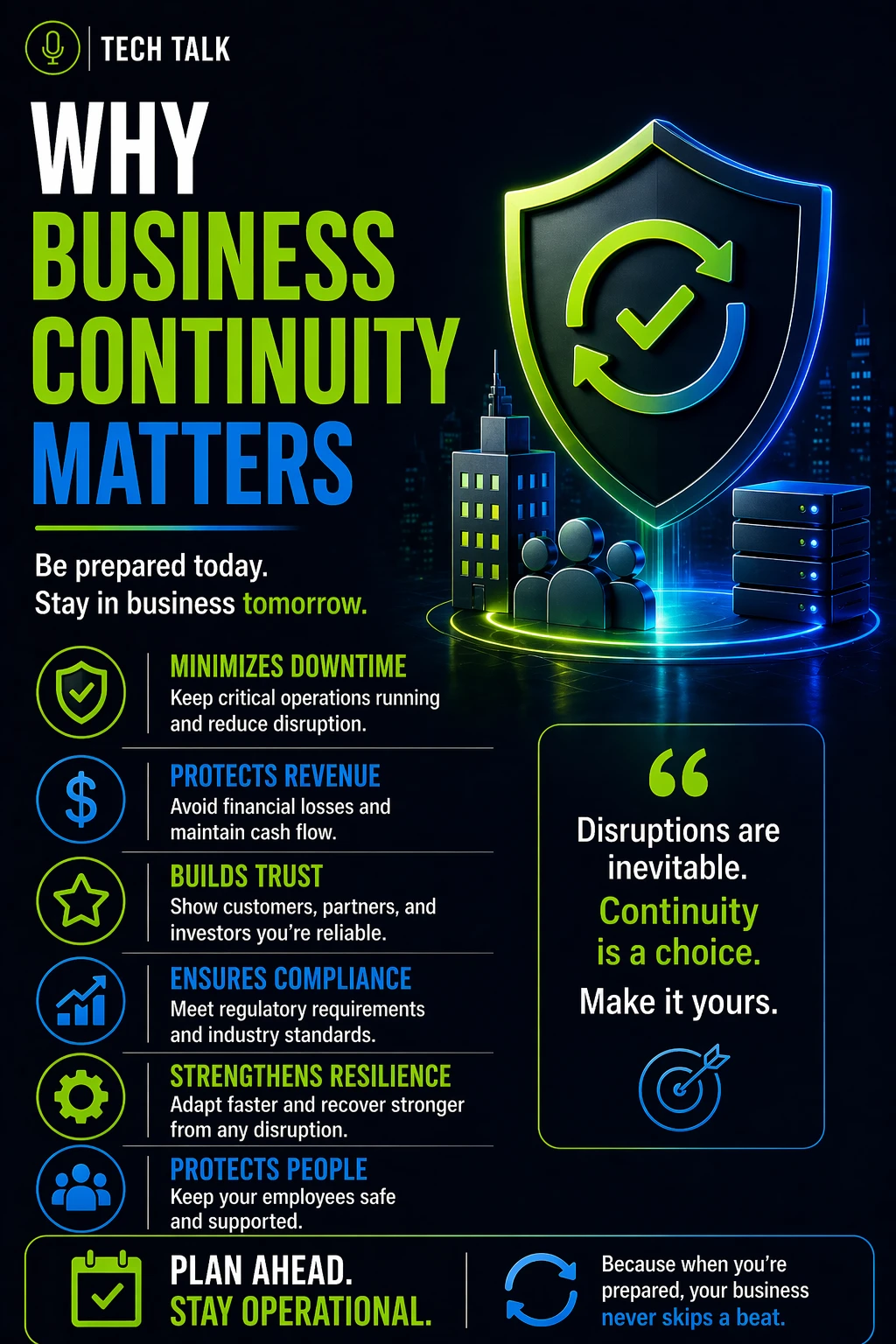
Disruption is inevitable.
What matters is how prepared your business is when it happens.
Without a plan:
- decisions are made under pressure
- teams lack direction
- operations stop unexpectedly
With a plan:
- response is structured
- roles are clear
- operations continue at some level
In a disruption, the absence of a plan becomes the plan.
What Business Continuity Planning Actually Is
Business continuity planning is the process of:
👉 preparing your business to continue operating during disruption
It focuses on:
- identifying critical operations
- understanding risks
- defining how work continues
- preparing teams for execution
It answers:
👉 What happens when normal operations are no longer possible?
What Happens Without a Plan
A typical scenario without planning:
- a system outage occurs
- employees lose access to tools
- leadership must make decisions in real time
- communication becomes inconsistent
- processes break down
At that point:
- response is reactive
- confusion increases
- downtime extends
Without a continuity plan, disruption turns into chaos.
The Core Components of a Continuity Plan
A strong business continuity plan includes multiple layers.
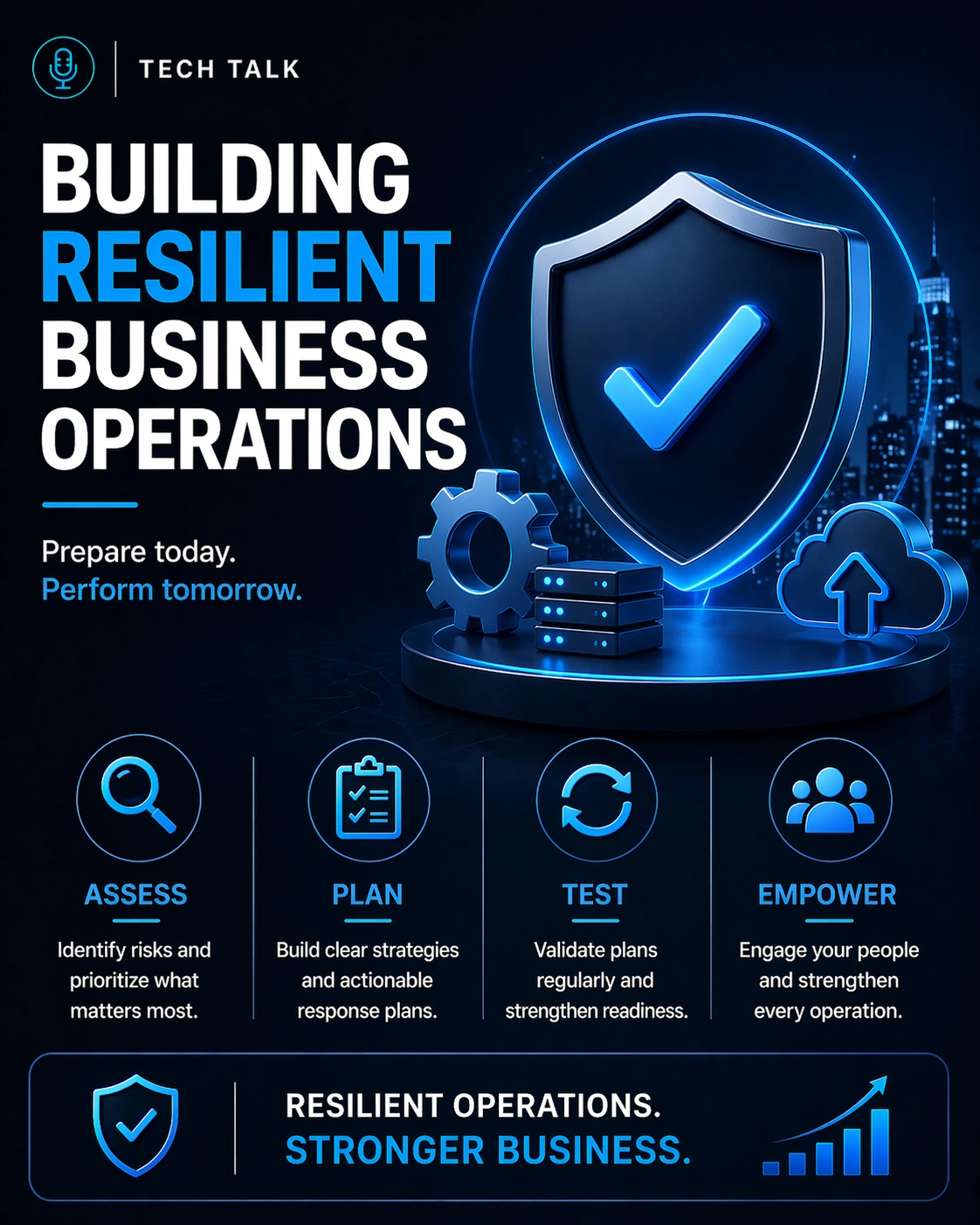
1. Business Impact Analysis (BIA)
- identifies critical functions
- determines operational priorities
- evaluates impact of downtime
2. Risk Assessment
- identifies potential threats
- evaluates likelihood and severity
- prepares for realistic scenarios
See
risk assessment
3. Continuity Strategies
- defines how operations continue
- outlines fallback processes
- includes manual or alternative workflows
4. Roles and Responsibilities
- defines who does what during disruption
- removes uncertainty in decision-making
- enables faster response
5. Communication Planning
- internal communication procedures
- customer communication strategy
- escalation paths
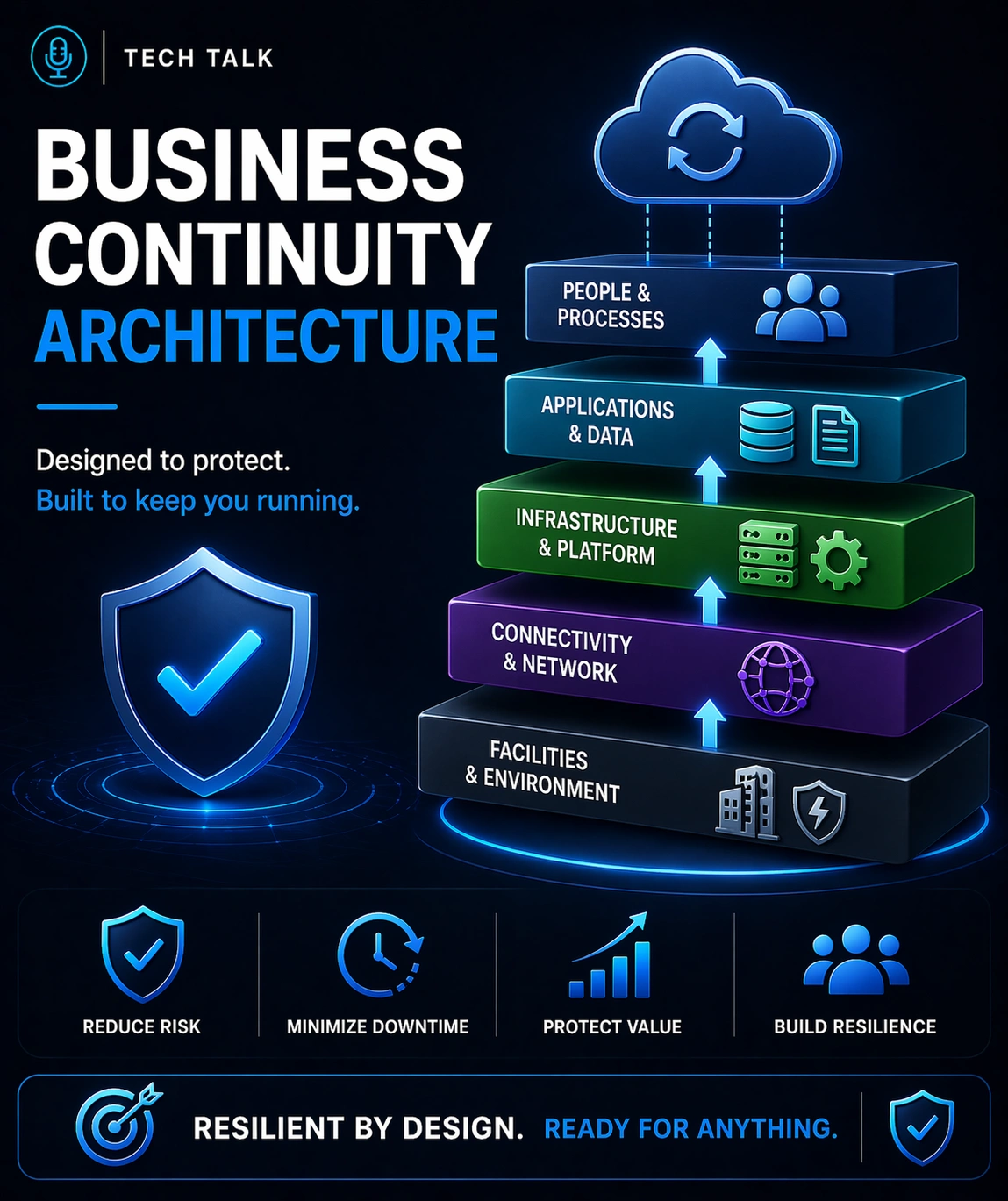
6. Technology and Infrastructure
- backup and recovery systems
- redundant systems and environments
- cloud and hybrid support
See
backup and recovery resilience
7. Testing and Validation
- validates plan effectiveness
- identifies weaknesses
- ensures readiness
See
business continuity testing
The Difference Between Planning and Reality
Many businesses create plans.
Few validate them.
Common issues include:
- outdated documentation
- unclear procedures
- unrealistic assumptions
- lack of testing
A plan that has not been tested is an assumption — not a strategy.
What a Good Plan Looks Like
A strong continuity plan is:
- clear and actionable
- focused on critical operations
- aligned with real-world risks
- understood by the team
- regularly tested and updated
It should not be:
- overly complex
- purely theoretical
- dependent on perfect conditions
Effective continuity plans are designed for execution — not documentation.
How Planning Connects to Recovery
Business continuity planning works alongside:
- disaster recovery
- backup and recovery systems
Continuity ensures:
- operations continue
Recovery ensures:
- systems return
See:
What Breaks Continuity Plans
Continuity planning fails when:
- plans are not documented
- roles are unclear
- dependencies are misunderstood
- testing is not performed
- plans are not maintained
These issues lead to:
- delayed response
- operational disruption
- increased impact
How to Know If You Need a Plan
You need business continuity planning if:
- your business depends on technology
- downtime impacts revenue
- customer service must remain available
- operations cannot simply pause
If your business cannot afford downtime, it cannot afford to operate without a plan.
What This Means for Your Business
Business continuity planning determines:
- how prepared your organization is
- how quickly you respond
- how well operations continue
- how much impact disruption causes
Preparation does not eliminate disruption — it determines how your business handles it.
Final Thoughts
Disruption will happen.
Planning determines what happens next.
Without a plan:
- response is reactive
With a plan:
- response is controlled
Need help with this topic?
Make sure your backups actually work when it matters.
Most businesses discover backup failures during an outage. We help you validate recovery, reduce downtime risk, and build a system that works under pressure.
- Backup validation and testing
- Recovery time optimization
- Clear recovery documentation