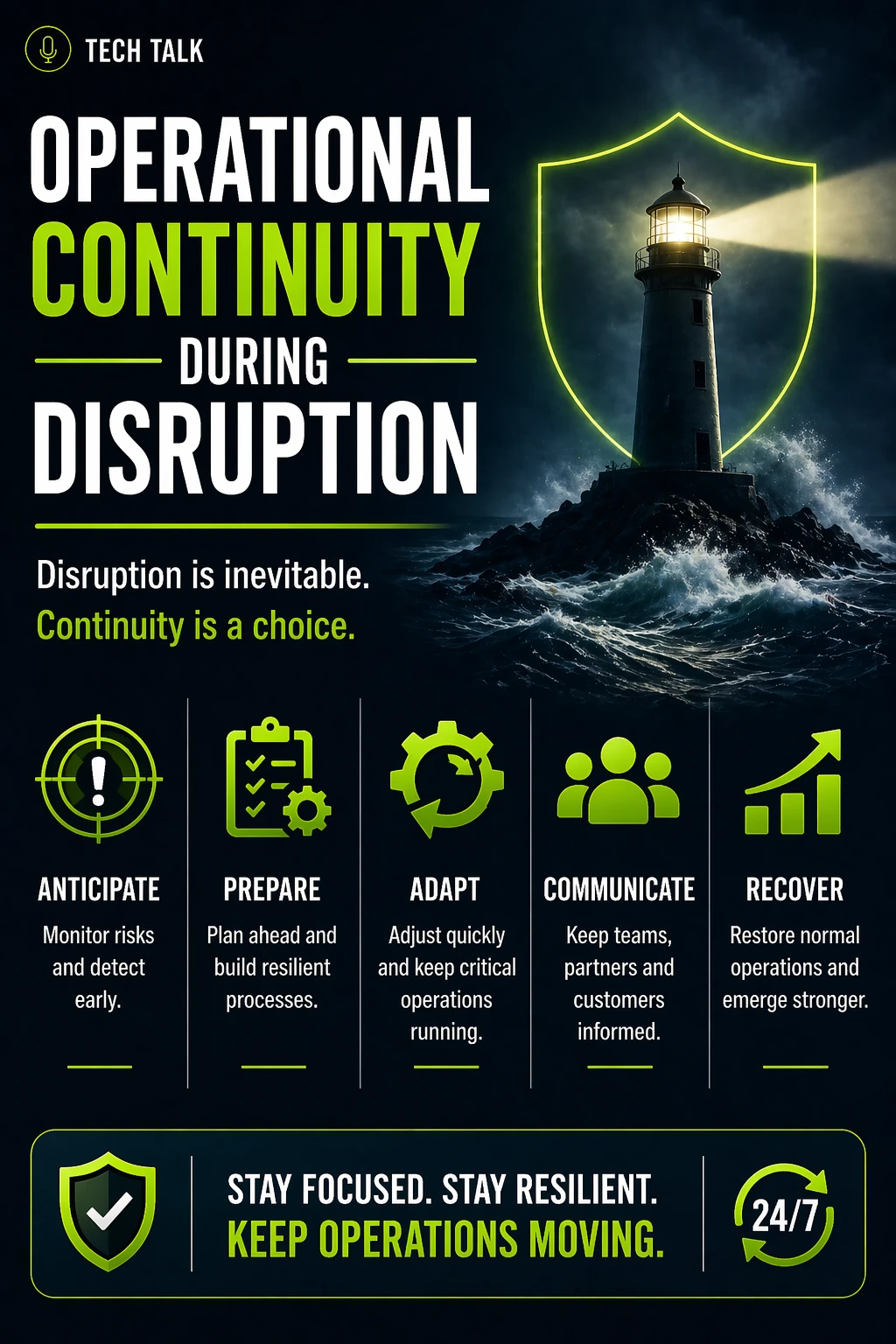
Why Operational Continuity Matters
Disruption does not just affect systems.
It affects:
- employees
- workflows
- customer interactions
When systems fail:
- work stops
- communication breaks down
- productivity drops
When operations stop, the business is not disrupted — it is down.
Operational continuity ensures:
👉 the business keeps functioning, even under disruption
What Is Operational Continuity?
Operational continuity is the ability to:
👉 maintain essential business functions when normal systems or processes are unavailable
It focuses on:
- keeping employees productive
- maintaining service delivery
- adapting workflows in real time
It answers:
👉 How does work continue when the usual way of working is not possible?
What Happens Without Operational Continuity
A typical scenario:
- systems go offline
- employees lose access
- workflows stop
Without continuity:
- teams wait for recovery
- processes are unclear
- decisions are delayed
At that point:
- downtime increases
- impact escalates
See
what happens without continuity
The First Moments of Disruption
When disruption occurs:
- access to systems is lost
- employees cannot perform tasks
- communication becomes inconsistent
Organizations without continuity:
- react slowly
- lack direction
- experience immediate productivity loss
Organizations with continuity:
- activate fallback processes
- maintain partial operations
- reduce impact
How Operational Continuity Works
Operational continuity is not about restoring systems.
It is about:
👉 keeping work moving while systems are unavailable
This includes:
- alternative workflows
- manual processes
- temporary systems
- remote work strategies
Key Components of Operational Continuity
A strong continuity approach includes several elements.
1. Fallback Processes
- manual or alternative workflows
- defined steps for operating without systems
2. Workforce Readiness
- employees trained on contingency procedures
- clear understanding of roles
3. Communication Framework
- clear internal communication
- defined escalation paths
- customer communication strategies
4. Technology Alternatives
- backup systems
- cloud-based access
- temporary tools
5. Operational Prioritization
- focus on critical functions
- defer non-essential work
Why Continuity Is Not Just About Technology
Many organizations assume:
- restoring systems will solve the problem
But during downtime:
- systems may remain unavailable
- recovery takes time
- employees still need to work
Technology supports continuity — it does not define it.
Real-World Examples of Operational Continuity
Examples include:
- processing orders manually when systems are down
- using alternative communication tools
- shifting to temporary workflows
- prioritizing essential services
These actions:
- keep operations moving
- reduce business impact
Common Failures in Operational Continuity
Common issues include:
- no defined fallback processes
- employees not trained
- reliance on a single system
- unclear priorities
- poor communication
These lead to:
- operational shutdown
- increased downtime
- greater impact
How to Build Operational Continuity
To strengthen continuity:
- document fallback processes
- train employees regularly
- define operational priorities
- establish communication plans
- align with recovery strategies
See:
How to Know If You Lack Operational Continuity
Warning signs include:
- employees cannot work without systems
- processes stop during outages
- fallback procedures are undefined
- communication breaks down
If your team cannot operate during disruption, operational continuity is missing.
What This Means for Your Business
Operational continuity determines:
- how much work continues during disruption
- how customers experience outages
- how much impact is sustained
Continuity does not eliminate disruption — it prevents disruption from stopping your business.
Final Thoughts
Disruption will interrupt systems.
It does not have to stop operations.
Operational continuity ensures:
- work continues
- teams adapt
- impact is reduced
Need help with this topic?
Make sure your backups actually work when it matters.
Most businesses discover backup failures during an outage. We help you validate recovery, reduce downtime risk, and build a system that works under pressure.
- Backup validation and testing
- Recovery time optimization
- Clear recovery documentation