Why Operational Risk Matters
Not all disruption starts with major events.
Many incidents begin with:
- small process failures
- human error
- system dependencies
These are operational risks.
Left unmanaged:
👉 they escalate into full business disruption
Most disruptions do not start as disasters — they start as operational failures.
What Is Operational Risk?
Operational risk is the risk of:
👉 loss or disruption caused by failures in processes, people, systems, or external events
It exists in:
- day-to-day operations
- routine workflows
- normal business activities
Operational risk is not rare.
It is constant.
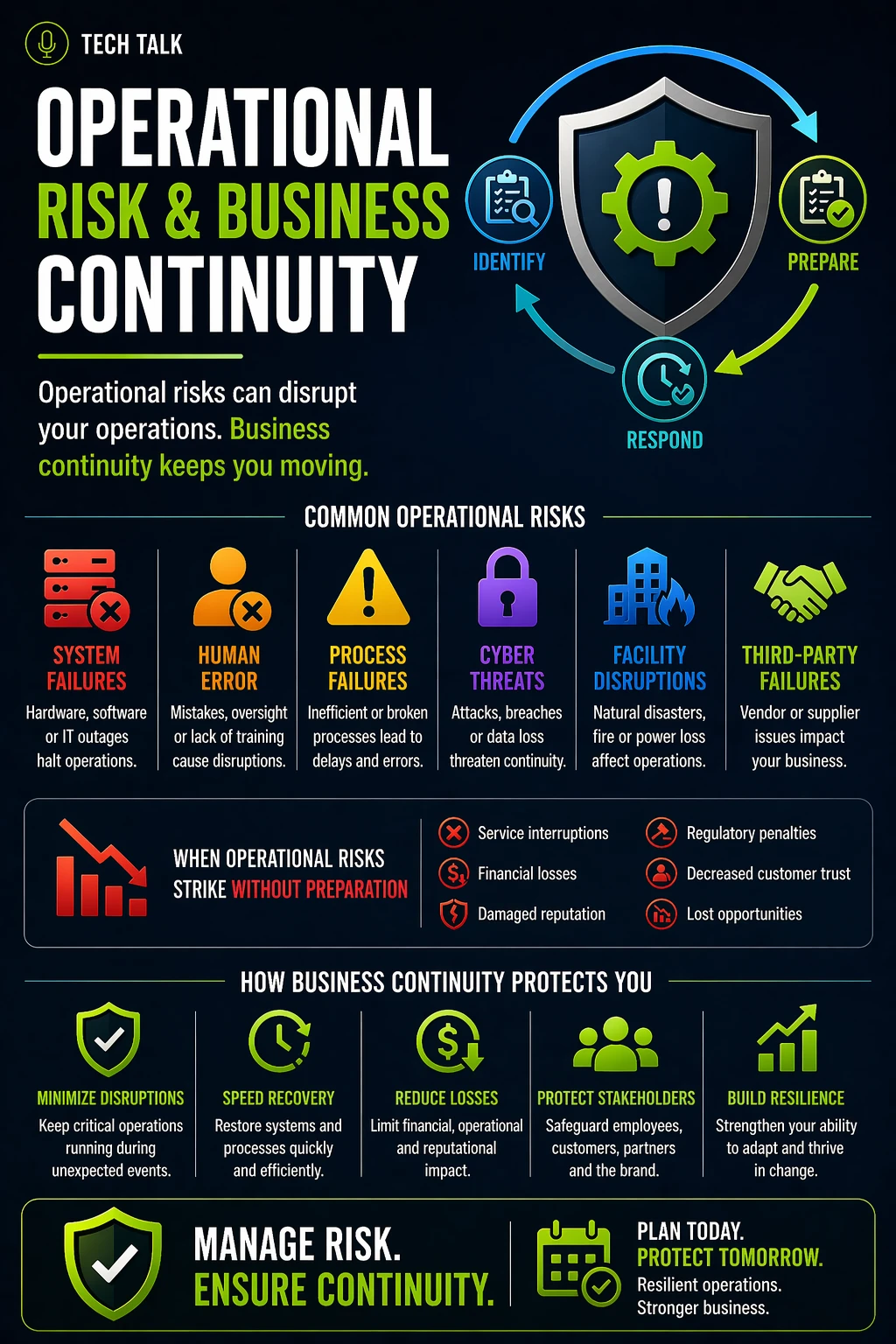
Where Operational Risk Comes From
Operational risk exists across multiple areas.
Process Risk
- unclear or undocumented procedures
- manual workflows with no backup
- inconsistent execution
People Risk
- human error
- lack of training
- reliance on key individuals
System Risk
- system outages
- software failures
- integration issues
External Risk
- vendor disruptions
- supply chain issues
- third-party failures
Operational risk is rarely isolated — it often involves multiple factors interacting at once.
How Operational Risk Impacts Business Continuity
Operational risk directly affects:
- availability of systems
- reliability of processes
- ability to deliver services
When operational risk is not managed:
- continuity strategies fail
- disruption spreads
- recovery becomes more complex
See:
What Happens When Operational Risk Is Ignored
A typical scenario:
- a minor process failure occurs
- it impacts a dependent system
- employees cannot complete tasks
- operations slow or stop
At that point:
- disruption escalates
- response becomes reactive
- impact increases
The Link Between Operational Risk and Downtime
Operational risk often leads directly to downtime.
Examples:
- a failed process delays critical operations
- a system outage stops workflows
- a vendor issue blocks access
See
downtime cost
Operational risk is one of the most common causes of downtime.
Why Operational Risk Is Often Overlooked
Common reasons include:
- focus on major threats instead of everyday risks
- assumption that processes will work
- lack of visibility into dependencies
- no formal risk assessment
This leads to:
- hidden vulnerabilities
- unexpected disruption
How to Identify Operational Risk
To identify risk, ask:
- what could fail in this process?
- who is responsible for this task?
- what systems are required?
- what happens if any of these fail?
Look for:
- single points of failure
- undocumented processes
- dependencies on individuals or systems
How to Reduce Operational Risk
Reducing operational risk requires a structured approach.
Improve Process Design
- document workflows
- standardize procedures
- create fallback options
Strengthen People Readiness
- train employees
- cross-train critical roles
- define responsibilities
Increase System Reliability
- implement redundancy
- use resilient infrastructure
- monitor performance
Manage External Dependencies
- diversify vendors
- define contingency plans
- evaluate third-party risk
Integrate Continuity Planning
- align risk with continuity strategies
- ensure fallback processes exist
- test under realistic conditions
Common Mistakes to Avoid
Avoid these pitfalls:
- focusing only on IT risk
- ignoring process and people dependencies
- failing to document workflows
- not testing operational scenarios
- assuming processes will work under stress
These lead to:
- increased disruption risk
- ineffective continuity plans
How to Know If You Have Operational Risk Gaps
Warning signs include:
- frequent process failures
- reliance on key individuals
- lack of documented procedures
- disruption spreads quickly
If small issues regularly disrupt operations, operational risk is not being managed effectively.
What This Means for Your Business
Operational risk determines:
- how stable your operations are
- how often disruption occurs
- how well your business can continue
The strength of your continuity strategy depends on how well you manage operational risk.
Final Thoughts
Operational risk is always present.
It cannot be eliminated.
But it can be managed.
Without management:
- small failures become major disruptions
With proper strategy:
- risk is reduced
- impact is minimized
Need help with this topic?
Make sure your backups actually work when it matters.
Most businesses discover backup failures during an outage. We help you validate recovery, reduce downtime risk, and build a system that works under pressure.
- Backup validation and testing
- Recovery time optimization
- Clear recovery documentation