What Cloud Infrastructure Means for Your Business
Most businesses rely on cloud systems every day.
But few understand the infrastructure behind them.
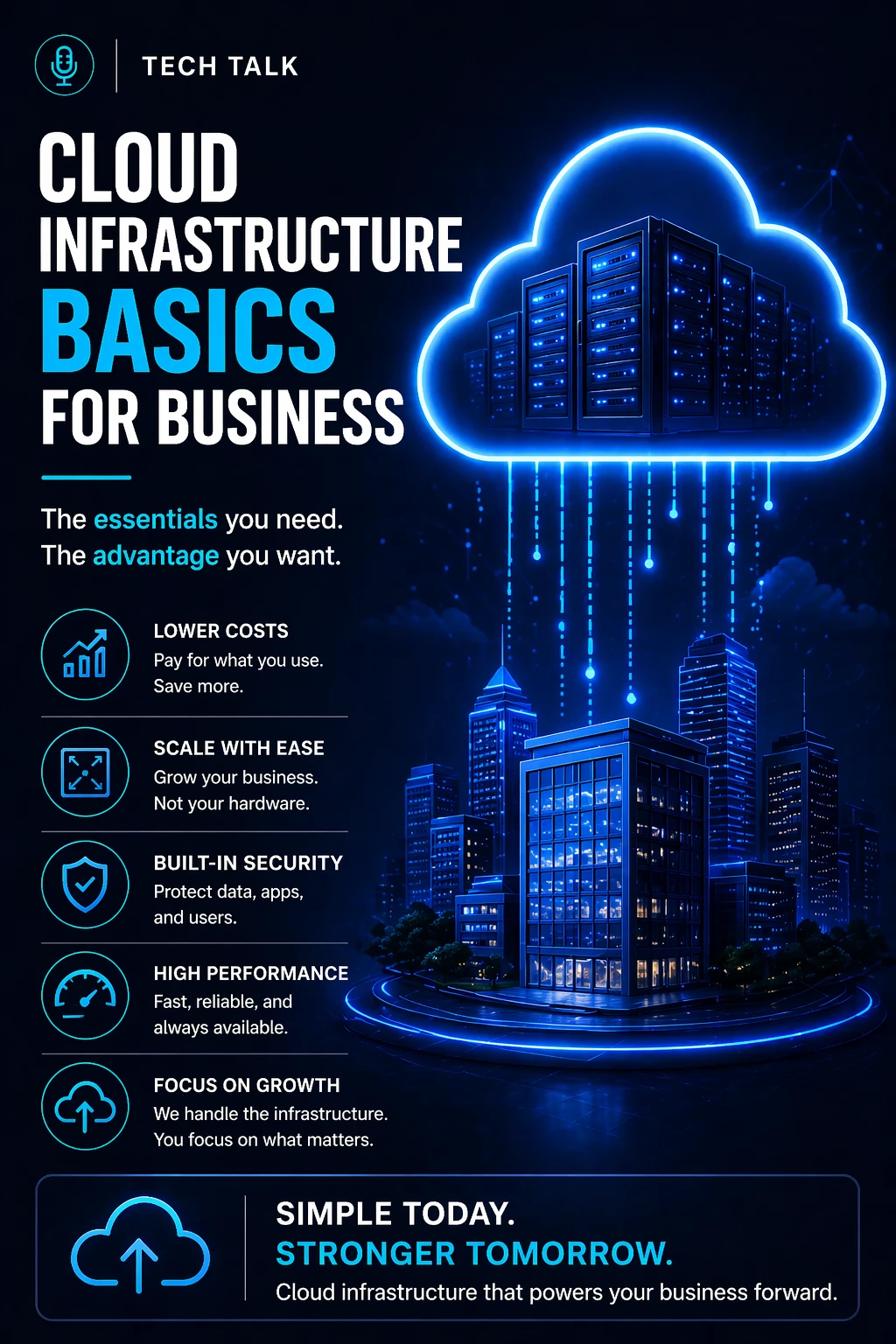
Cloud infrastructure is what allows your business to:
- run applications
- store and access data
- connect users and systems
- scale operations
It is the foundation of your technology environment.
If you are unfamiliar with the concept, start with what cloud infrastructure is.
Your business depends on cloud infrastructure — whether you understand it or not.
Why Cloud Infrastructure Basics Matter
You do not need to be technical to understand the basics.
But without basic knowledge:
- decisions are made without context
- risks go unnoticed
- costs increase unnecessarily
Understanding the fundamentals helps you:
- make better technology decisions
- evaluate risks
- avoid costly mistakes
Most infrastructure problems come from decisions made without understanding the system.
What a Real Business Problem Looks Like
A common scenario:
- a business grows and adds more users
- systems begin to slow down
- applications become unreliable
- troubleshooting takes time
The issue is often not the application.
It is the infrastructure behind it — something explained in cloud infrastructure explained.
At that point:
- productivity drops
- customer experience suffers
- costs increase
Most business technology problems are infrastructure problems — not application problems.
The Core Parts of Cloud Infrastructure
You do not need deep technical knowledge — just a basic understanding of the main components.
These components are explained in more detail in cloud infrastructure components.
Compute
This is where your applications run.
Examples:
- servers
- virtual machines
- cloud applications
Storage
This is where your data is kept.
Examples:
- files
- databases
- backups
Networking
This connects everything together.
Examples:
- internet access
- internal system communication
- remote access
Security
This controls access and protects your data.
Examples:
- user permissions
- encryption
- monitoring
Management
This controls how everything operates.
Examples:
- monitoring systems
- automation
- system updates
Cloud infrastructure is made up of a few key components — but how they work together is what matters most.
How These Components Affect Your Business
Each part of your infrastructure impacts operations.
Performance
If compute or storage is not properly configured:
- systems slow down
- applications lag
Reliability
If redundancy is not built in:
- systems go down
- recovery is difficult
Security
If access is not controlled:
- data can be exposed
- systems can be compromised
This is why cloud infrastructure security is critical.
Cost
If systems are not optimized:
- resources are wasted
- expenses increase
Cloud infrastructure directly affects performance, reliability, security, and cost — not just IT operations.
The Difference Between Cloud and Traditional Infrastructure
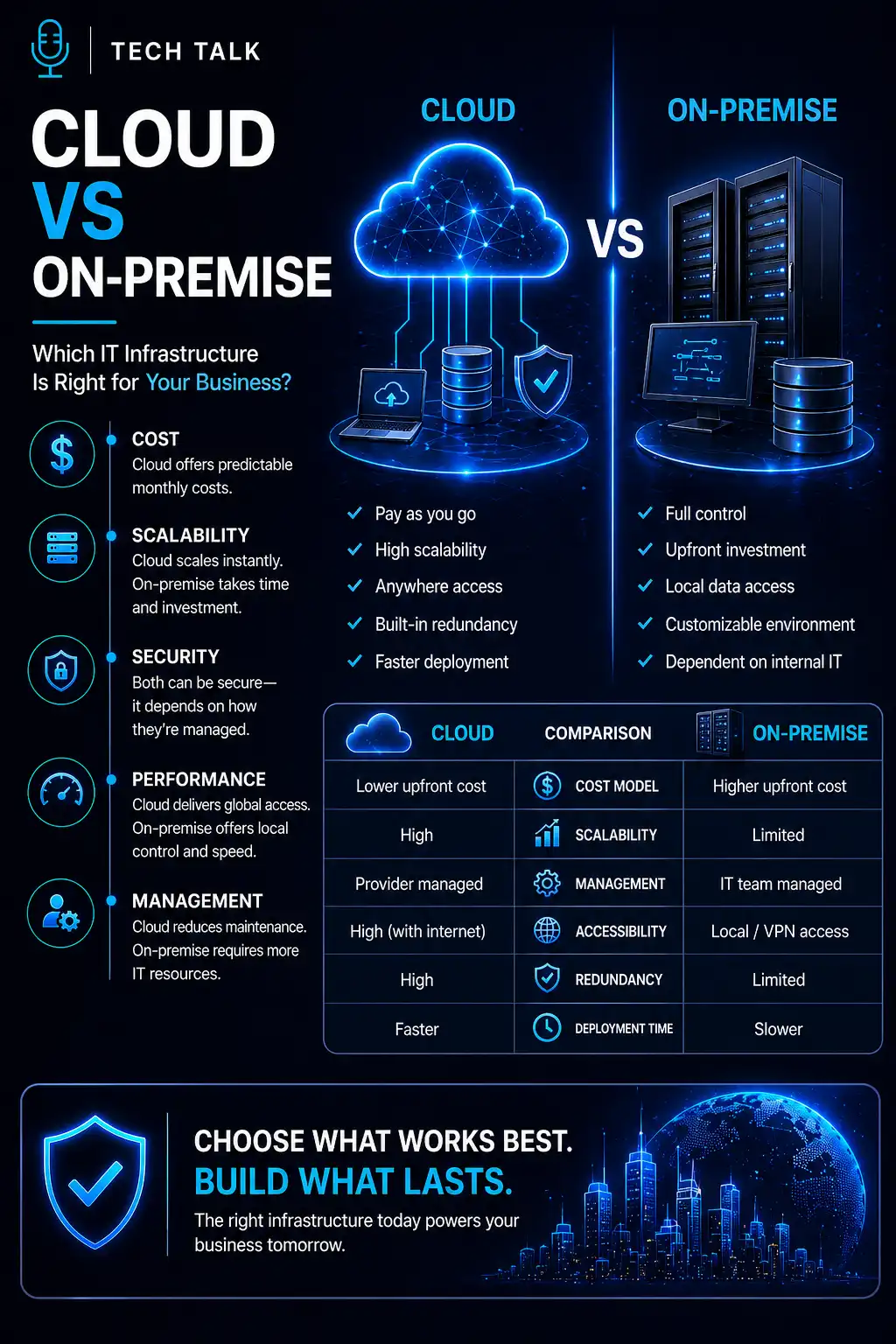
Cloud infrastructure is different from traditional systems.
Traditional infrastructure:
- runs on physical hardware
- requires upfront investment
- has fixed capacity
Cloud infrastructure:
- runs on virtual systems
- scales on demand
- uses flexible pricing
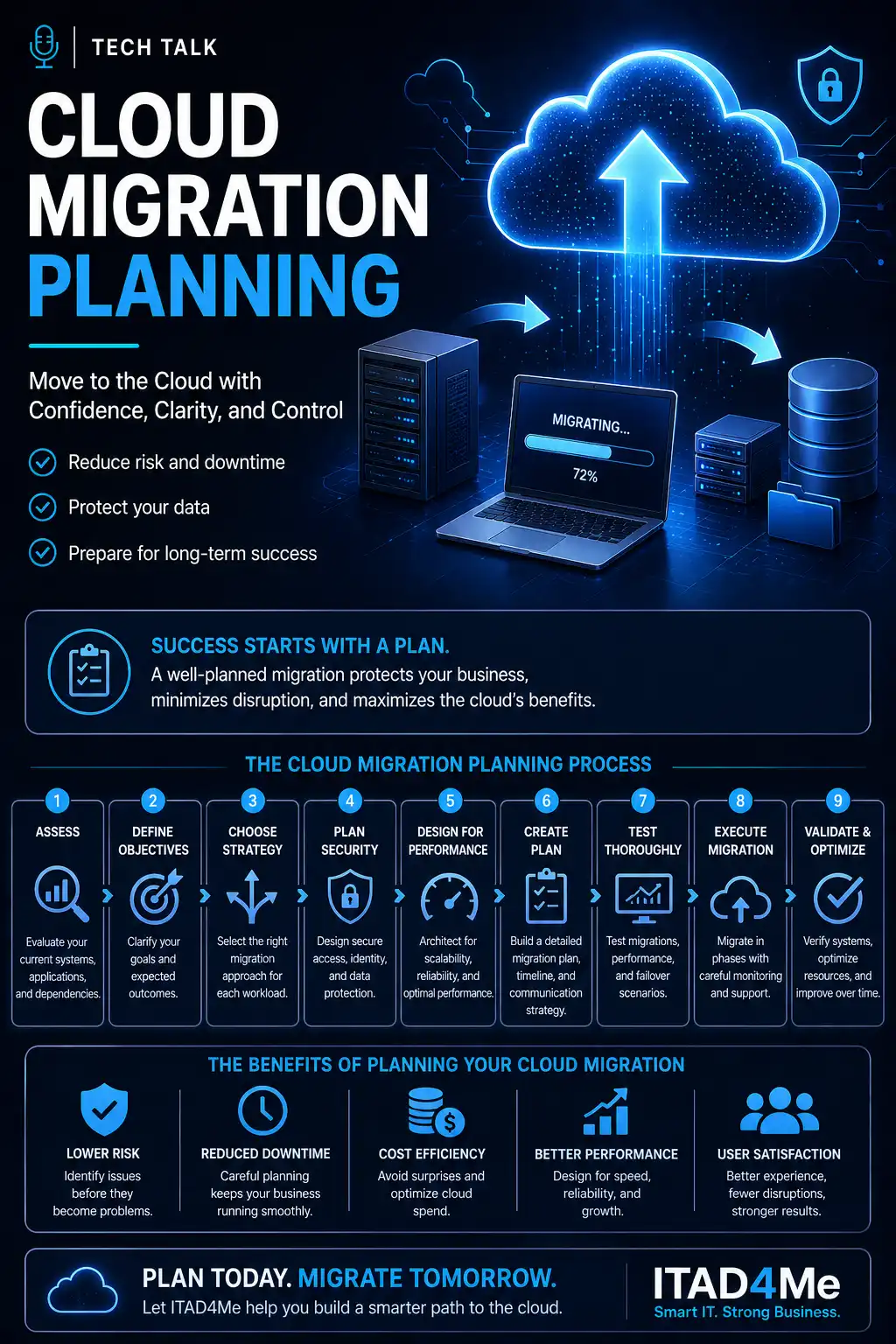
This difference is explained further in cloud vs on-premise infrastructure.
Cloud removes hardware limitations — but introduces design and management complexity.
The Hidden Risk: Not Understanding Your Infrastructure
Many businesses assume:
- “everything is in the cloud”
- “the provider handles everything”
In reality:
- providers supply tools
- businesses are responsible for design and configuration
Without understanding:
- systems may not scale
- security may be weak
- costs may grow
Cloud providers do not manage your architecture — they provide the tools to build it.
What Breaks Cloud Infrastructure for Businesses
Most issues come from simple mistakes:
- poor configuration
- lack of planning
- no monitoring
- unclear responsibilities
These problems are often tied to weak cloud infrastructure architecture.
How to Know If Your Business Has a Problem
You may have a risk if:
- systems slow down as you grow
- outages happen unexpectedly
- you do not know how systems are structured
- costs increase without clear reason
If your infrastructure is unclear, your business is exposed to unnecessary risk.
How to Think About Cloud Infrastructure (Simple Framework)
Instead of thinking technically, think operationally:
- What happens if systems go down?
- How quickly can we recover?
- Can we scale if demand increases?
- Are our systems secure?
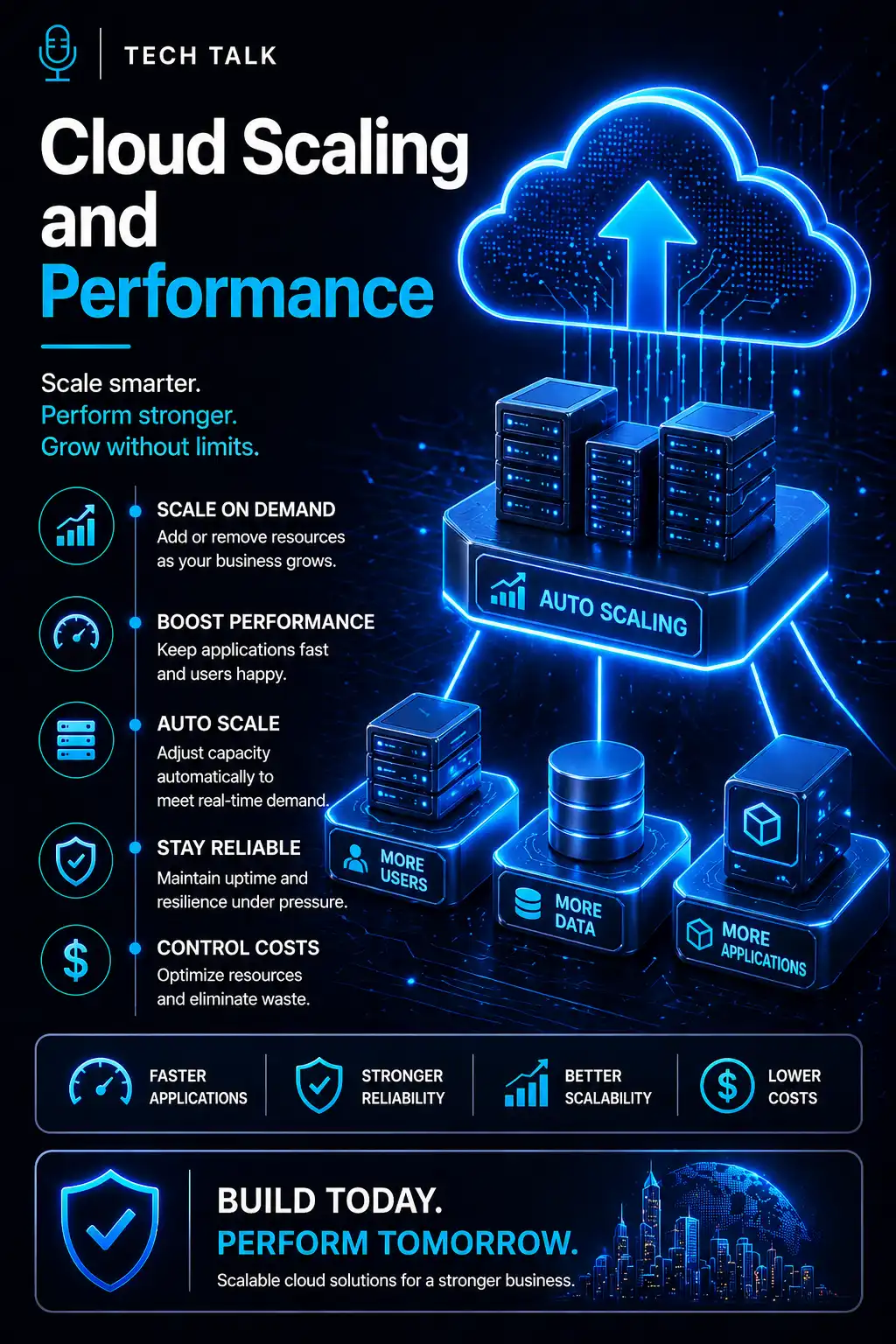
These questions align with broader topics like cloud scaling and performance.
How This Connects to Other Cloud Topics
Cloud basics are the foundation for understanding:
- what is cloud infrastructure
- cloud infrastructure explained
- cloud infrastructure architecture
- cloud infrastructure components
What This Means for Your Business
Cloud infrastructure is not just an IT concept.
It directly impacts:
- how your business operates
- how your team performs
- how your systems scale
Understanding the basics of cloud infrastructure allows you to make better business decisions — not just technical ones.
Final Thoughts
You do not need to be an expert.
But you do need to understand the basics.
Because your business depends on it.
Need help with this topic?
Make sure your backups actually work when it matters.
Most businesses discover backup failures during an outage. We help you validate recovery, reduce downtime risk, and build a system that works under pressure.
- Backup validation and testing
- Recovery time optimization
- Clear recovery documentation