What Designing Cloud Infrastructure Really Means
Designing cloud infrastructure is the process of intentionally building systems that support your business over time.
It involves decisions about:
- how systems are structured
- how resources are allocated
- how components interact
- how failures are handled
It is not just about making systems work.
It is about making them work under real-world conditions.
If you need foundational context, start with what cloud infrastructure is.
Most infrastructure problems are not operational — they are design problems.
Why Design Matters More Than Implementation
Many environments function correctly when first deployed.
Problems appear later:
- as demand increases
- as systems grow
- as dependencies expand
At that point:
- performance issues emerge
- scaling becomes difficult
- costs increase
These outcomes are determined during design — not during day-to-day operations.
This is why understanding cloud infrastructure architecture is critical.
You cannot fix poor design with better tools — design determines long-term success.
What a Real Design Failure Looks Like
A typical scenario:
- systems are built quickly to meet immediate needs
- minimal planning is done for future growth
- workloads increase over time
- systems begin to slow down
- bottlenecks appear
- outages occur under peak demand
At that point:
- redesign becomes necessary
- costs increase significantly
- downtime impacts operations
These issues often stem from gaps in cloud infrastructure strategy.
Design failures are often invisible until systems are stressed.
The Core Principles of Designing Cloud Infrastructure
Effective design follows key principles.
Scalability (Planning for Growth)
Systems must handle increased demand.
This includes:
- auto-scaling resources
- load balancing
- flexible architecture
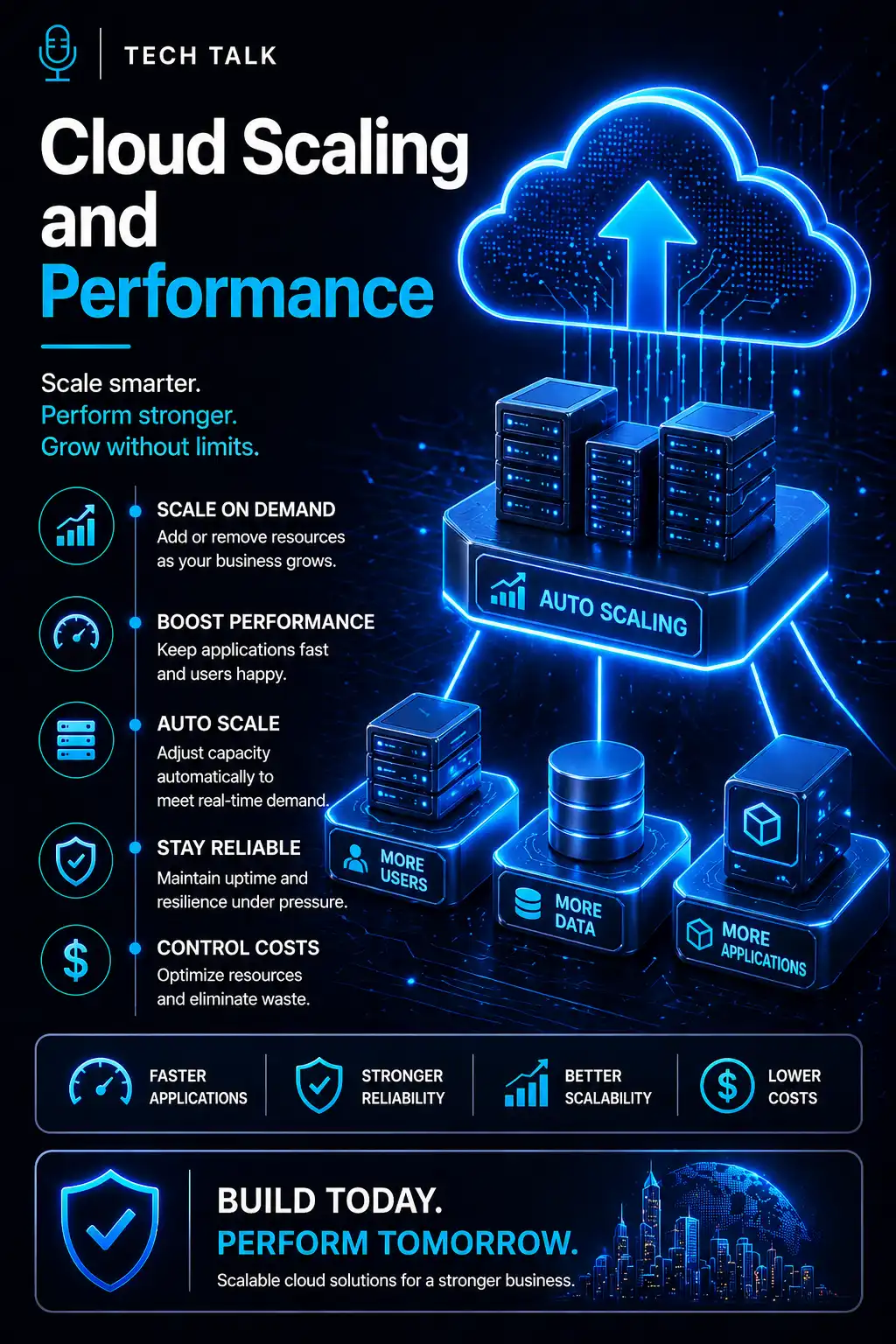
This connects directly to cloud scaling and performance.
What happens without it:
- systems slow down
- performance becomes inconsistent
Redundancy (Planning for Failure)
Systems must continue operating when components fail.
This includes:
- multiple availability zones
- replicated storage
- failover systems
What happens without it:
- single points of failure
- extended downtime
Performance Optimization (Planning for Speed)
Systems must deliver consistent performance.
This includes:
- efficient storage selection
- optimized networking
- appropriate compute allocation
What happens without it:
- slow applications
- poor user experience
Security by Design (Planning for Protection)
Security must be built into the system.
This includes:
- access control
- network segmentation
- monitoring
This aligns with cloud infrastructure security.
What happens without it:
- vulnerabilities
- data exposure
- increased risk
Observability (Planning for Visibility)
You must be able to monitor and understand your environment.
This includes:
- logging
- monitoring
- alerting
What happens without it:
- slow troubleshooting
- hidden issues
Good cloud design anticipates growth, failure, and complexity — not just initial deployment.
The Role of Components in Design
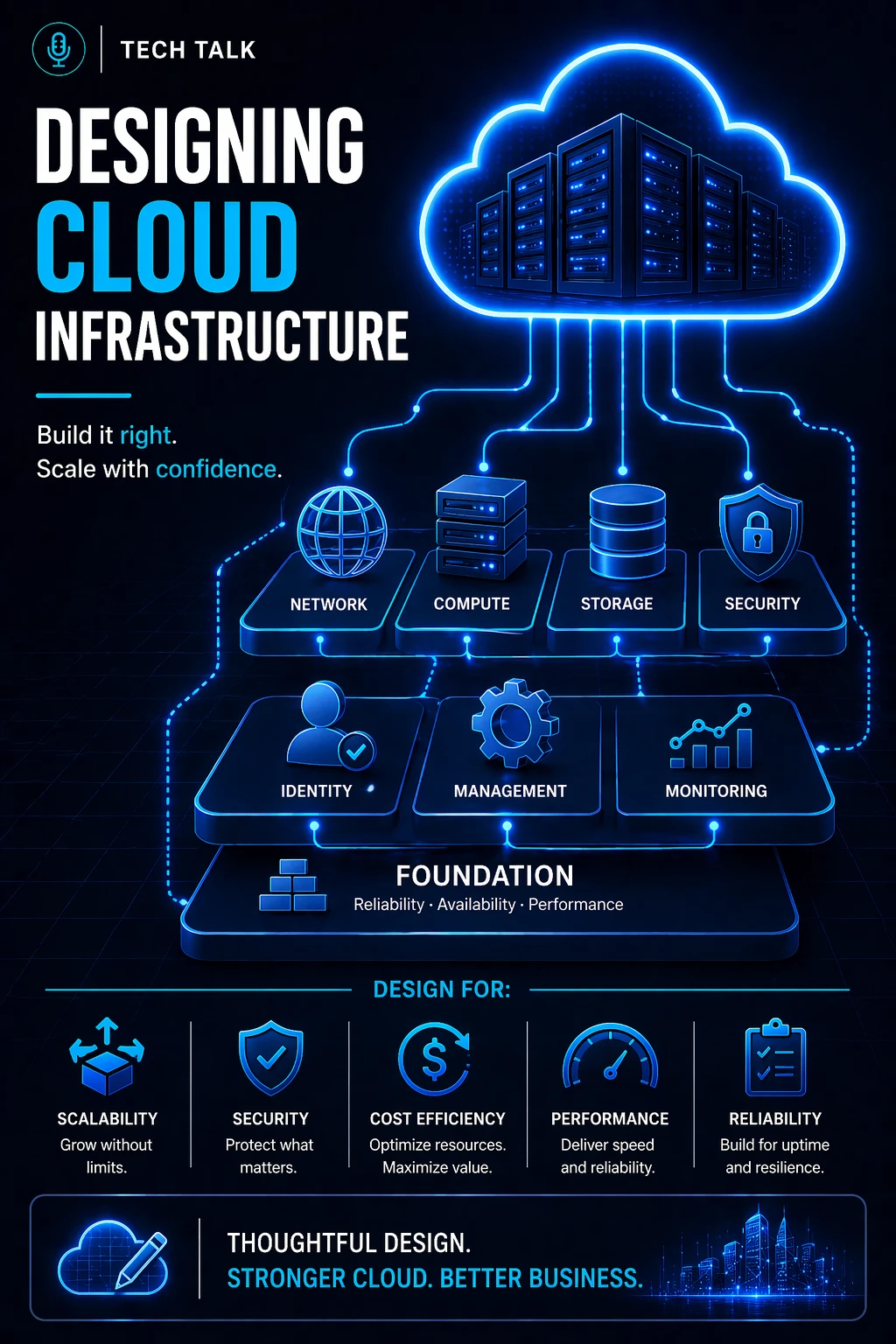
Cloud design is built around components.
These include:
- compute
- storage
- networking
- security
- management systems
Each component must be configured correctly and aligned with others.
See cloud infrastructure components for a deeper breakdown.
Design failures often occur between components — not within them.
The Hidden Complexity of Designing Systems
Cloud infrastructure design is complex because:
- systems are interconnected
- dependencies exist between components
- environments evolve over time
This complexity is explained further in cloud infrastructure explained.
Without careful design:
- systems become fragile
- troubleshooting becomes difficult
- risk increases
What Breaks Cloud Infrastructure Design
Most design failures come from predictable issues:
- lack of planning
- poor documentation
- inconsistent configuration
- ignoring scalability
- overlooking security
These problems often go unnoticed until:
- systems fail
- performance drops
- incidents occur
What a Well-Designed Cloud Environment Looks Like
A strong design ensures:
- systems scale predictably
- failures are isolated
- performance remains consistent
- costs are controlled
It also ensures alignment with overall cloud infrastructure strategy.
Well-designed cloud environments are predictable, scalable, and resilient.
How Design Impacts Cost
Design decisions directly affect cost.
Poor design leads to:
- overprovisioned resources
- inefficient scaling
- unnecessary services
Strong design ensures:
- efficient resource usage
- optimized scaling
- controlled spending
Cloud cost is driven by design decisions — not just usage.
How to Know If Your Design Needs Improvement
You may have a gap if:
- systems struggle under growth
- outages occur during peak demand
- infrastructure is undocumented
- performance is inconsistent
If your infrastructure cannot scale or recover predictably, your design needs improvement.
How This Connects to Other Cloud Topics
Design is the execution layer of your infrastructure strategy.
It connects to:
- what is cloud infrastructure
- cloud infrastructure explained
- cloud infrastructure architecture
- cloud infrastructure components
- cloud infrastructure strategy
What This Means for Your Business
Design determines:
- how your systems perform
- how your business scales
- how resilient your operations are
It is not just technical.
It is operational and strategic.
The quality of your infrastructure design determines the reliability of your business operations.
Final Thoughts
Designing cloud infrastructure is not a one-time task.
It is an ongoing process of:
- planning
- building
- refining
When done correctly, it allows your business to:
- grow without disruption
- operate efficiently
- reduce risk
Need help with this topic?
Make sure your backups actually work when it matters.
Most businesses discover backup failures during an outage. We help you validate recovery, reduce downtime risk, and build a system that works under pressure.
- Backup validation and testing
- Recovery time optimization
- Clear recovery documentation