Why Business Continuity Matters
Every business will face disruption.
The difference is not if something happens —
it is how your business responds when it does.
Most organizations assume:
- systems will be restored quickly
- downtime will be manageable
- operations can pause temporarily
In reality:
- disruptions often last longer than expected
- recovery introduces delays and complications
- business impact escalates quickly
Recovery restores systems — business continuity keeps your business running.
What Business Continuity Actually Means
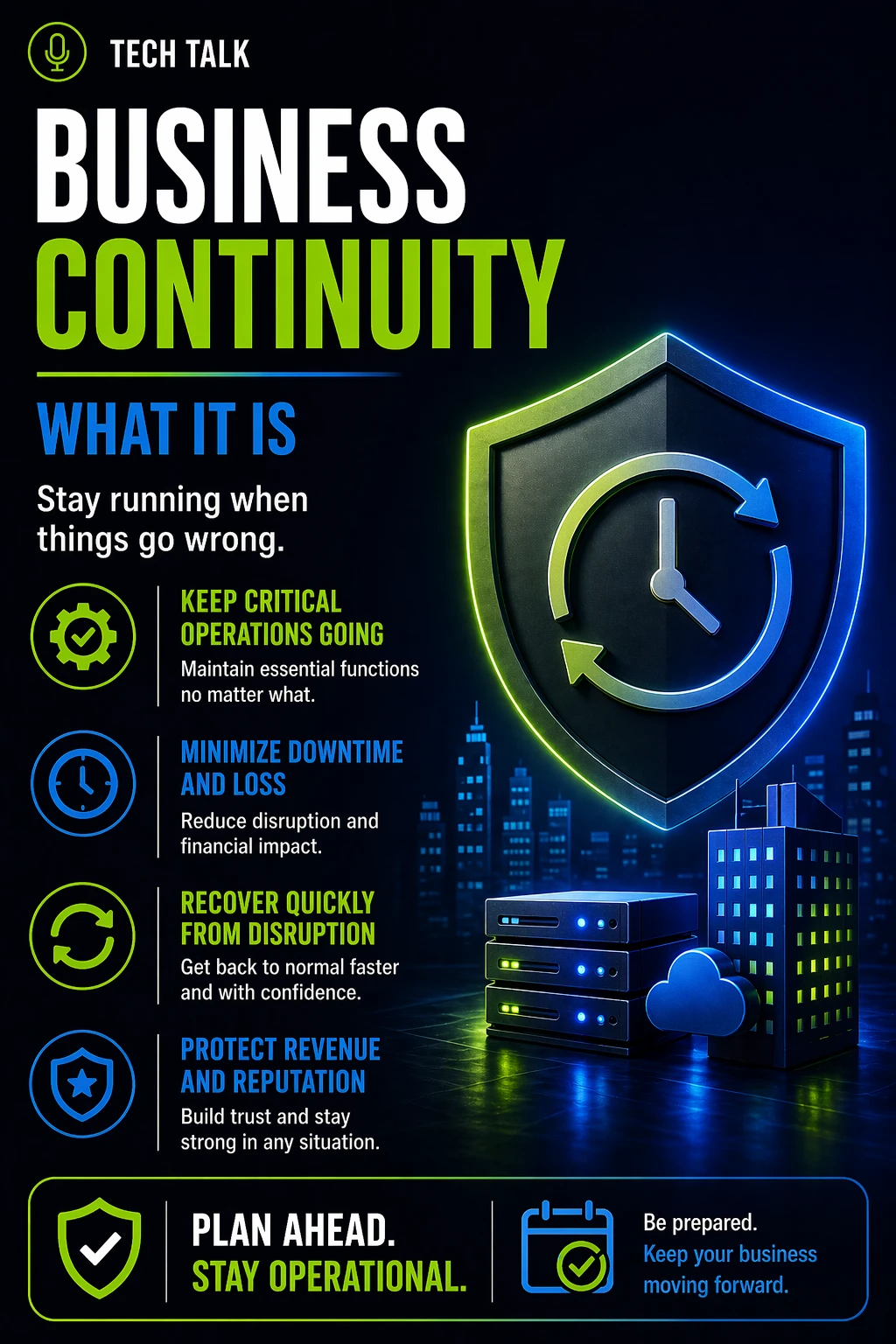
Business continuity is the ability to:
👉 maintain critical operations during and after a disruption
It is not limited to IT.
It includes:
- people
- processes
- systems
- communication
- infrastructure
Continuity answers one critical question:
👉 How does the business continue to function when normal operations are disrupted?
What Happens Without Business Continuity
A typical failure scenario:
- a system outage occurs
- employees lose access to tools
- communication breaks down
- processes stop or become manual
- customers experience delays or service failure
At that point:
- productivity drops immediately
- revenue impact begins
- operational chaos increases
Even if recovery is successful:
- lost time cannot be recovered
- customer trust may already be damaged
Without continuity, businesses are forced to stop — not adapt.
Business Continuity vs Recovery (Critical Difference)
Many businesses confuse continuity with recovery.
They are not the same.
Recovery
- Restores systems after failure
- Focuses on returning to normal
- Occurs after disruption
Continuity
- Maintains operations during disruption
- Focuses on ongoing functionality
- Occurs during and after disruption
If your strategy begins after failure, it is recovery — not continuity.
The Core Components of Business Continuity
A complete continuity strategy is layered.
1. Operational Awareness
- understanding critical business functions
- identifying dependencies
- prioritizing essential operations
2. Risk Identification
- identifying threats and vulnerabilities
- evaluating likelihood and impact
- planning for real-world scenarios
See
risk assessment
3. Continuity Planning
- defining how operations continue
- creating fallback procedures
- documenting responsibilities
4. Technology Alignment
- backup and recovery systems
- redundant infrastructure
- cloud and hybrid environments
See
backup and recovery resilience
5. Communication Strategy
- internal communication plans
- customer communication
- escalation procedures
6. Testing and Validation
- testing continuity plans
- validating real-world execution
- identifying weaknesses before failure
See
business continuity testing
Why Modern Businesses Need Continuity
Today’s risks are more complex than ever.
Common disruption sources include:
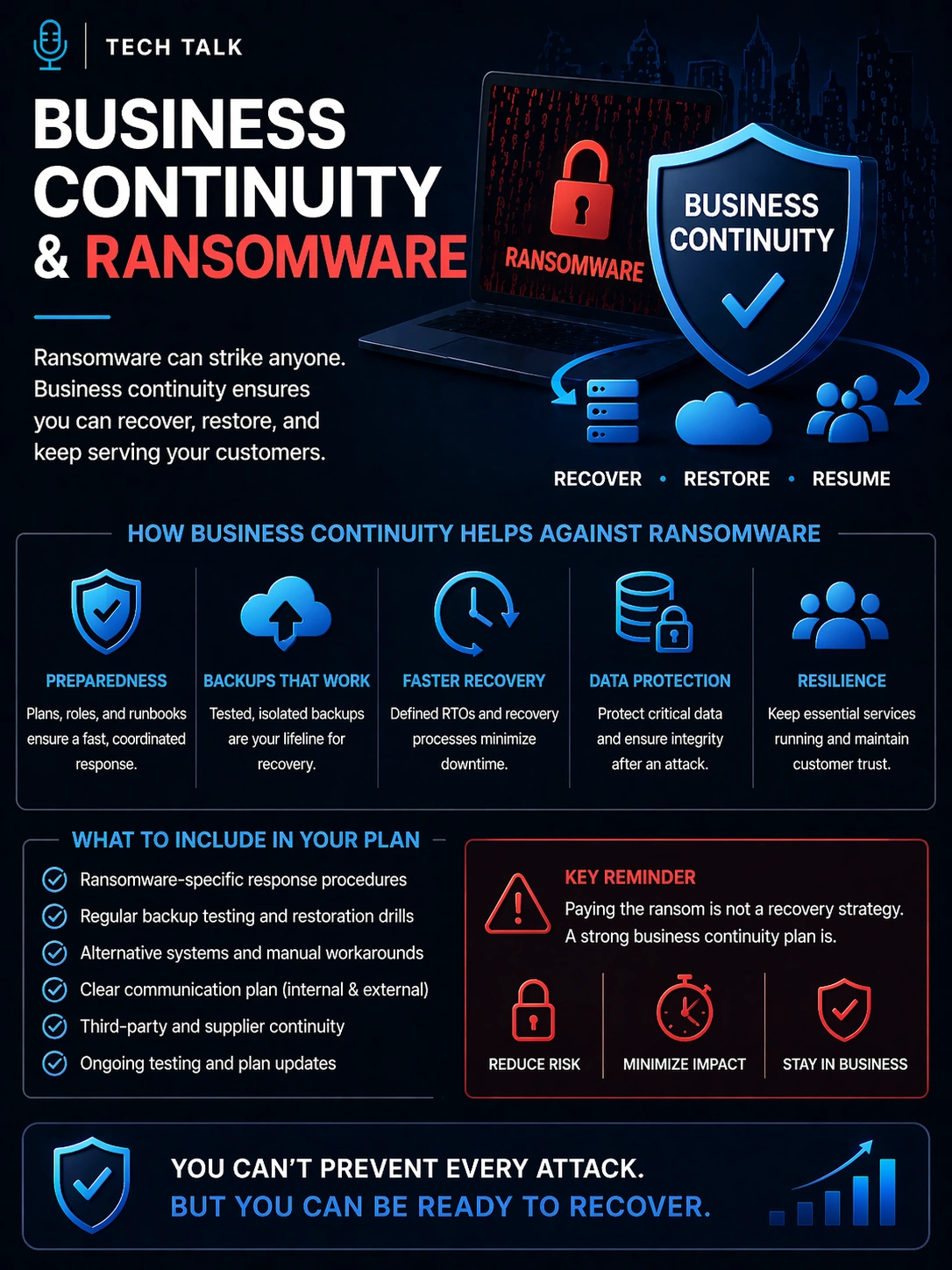
- ransomware attacks
- cloud outages
- infrastructure failures
- human error
- supply chain disruption
These events:
- happen unexpectedly
- spread quickly
- impact multiple systems simultaneously
Modern disruptions are not isolated — they are systemic, which makes continuity essential.
The Hidden Risk: Assumptions
Many organizations believe:
- “we have backups”
- “we can recover quickly”
- “downtime will be minimal”
These assumptions are rarely tested.
In reality:
- recovery may take longer than expected
- processes may fail under pressure
- teams may not be prepared
Continuity cannot be assumed — it must be designed and proven.
What Breaks Business Continuity
Continuity fails when:
- processes are undocumented
- roles are unclear
- systems are not redundant
- plans are not tested
- dependencies are misunderstood
These gaps lead to:
- extended downtime
- operational confusion
- increased financial impact
What a Continuity Strategy Looks Like
A resilient business continuity strategy includes:
- clearly defined critical operations
- redundant systems and infrastructure
- backup and recovery integration
- documented procedures
- communication frameworks
- regular testing and validation
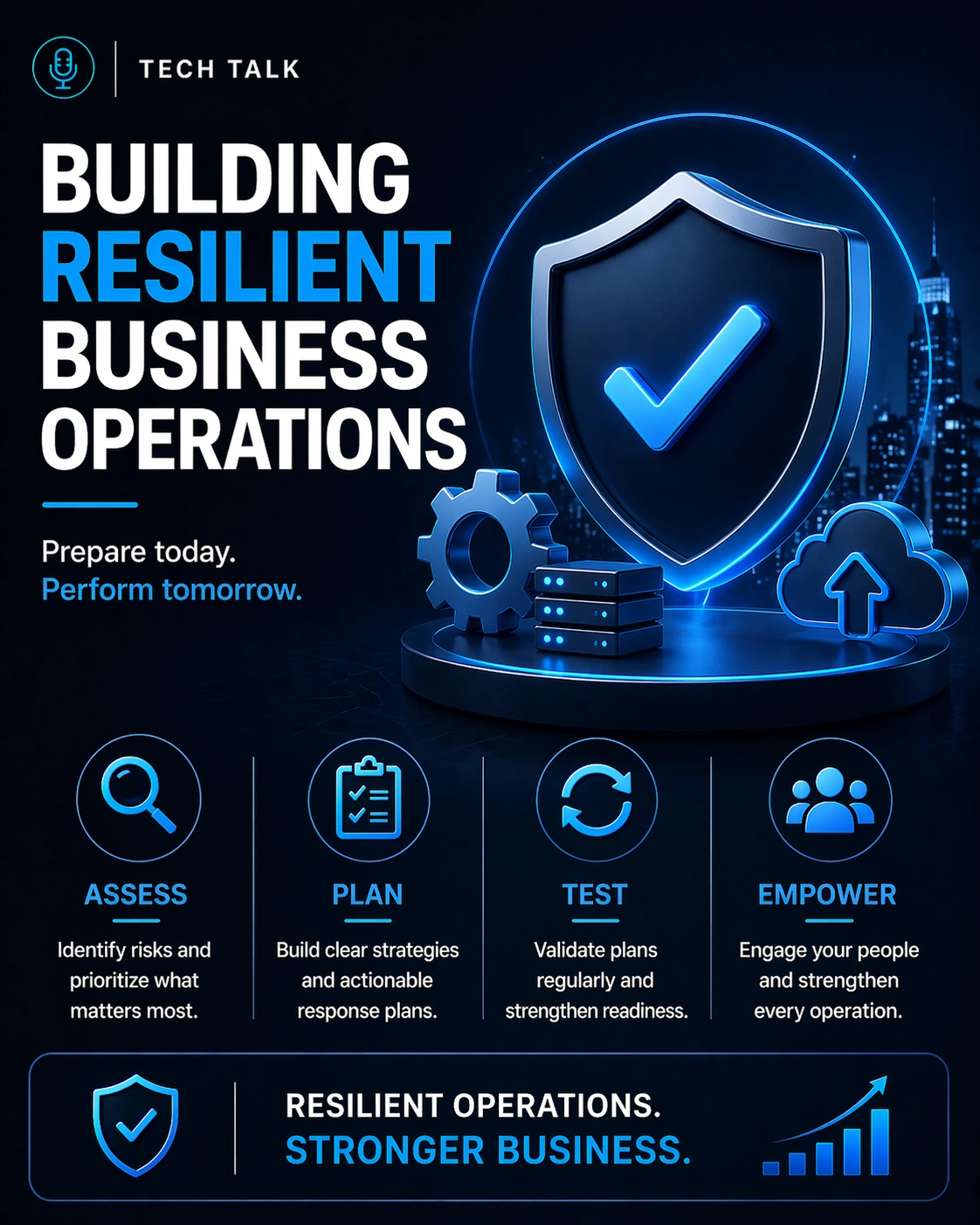
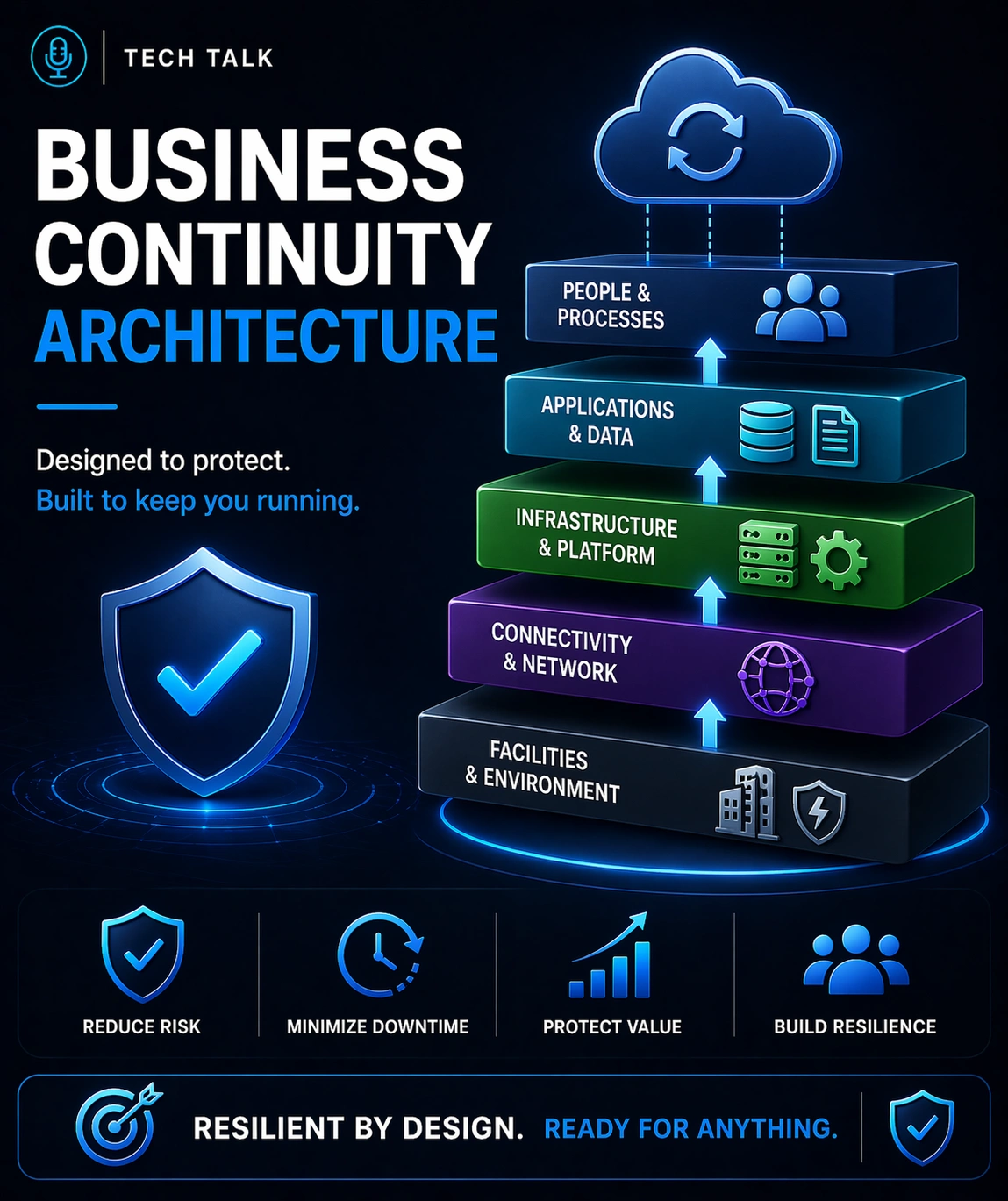
Continuity is not a single solution — it is a coordinated system of people, processes, and technology.
How to Measure Business Continuity
Continuity is measured by:
- operational uptime during disruption
- recovery time (RTO)
- data loss tolerance (RPO)
- ability to maintain service levels
If these are unclear:
- continuity is unproven
How to Know If You Lack Continuity
You may have a gap if:
- you rely only on recovery plans
- operations stop during outages
- continuity processes are undocumented
- testing has never been performed
If your business cannot operate during disruption, your continuity strategy is incomplete.
What This Means for Your Business
Business continuity determines:
- whether your business keeps running
- how customers experience disruption
- how much revenue is impacted
- how quickly normal operations resume
The difference between interruption and survival is continuity.
Final Thoughts
Recovery is important.
But it happens after the problem.
Business continuity determines what happens during it.
Need help with this topic?
Make sure your backups actually work when it matters.
Most businesses discover backup failures during an outage. We help you validate recovery, reduce downtime risk, and build a system that works under pressure.
- Backup validation and testing
- Recovery time optimization
- Clear recovery documentation