What Network Segmentation Really Means
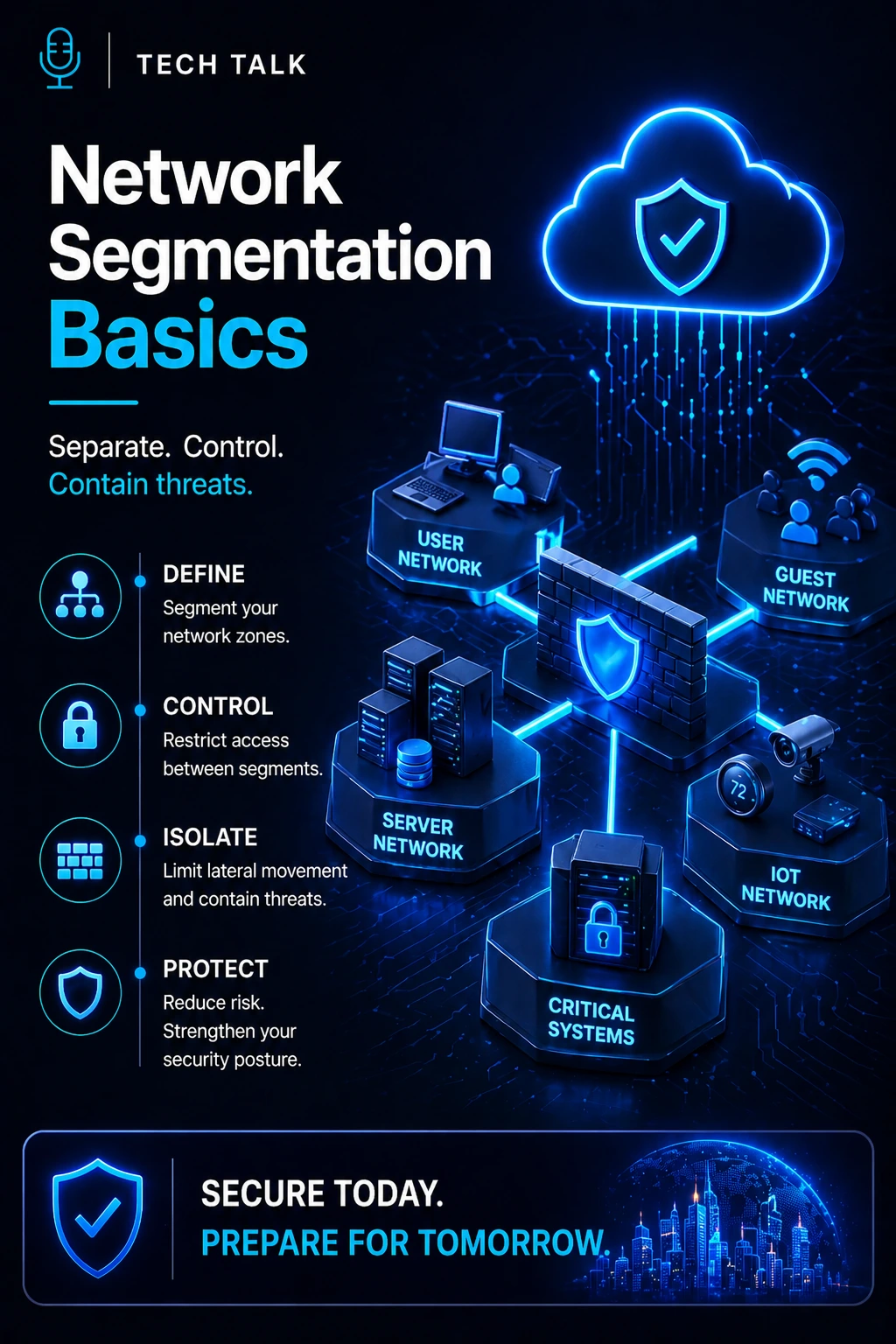
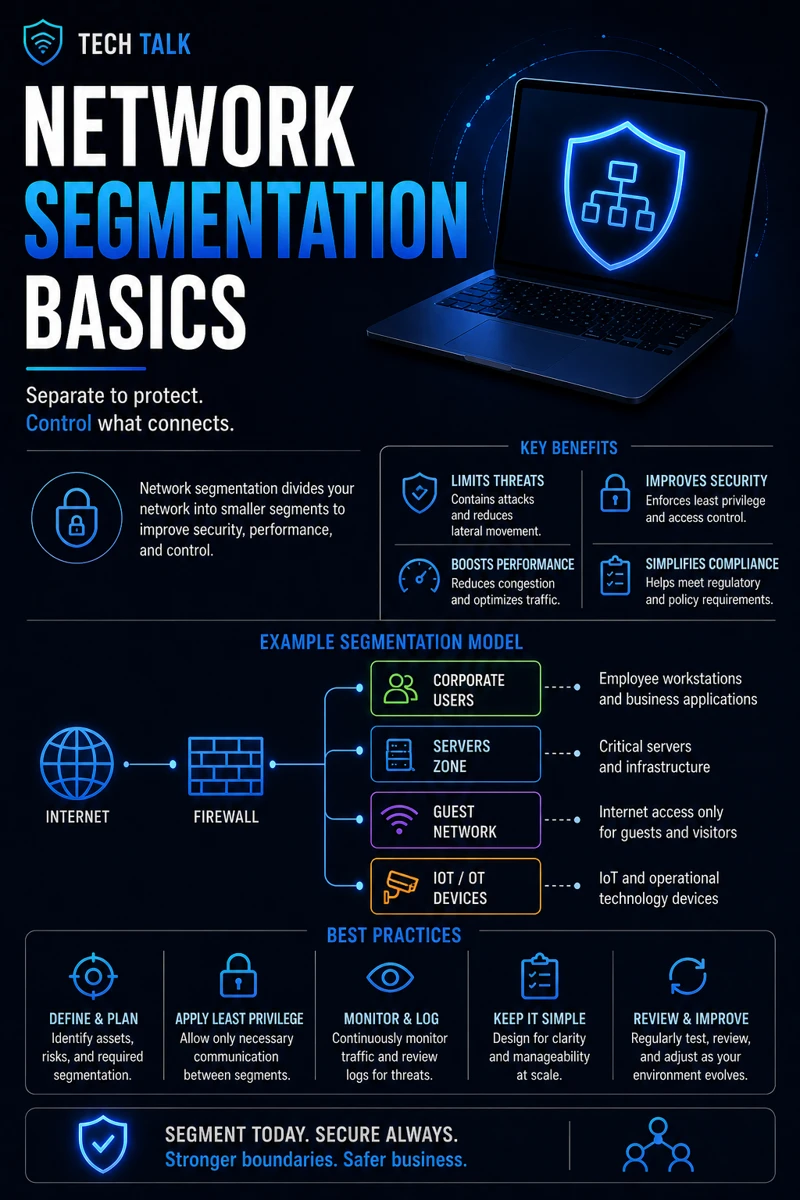
Network segmentation is the practice of dividing a network into smaller, controlled sections.
Instead of one large, open network:
- systems are grouped
- access is restricted
- communication is controlled
This limits how far attackers can move.
Without segmentation, one compromised system can expose your entire network.
Why Network Segmentation Is Critical
In many environments:
- all systems can communicate freely
- access is unrestricted
This creates:
- large attack surfaces
- easy lateral movement
Segmentation reduces:
- risk
- exposure
- potential damage
This is especially important in attacks like ransomware readiness 60-minute executive checklist.
The Biggest Risk: Flat Networks
A flat network means:
- no separation between systems
- unrestricted internal access
This allows attackers to:
- move freely
- access critical systems
- escalate attacks
Flat networks turn small breaches into large-scale incidents.
How Network Segmentation Works
Segmentation controls:
- which systems can communicate
- how data flows
- what access is allowed
This is typically enforced through:
- firewalls
- VLANs
- access control policies
Common Segmentation Approaches
1. Department-Based Segmentation
Separate networks for:
- finance
- HR
- operations
2. Function-Based Segmentation
Separate networks for:
- servers
- user devices
- IoT devices
3. Security-Based Segmentation
Separate networks based on:
- sensitivity
- risk level
Segmentation limits access so that systems only communicate when necessary.
The Role of Segmentation in Attack Prevention
Segmentation helps:
- contain breaches
- prevent spread
- limit impact
Even if attackers gain access:
- movement is restricted
- damage is reduced
This is critical in attacks that begin with phishing defense real world.
The Role of Segmentation in Ransomware Defense
Ransomware spreads by:
- moving across systems
- encrypting data
Segmentation:
- slows spread
- isolates infected systems
This aligns with incident response plan basics.
Segmentation can turn a network-wide attack into a contained incident.
The Role of Identity and Access Control
Segmentation works alongside:
- user permissions
- authentication
This includes:
- enforcing MFA
- controlling user access
This aligns with:
The Role of Endpoint Security
Endpoints within segments must be:
- protected
- monitored
This aligns with endpoint security basics edr vs antivirus.
The Role of Patch Management
Systems must be:
- updated
- secured
Segmentation does not replace patching.
This aligns with patch management smb.
The Role of Monitoring and Visibility
Organizations must monitor:
- network traffic
- access patterns
- unusual activity
This enables:
- early detection
- faster response
The Complexity of Segmentation
Segmentation involves:
- network design
- access rules
- ongoing management
This creates:
- complexity
- potential misconfiguration
What a Strong Segmentation Strategy Looks Like
A strong strategy includes:
- defined network zones
- restricted communication
- monitored access
- regular review
It must also align with:
- overall security architecture
- operational needs
Start with simple segmentation and expand as needed.
How Segmentation Impacts Business Operations
Segmentation improves:
- security
- control
- resilience
Without it:
- breaches spread quickly
- impact increases
Segmentation reduces the scope and cost of security incidents.
How to Know If Your Network Is Not Segmented
You may have a gap if:
- all devices are on the same network
- access is unrestricted
- sensitive systems are not isolated
If every system can talk to every other system, your network is high risk.
How to Improve Network Segmentation
Start with:
- identifying critical systems
- separating networks
- restricting communication
- monitoring traffic
These steps align with broader cybersecurity practices.
How This Connects to Other Cybersecurity Topics
Segmentation connects to:
- ransomware readiness 60-minute executive checklist
- incident response plan basics
- phishing defense real world
- endpoint security basics edr vs antivirus
- patch management smb
What This Means for Your Business
Your network design determines:
- how far attacks can spread
- how much damage occurs
- how quickly systems recover
It is not optional.
It is essential.
Segmentation reduces risk by limiting access and isolating systems.
Final Thoughts
Network segmentation is one of the most effective ways to:
- contain threats
- reduce exposure
- improve security
When implemented correctly:
- attacks are limited
- systems are protected
- operations are more resilient
Need help with this topic?
Make sure your backups actually work when it matters.
Most businesses discover backup failures during an outage. We help you validate recovery, reduce downtime risk, and build a system that works under pressure.
- Backup validation and testing
- Recovery time optimization
- Clear recovery documentation