What SD-WAN vs VPN Really Means
SD-WAN and VPN are both used to:
- connect users and locations
- secure network traffic
But they solve different problems.
VPN:
- provides secure remote access
SD-WAN:
- manages and optimizes entire networks
Understanding the difference is critical for modern infrastructure.
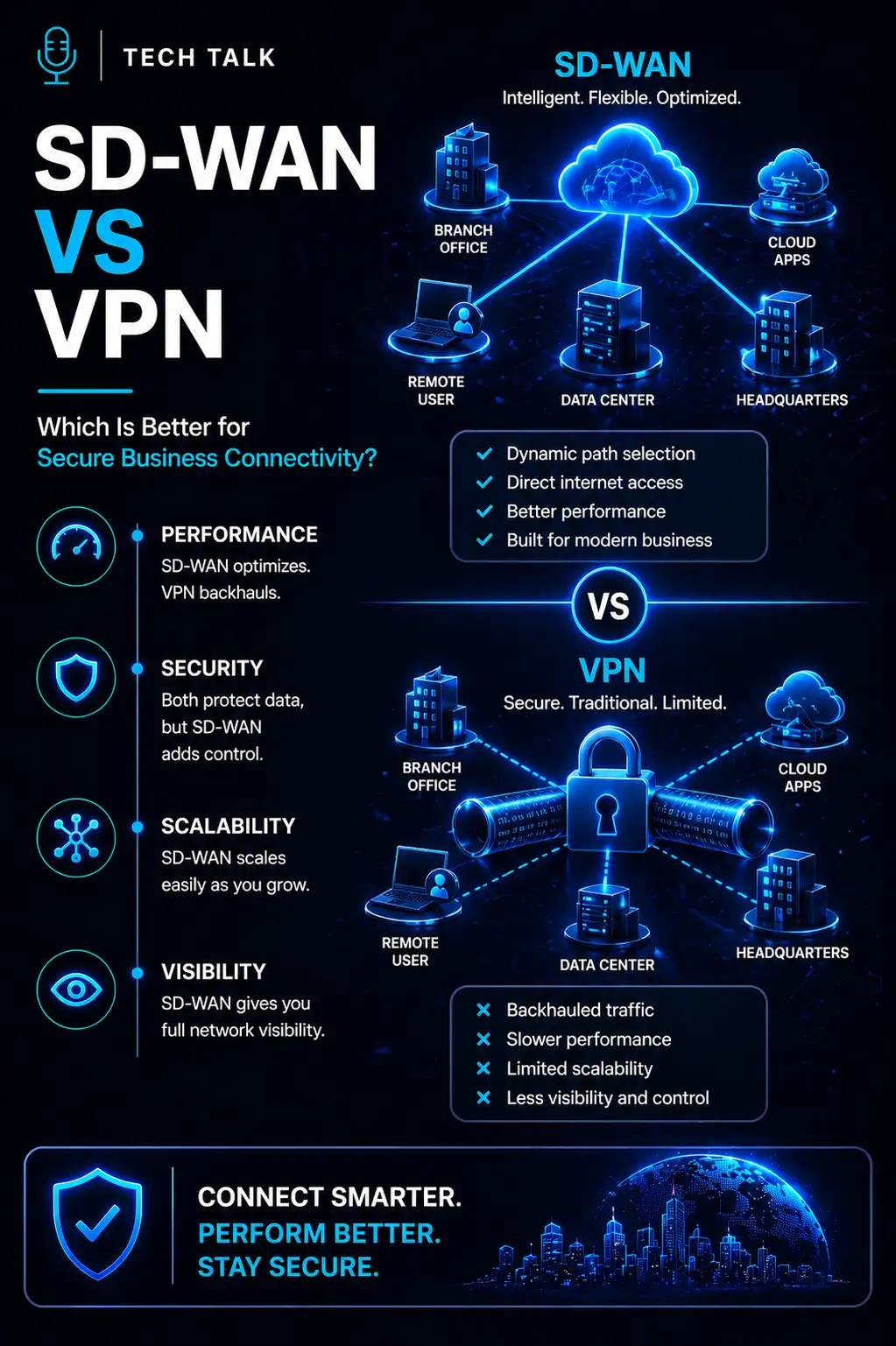
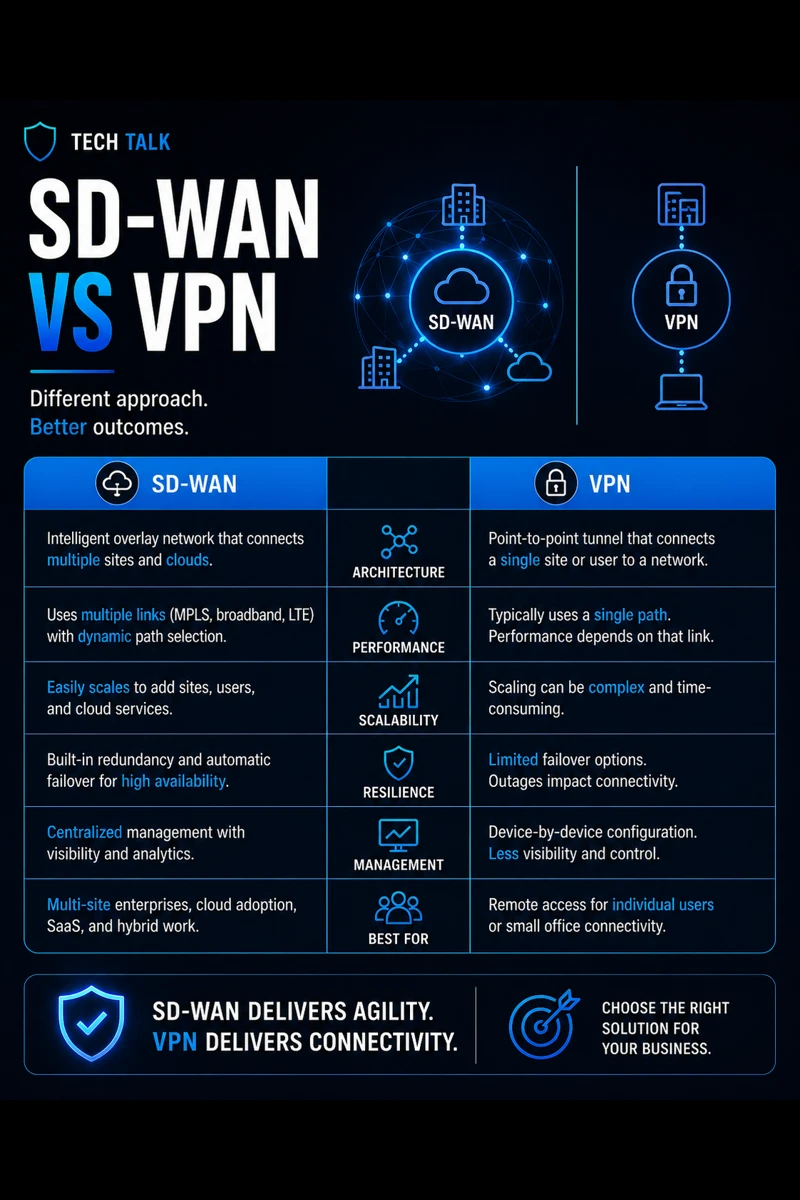
VPN is a tool — SD-WAN is an architecture.
What a VPN Does
A VPN (Virtual Private Network):
- creates an encrypted tunnel
- connects users to a network
- secures data in transit
Common VPN Use Cases
- remote work access
- connecting to internal systems
- secure internet connections
Strengths of VPN
- simple to deploy
- secure data transmission
- widely supported
Limitations of VPN
- limited scalability
- performance bottlenecks
- lack of traffic optimization
These limitations become more apparent in modern environments.
What SD-WAN Does
SD-WAN (Software-Defined Wide Area Network):
- manages network traffic
- optimizes performance
- provides centralized control
Key SD-WAN Capabilities
- intelligent traffic routing
- application prioritization
- centralized management
- built-in security features
Strengths of SD-WAN
- improved performance
- scalability
- better visibility
Limitations of SD-WAN
- more complex setup
- higher initial cost
SD-WAN provides visibility and control across the entire network, not just individual connections.
The Biggest Difference: Scope
The key difference is scope.
VPN:
- connects individual users
SD-WAN:
- manages entire networks
This makes SD-WAN more suitable for:
- multi-location businesses
- cloud-heavy environments
The Hidden Risk: Relying Only on VPN
Many organizations rely only on VPN.
This creates:
- performance issues
- limited visibility
- scalability challenges
VPN alone cannot meet the demands of modern, distributed networks.
How SD-WAN Improves Performance
SD-WAN optimizes traffic by:
- selecting the best path
- prioritizing critical applications
- balancing loads
This improves:
- speed
- reliability
The Role of Security in VPN vs SD-WAN
Both provide security, but differently.
VPN:
- encrypts traffic
SD-WAN:
- adds layered security
- integrates with broader controls
This aligns with:
The Role of Identity and Access Control
Secure access depends on:
- user authentication
- identity controls
This includes:
- MFA enforcement
- conditional access
This aligns with:
The Role of Monitoring and Visibility
SD-WAN provides:
- centralized monitoring
- real-time visibility
VPN typically lacks:
- detailed insights
- centralized control
The Role of Incident Response
Network visibility impacts:
- detection speed
- response effectiveness
This aligns with incident response plan basics.
Visibility determines how quickly network threats are identified and contained.
The Role of Patch and Endpoint Security
Both VPN and SD-WAN depend on:
- secure endpoints
- updated systems
This aligns with:
The Complexity of Modern Networking
Modern networks include:
- remote users
- cloud applications
- multiple locations
This creates:
- complexity
- new security challenges
When to Use VPN
VPN is ideal for:
- small teams
- basic remote access
- simple environments
When to Use SD-WAN
SD-WAN is ideal for:
- growing businesses
- multi-location networks
- cloud-first environments
When to Use Both
Many organizations use both:
- VPN for remote users
- SD-WAN for network management
This provides:
- flexibility
- scalability
- improved security
VPN and SD-WAN are not competing — they are complementary.
How This Impacts Business Operations
Your network architecture affects:
- performance
- security
- reliability
Poor design leads to:
- slow systems
- increased risk
- operational inefficiencies
Modern businesses require network solutions that support both performance and security.
How to Know If Your Network Needs Improvement
You may have a gap if:
- VPN performance is slow
- visibility is limited
- multiple locations are difficult to manage
If your network struggles to support remote work or cloud apps, it may be time to upgrade.
How This Connects to Other Cybersecurity Topics
SD-WAN and VPN connect to:
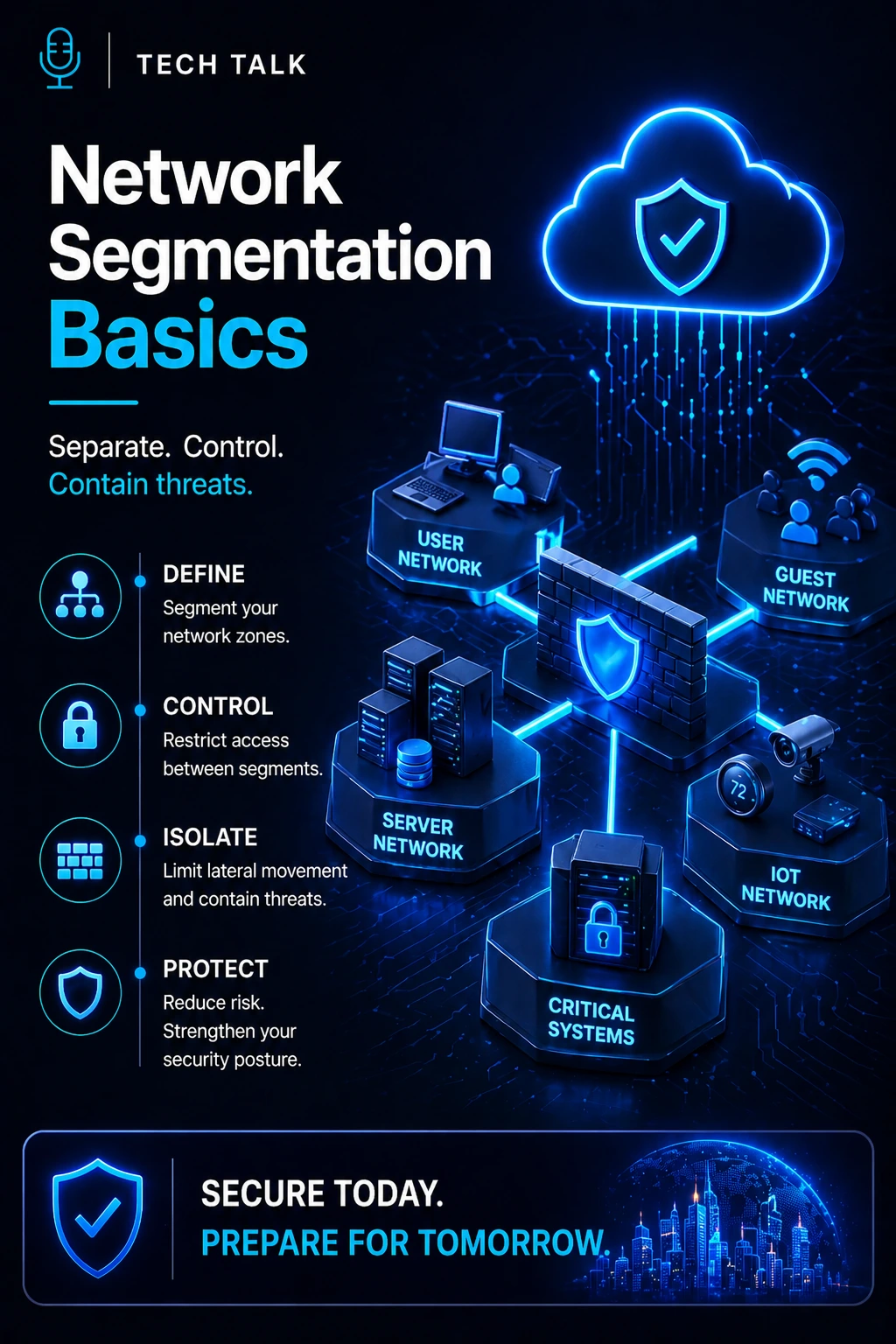
- network segmentation basics
- endpoint security basics edr vs antivirus
- incident response plan basics
- patch management smb
- cyber insurance controls
What This Means for Your Business
Your network design determines:
- how securely users connect
- how well applications perform
- how resilient your infrastructure is
It is not optional.
It is essential.
Modern networking requires both secure access and intelligent traffic management.
Final Thoughts
VPN and SD-WAN serve different purposes.
Understanding both allows you to:
- build better networks
- improve performance
- strengthen security
Need help with this topic?
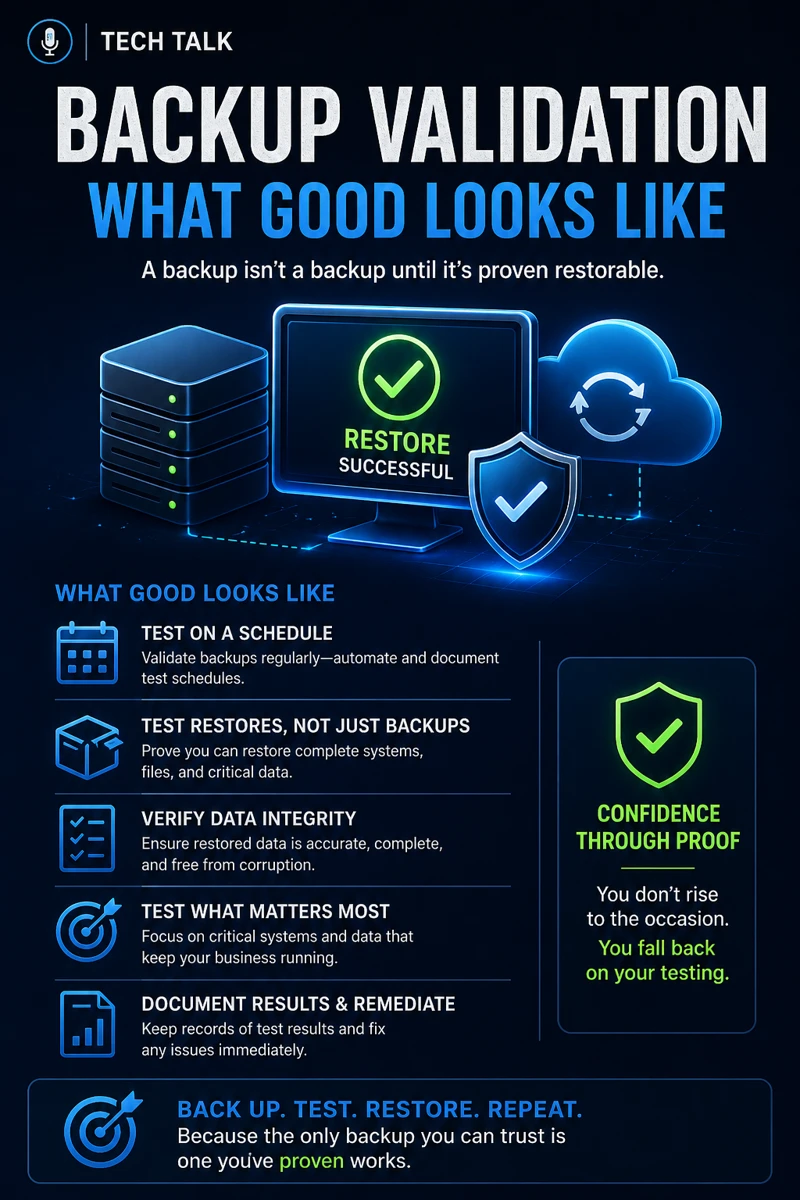
Make sure your backups actually work when it matters.
Most businesses discover backup failures during an outage. We help you validate recovery, reduce downtime risk, and build a system that works under pressure.
- Backup validation and testing
- Recovery time optimization
- Clear recovery documentation