What Cloud Infrastructure Risk Management Really Means
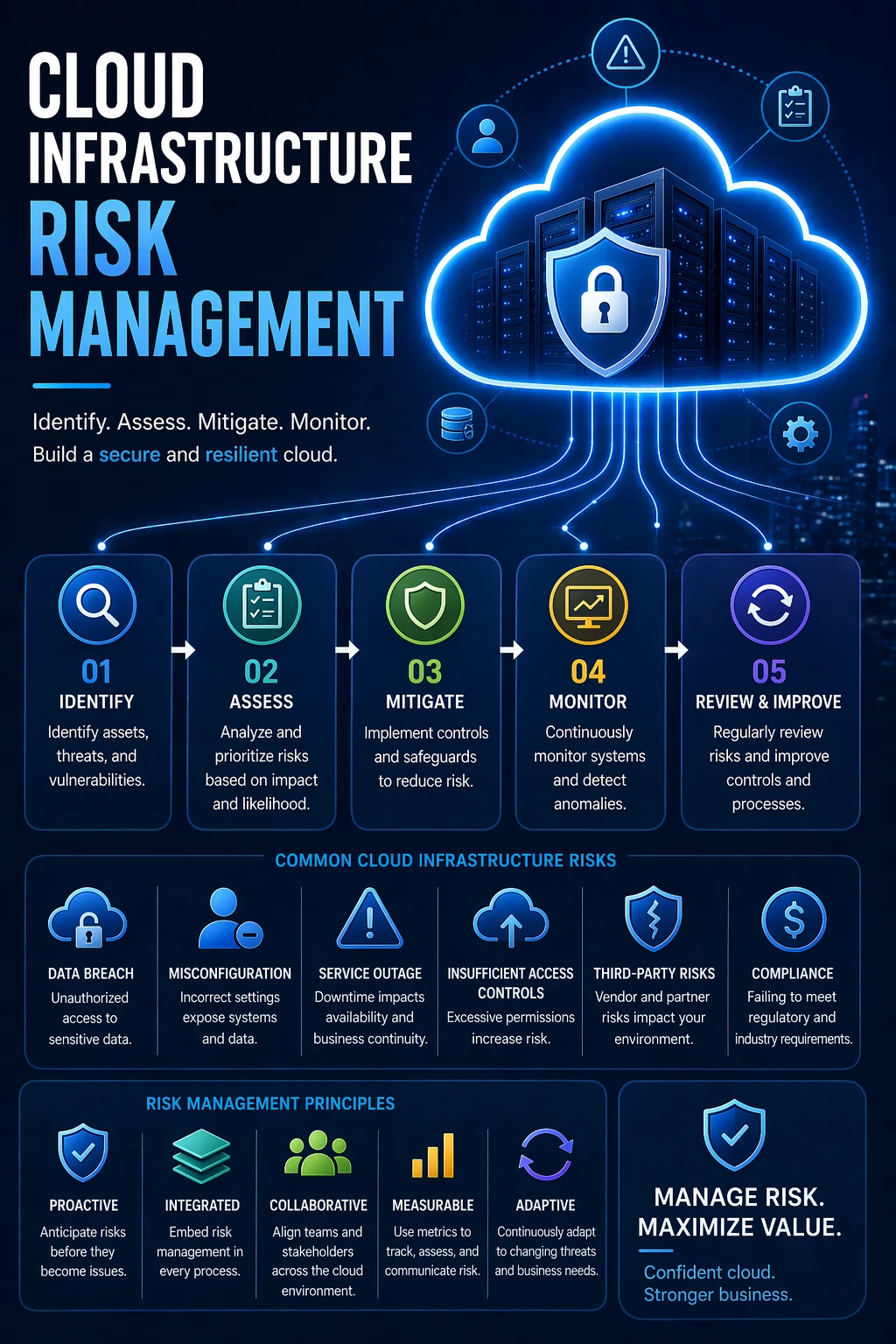
Cloud infrastructure risk management is the process of identifying, understanding, and reducing risk across your environment.
It involves:
- recognizing vulnerabilities
- understanding system dependencies
- controlling exposure
- preparing for failure
It is not about eliminating risk.
It is about managing it effectively.
If you need foundational context, start with what cloud infrastructure is.
Cloud infrastructure risk cannot be eliminated — but it can be controlled.
Why Risk Exists in Cloud Environments
Cloud environments introduce flexibility and scalability.
But they also introduce:
- complexity
- dependencies
- configuration risk
Without control:
- systems become fragile
- failures become more likely
This complexity is explained in cloud infrastructure explained.
The more complex your environment becomes, the more risk it carries if not managed properly.
What a Real Infrastructure Risk Scenario Looks Like
A typical scenario:
- systems are deployed and working
- environment grows over time
- dependencies increase
- visibility decreases
- a failure occurs
At that point:
- impact spreads across systems
- recovery is delayed
- business operations are affected
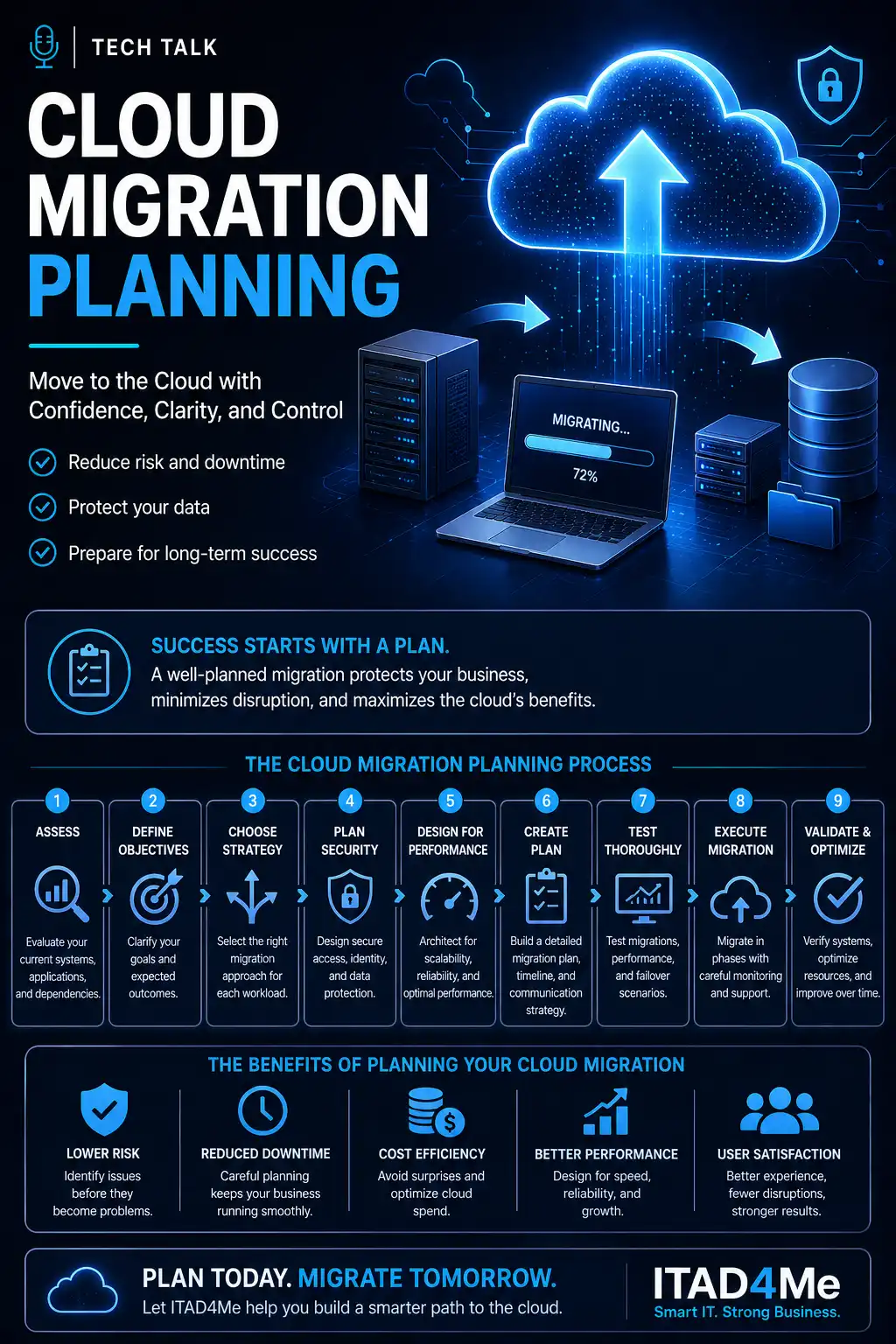
These risks are often tied to gaps in cloud infrastructure planning.
Risk is not caused by a single issue — it is created by multiple small gaps over time.
The Core Types of Cloud Infrastructure Risk
Cloud risk exists in multiple areas.
Operational Risk
This includes:
- system downtime
- performance degradation
- scaling issues
These risks are often tied to poor cloud infrastructure architecture.
Security Risk
This includes:
- unauthorized access
- data exposure
- system compromise
See cloud infrastructure security.
Financial Risk
This includes:
- uncontrolled spending
- inefficient resource usage
- unpredictable costs
Dependency Risk
This includes:
- reliance on interconnected systems
- cascading failures
- lack of redundancy
This is closely related to how cloud infrastructure components interact.
Cloud risk is not isolated — it spans operations, security, cost, and system dependencies.
The Hidden Risk: Growth Without Control
Many environments grow quickly.
This leads to:
- increased complexity
- unclear dependencies
- reduced visibility
Over time:
- risk increases
- failures become more impactful
This is a common issue in environments lacking a clear cloud infrastructure strategy.
Uncontrolled growth is one of the biggest drivers of cloud infrastructure risk.
What Breaks Risk Management
Risk management fails when:
- risks are not identified
- systems are undocumented
- monitoring is insufficient
- decisions are reactive
These issues often appear as:
- unexpected downtime
- security incidents
- performance failures
What Effective Risk Management Looks Like
A strong approach includes:
- identifying risks early
- implementing controls
- monitoring continuously
- updating systems as environments change
It also requires alignment with cloud infrastructure strategy.
Effective risk management is proactive — not reactive.
The Role of Design in Reducing Risk
Risk is largely determined during design.
Good design includes:
- redundancy
- scalability
- segmentation
- monitoring
This aligns with designing cloud infrastructure.
Most risks are introduced during design — not during operations.
How Monitoring Reduces Risk
Monitoring provides visibility.
It allows you to:
- detect issues early
- respond quickly
- understand system behavior
Without monitoring:
- problems go unnoticed
- risk increases
How Risk Impacts Business Outcomes
Infrastructure risk directly affects:
- uptime
- performance
- customer experience
- revenue
Poor risk management leads to:
- downtime
- data loss
- operational disruption
Cloud risk is business risk — not just technical risk.
How to Know If Your Risk Is Uncontrolled
You may have a gap if:
- systems are undocumented
- dependencies are unclear
- monitoring is limited
- failures are unpredictable
If you cannot clearly identify your risks, you cannot control them.
How to Start Managing Cloud Risk
You do not need to eliminate all risk.
Start with:
- identifying critical systems
- mapping dependencies
- improving monitoring
- strengthening security controls
Even small improvements can reduce exposure significantly.
How This Connects to Other Cloud Topics
Risk management is part of a complete infrastructure system.
It connects to:
- what is cloud infrastructure
- cloud infrastructure explained
- cloud infrastructure architecture
- cloud infrastructure planning guide
- cloud infrastructure security
What This Means for Your Business
Your risk management approach determines:
- how stable your systems are
- how prepared you are for failure
- how resilient your operations are
It is not optional.
It is essential.
Managing risk is the key to building reliable, scalable cloud infrastructure.
Final Thoughts
Cloud infrastructure risk is unavoidable.
But unmanaged risk is dangerous.
A strong approach ensures:
- systems remain stable
- issues are detected early
- business impact is minimized
Need help with this topic?
Make sure your backups actually work when it matters.
Most businesses discover backup failures during an outage. We help you validate recovery, reduce downtime risk, and build a system that works under pressure.
- Backup validation and testing
- Recovery time optimization
- Clear recovery documentation