What Cloud Infrastructure Planning Really Means
Cloud infrastructure planning is the process of defining how your systems will be built, scaled, and managed before they are deployed.
It answers key questions:
- What systems are required?
- How will they scale?
- How will they perform under load?
- How will failures be handled?
Without planning, infrastructure becomes reactive instead of intentional.
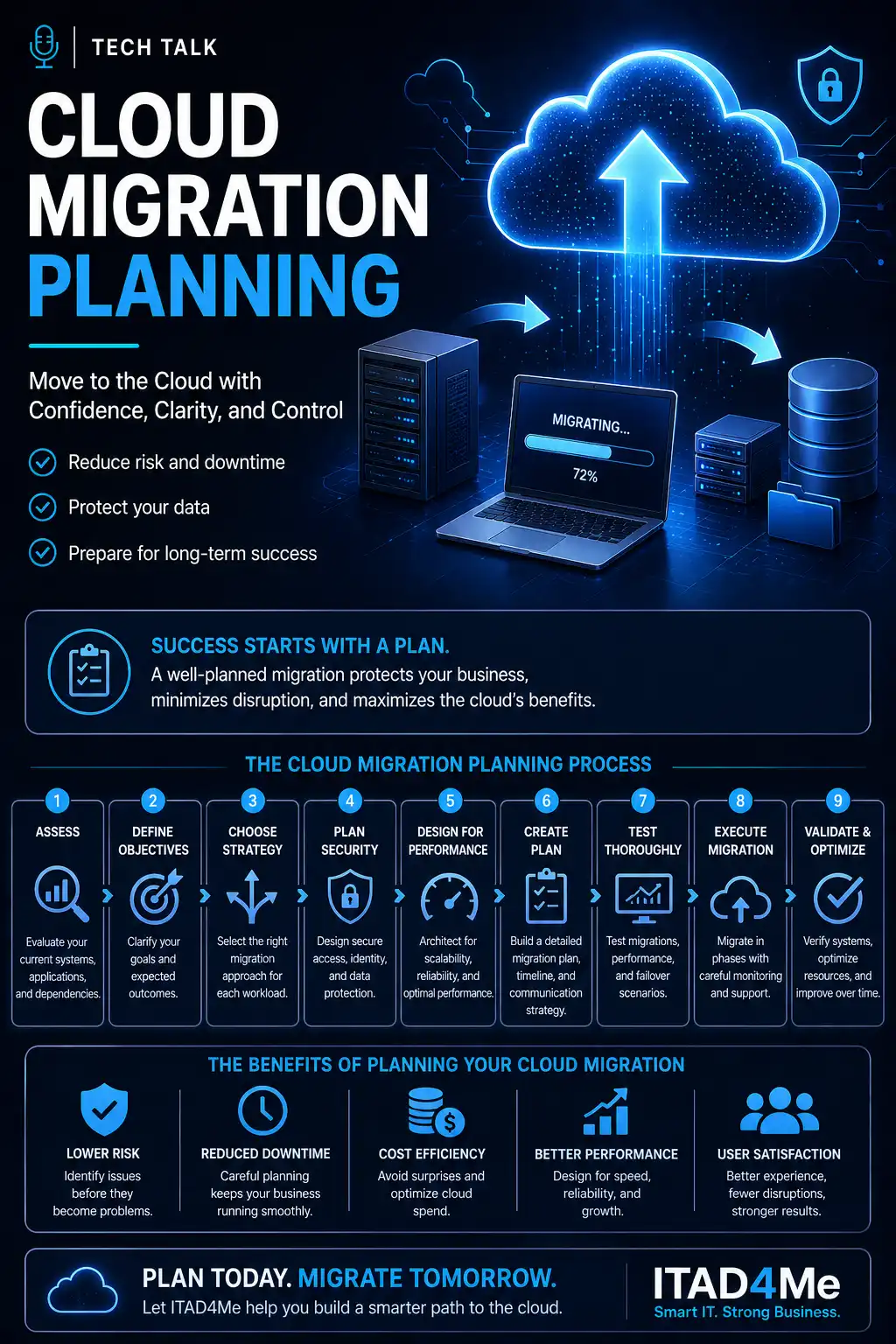
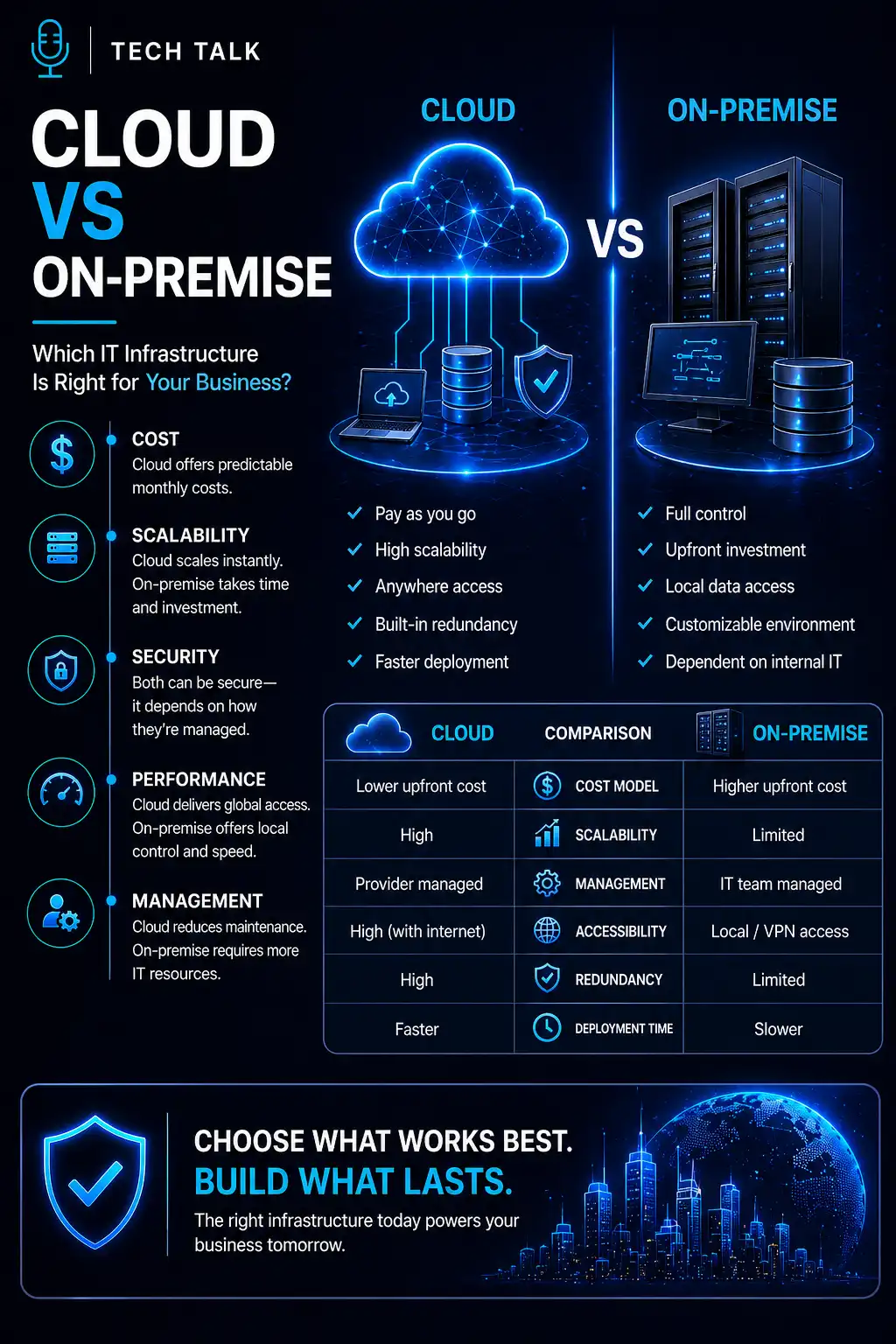
If you need a foundation, start with what cloud infrastructure is.
Most infrastructure failures begin during planning — not during execution.
Why Planning Matters More Than Deployment
Many businesses focus on implementation.
They ask:
- Which tools should we use?
- How quickly can we deploy?
But the real risk happens before deployment:
- unclear requirements
- incomplete architecture
- missing scalability planning
These issues lead to problems later — often requiring redesign, as seen in designing cloud infrastructure.
Fast deployment without planning creates long-term complexity and risk.
What a Real Planning Failure Looks Like
A typical scenario:
- infrastructure is deployed quickly
- immediate needs are met
- business grows
- systems begin to strain under demand
- performance issues appear
- costs increase
At that point:
- changes are harder to implement
- downtime risk increases
- redesign becomes necessary
These problems often stem from missing cloud infrastructure strategy.
Planning failures are often invisible until systems are under pressure.
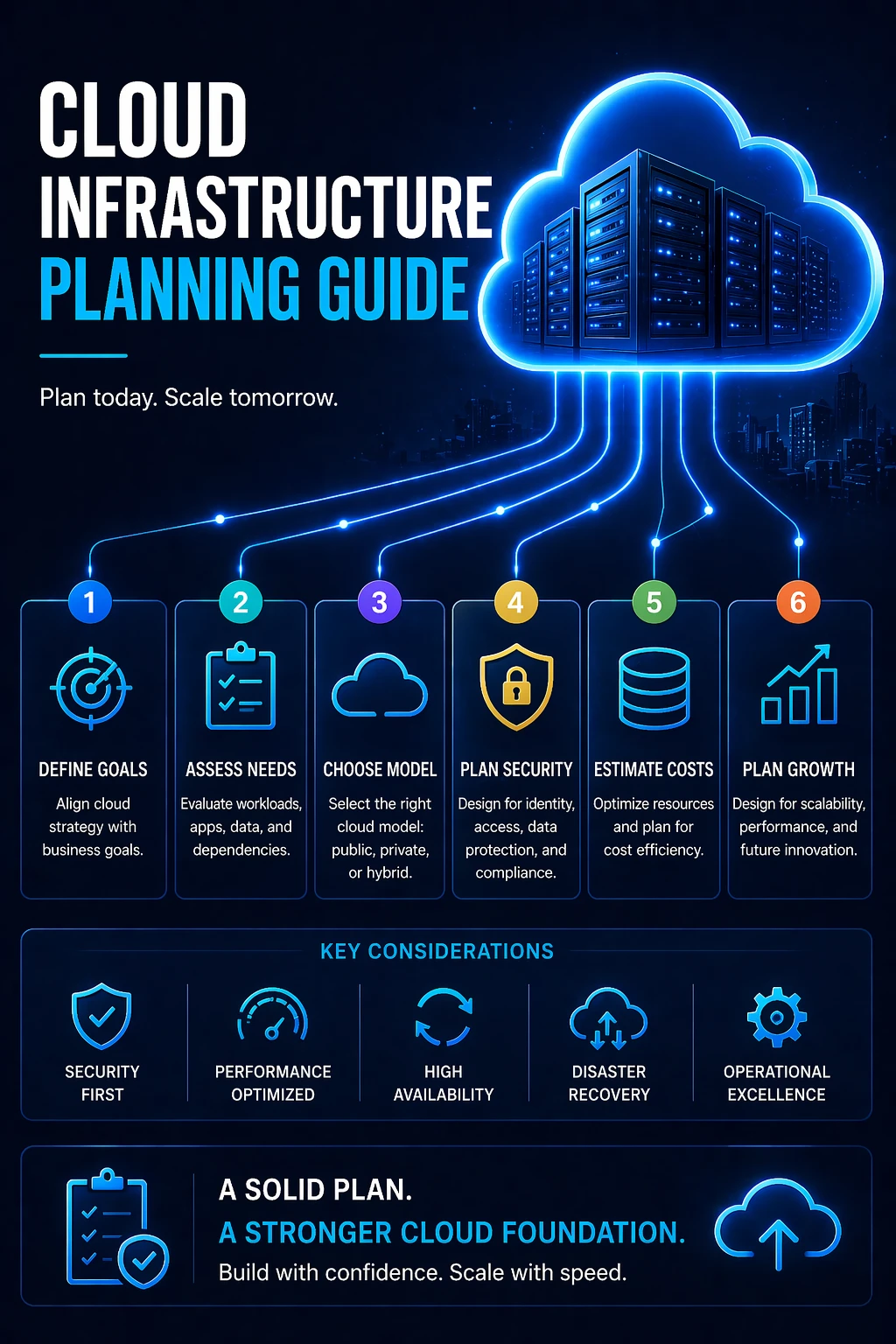
The Core Steps of Cloud Infrastructure Planning
Effective planning follows a structured approach.
1. Define Business Requirements
Infrastructure must support business goals.
This includes:
- expected growth
- operational needs
- performance expectations
Without this step:
- systems may not align with business outcomes
2. Understand System Requirements
Identify what needs to be supported:
- applications
- data systems
- user access
- integrations
This connects to the fundamentals explained in cloud infrastructure basics for business.
3. Design Architecture
Plan how systems will be structured.
This includes:
- system layout
- redundancy
- segmentation
See cloud infrastructure architecture.
4. Plan for Scalability
Define how systems will handle growth.
This includes:
- auto-scaling
- load balancing
- resource allocation
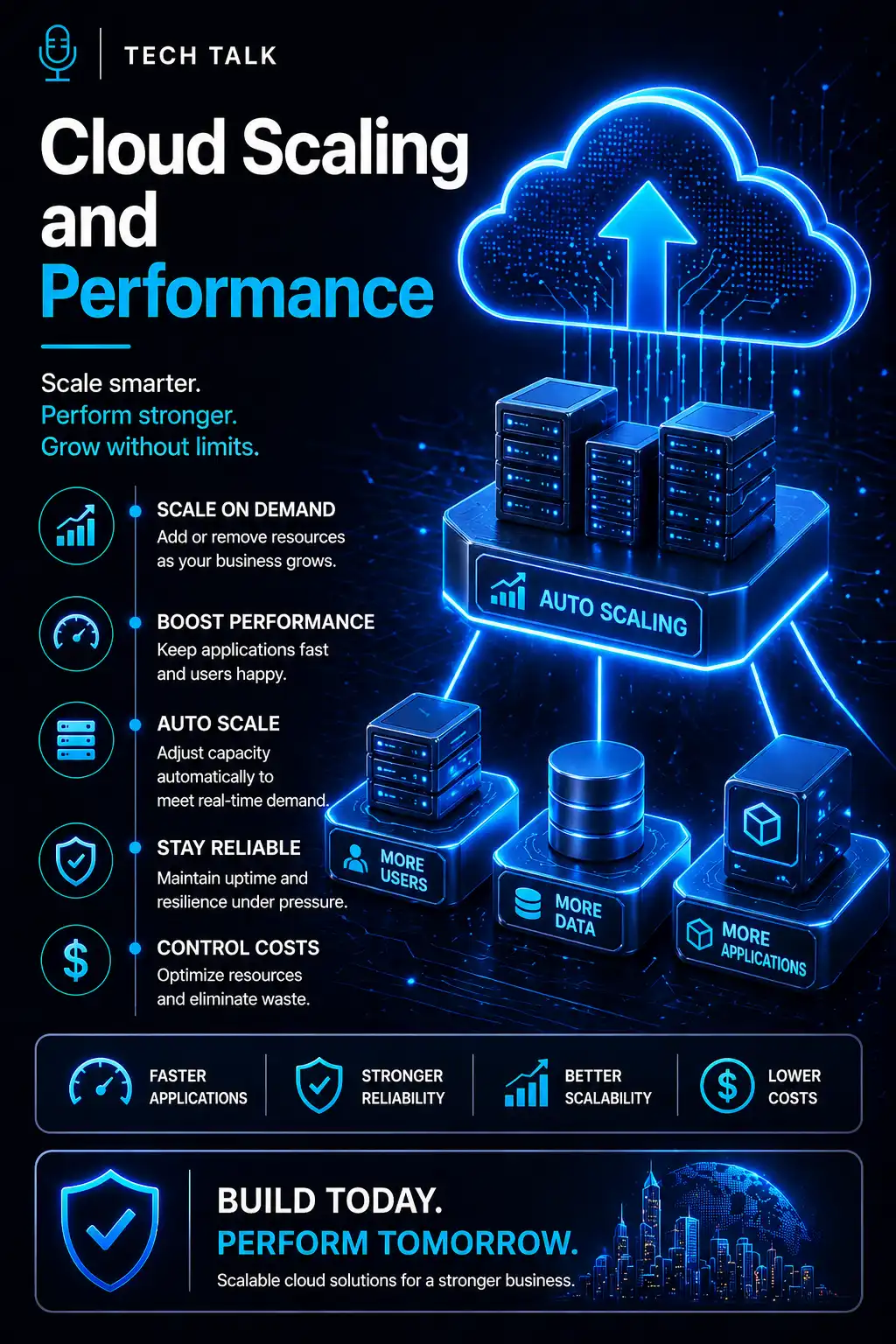
This aligns with cloud scaling and performance.
5. Plan for Failure and Recovery
Systems must continue operating during failure.
This includes:
- redundancy
- failover design
- recovery processes
This principle mirrors resilience concepts found in backup and recovery strategies.
6. Define Security Requirements
Security must be planned from the beginning.
This includes:
- access control
- encryption
- monitoring
See cloud infrastructure security.
7. Plan Monitoring and Management
You must be able to observe and control your systems.
This includes:
- monitoring tools
- alerting systems
- operational processes
Effective planning ensures systems are scalable, secure, and manageable before they are built.
The Role of Components in Planning
Planning requires understanding the building blocks of infrastructure.
These include:
- compute
- storage
- networking
- security
- management
Each component must be aligned with your design.
See cloud infrastructure components.
Planning must account for how components interact — not just how they function individually.
The Hidden Risk: Evolving Without a Plan
Many environments evolve over time.
This leads to:
- inconsistent architecture
- unclear dependencies
- inefficient systems
Over time:
- performance degrades
- costs increase
- risk grows
This is a common issue highlighted in cloud infrastructure explained.
Infrastructure that evolves without planning becomes complex and difficult to manage.
What Breaks Infrastructure Planning
Planning failures typically come from:
- incomplete requirements
- lack of documentation
- ignoring scalability
- overlooking security
- focusing on short-term needs
These issues often lead to:
- performance problems
- higher costs
- system instability
What a Well-Planned Environment Looks Like
A strong plan ensures:
- systems align with business needs
- architecture supports growth
- performance is predictable
- security is integrated
- operations are manageable
It also ensures alignment with cloud infrastructure strategy.
Well-planned cloud environments are predictable, scalable, and easier to manage.
How Planning Impacts Cost
Planning directly affects cost.
Poor planning leads to:
- overprovisioned resources
- inefficient scaling
- unnecessary services
Strong planning ensures:
- optimized usage
- controlled scaling
- cost visibility
Cloud cost problems are usually planning problems — not billing problems.
How to Know If Your Planning Is Inadequate
You may have a gap if:
- infrastructure decisions are reactive
- systems struggle under growth
- performance issues appear unexpectedly
- costs are unpredictable
If your infrastructure was not planned intentionally, it likely has hidden risks.
How This Connects to Other Cloud Topics
Planning is the starting point for everything else.
It connects to:
- what is cloud infrastructure
- cloud infrastructure explained
- cloud infrastructure architecture
- designing cloud infrastructure
- cloud infrastructure strategy
What This Means for Your Business
Planning determines:
- how your systems perform
- how your business scales
- how efficiently you operate
It is not just technical.
It is foundational.
Good planning prevents problems — poor planning creates them.
Final Thoughts
Cloud infrastructure planning is not optional.
It is essential.
Without it:
- systems become complex
- costs increase
- risks grow
With it:
- systems scale
- performance improves
- operations become predictable
Need help with this topic?
Make sure your backups actually work when it matters.
Most businesses discover backup failures during an outage. We help you validate recovery, reduce downtime risk, and build a system that works under pressure.
- Backup validation and testing
- Recovery time optimization
- Clear recovery documentation