What High Availability Really Means
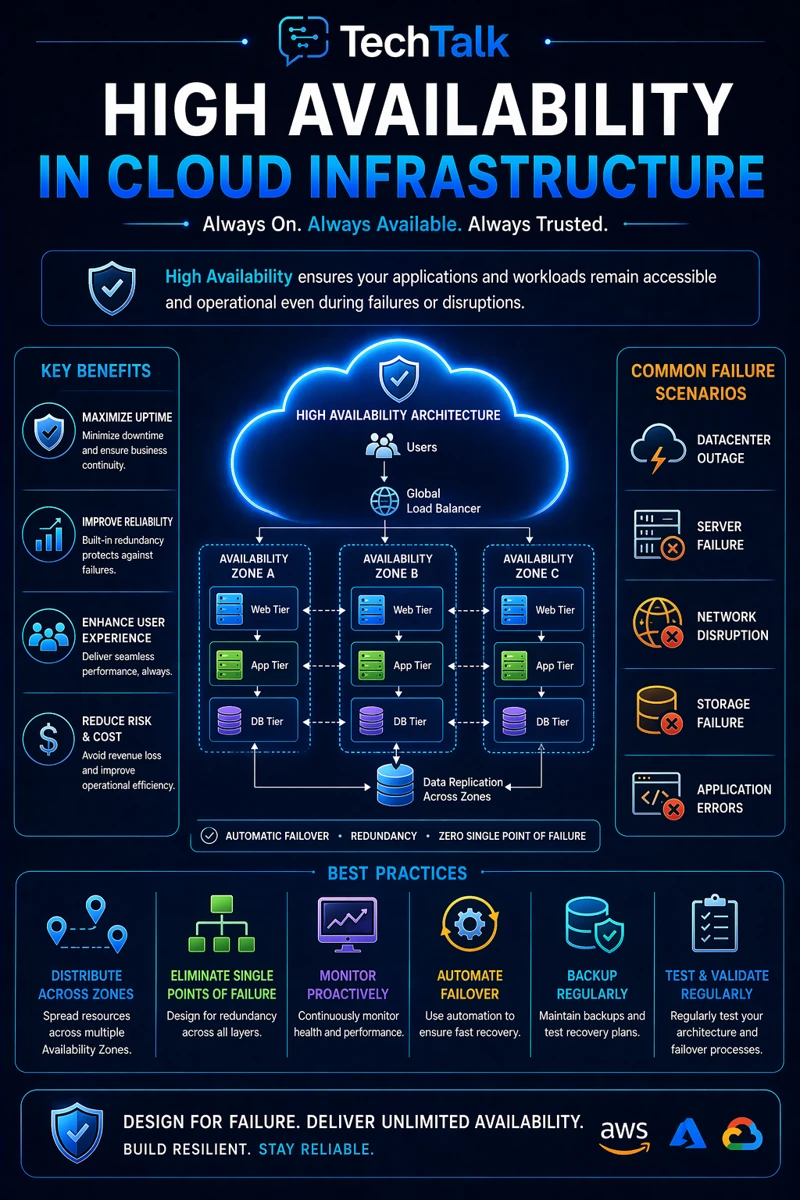
High availability (HA) is the ability of your systems to remain operational even when something fails.
It ensures:
- minimal downtime
- continuous access
- consistent performance
It is not about preventing failure.
It is about handling failure without disruption.
If you need foundational context, start with what cloud infrastructure is.
Failures are inevitable — high availability ensures they do not cause downtime.
Why High Availability Matters for Business
Modern businesses rely on systems being available at all times.
This includes:
- customer-facing applications
- internal systems
- communication tools
When systems go down:
- operations stop
- revenue is lost
- customer trust is impacted
This is why high availability is a core part of cloud infrastructure reliability.
What a Real Downtime Scenario Looks Like
A typical scenario:
- a single server handles a critical application
- the server fails
- no backup system exists
- the application goes offline
At that point:
- users cannot access systems
- operations are disrupted
- recovery takes time
These failures are often caused by poor cloud infrastructure architecture.
Most downtime is caused by single points of failure — not provider outages.
The Core Components of High Availability
High availability is achieved through multiple design elements.
Redundancy (Duplicate Systems)
Critical systems must be duplicated.
This includes:
- multiple servers
- replicated databases
- backup systems
Without redundancy:
- failure leads directly to downtime
Load Balancing (Distributing Traffic)
Traffic must be distributed across systems.
This includes:
- balancing user requests
- avoiding overload on a single system
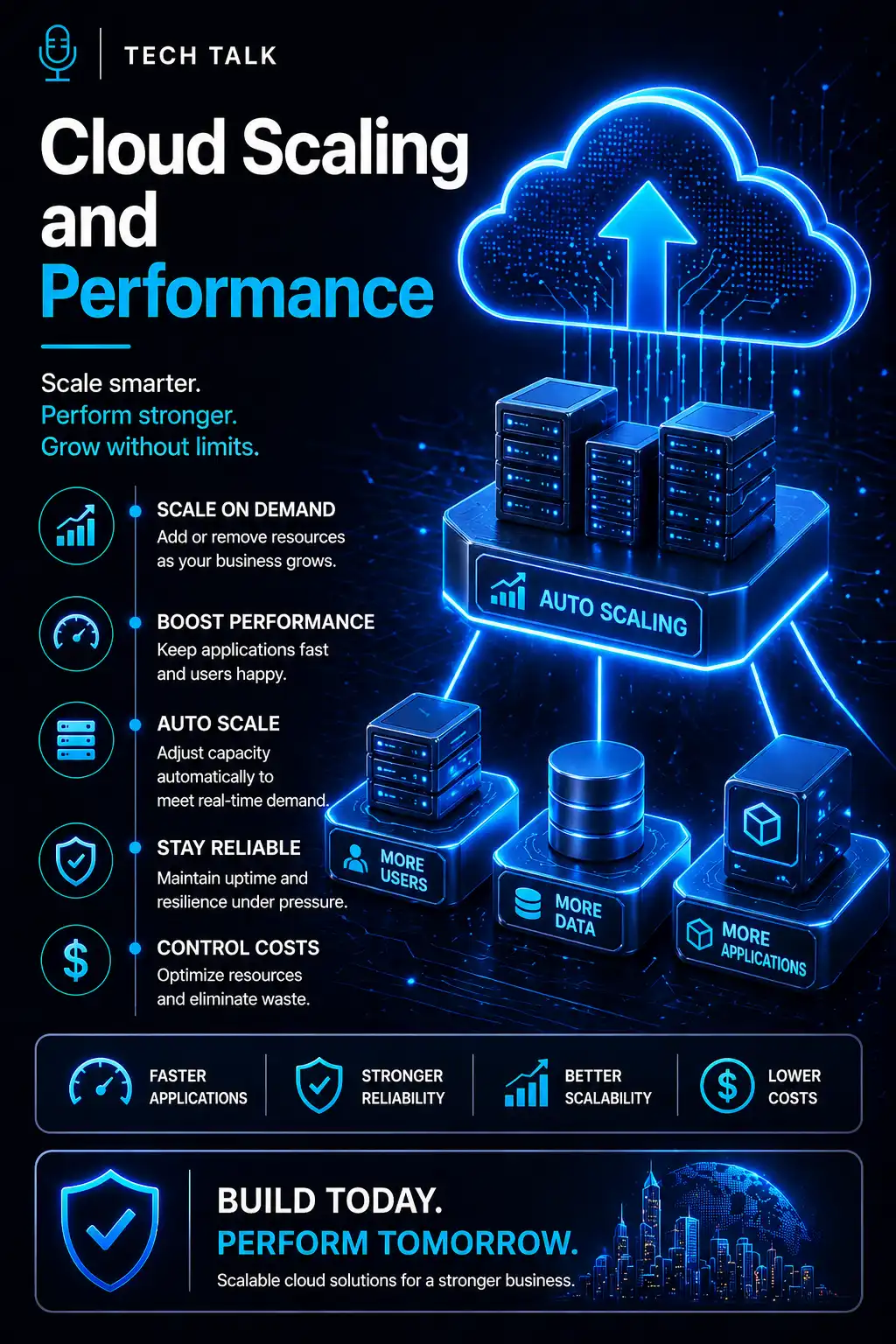
This ties into cloud scaling and performance.
Failover (Automatic Switching)
Systems must switch automatically when failure occurs.
This includes:
- redirecting traffic
- activating backup systems
Geographic Distribution (Reducing Location Risk)
Systems should not rely on a single location.
This includes:
- multiple regions
- distributed environments
Monitoring (Detecting Failure Quickly)
You must detect issues immediately.
This includes:
- alerts
- system monitoring
- performance tracking
This is often missing in environments without proper cloud infrastructure planning.
High availability is achieved through redundancy, distribution, and automation.
The Hidden Risk: Assuming the Cloud Is Highly Available
Many businesses assume:
- “the cloud is always available”
In reality:
- cloud platforms are highly available
- your systems may not be
This misunderstanding is common in environments without a clear cloud infrastructure strategy.
Cloud platforms are highly available — poorly designed systems are not.
What Breaks High Availability
High availability fails when:
- systems rely on a single resource
- failover is not configured
- monitoring is insufficient
- configurations are incorrect
These issues are often tied to cloud misconfigurations and risk.
The Role of Components in High Availability
HA depends on how components work together.
These include:
- compute
- storage
- networking
- security
Understanding these interactions is critical.
See cloud infrastructure components.
High availability is not achieved by a single system — it requires coordination across components.
The Complexity of Maintaining High Availability
Modern environments are:
- distributed
- interconnected
- constantly changing
This creates:
- dependency chains
- risk of cascading failures
- increased management complexity
These challenges are explained in cloud infrastructure explained.
What a Highly Available Environment Looks Like
A strong environment includes:
- redundant systems
- automated failover
- distributed architecture
- continuous monitoring
It should also align with designing cloud infrastructure.
High availability must be designed into systems — not added later.
How High Availability Impacts Business Performance
High availability directly affects:
- uptime
- customer experience
- operational continuity
Poor availability leads to:
- downtime
- lost revenue
- reduced trust
Availability is a business requirement — not just a technical feature.
How to Know If Your Infrastructure Lacks High Availability
You may have a gap if:
- systems rely on a single server
- failover is not configured
- outages occur unexpectedly
- recovery is manual or slow
If your systems have single points of failure, your availability is at risk.
How to Improve High Availability
Start with:
- identifying single points of failure
- implementing redundancy
- configuring failover
- improving monitoring
These steps align with broader cloud infrastructure strategy.
How This Connects to Other Cloud Topics
High availability is part of a complete infrastructure system.
It connects to:
- what is cloud infrastructure
- cloud infrastructure reliability
- cloud infrastructure architecture
- cloud infrastructure planning guide
- cloud infrastructure strategy
What This Means for Your Business
Your availability determines:
- how often your systems are accessible
- how stable your operations are
- how much downtime your business experiences
It is not optional.
It is essential.
High availability ensures your business continues operating — even when systems fail.
Final Thoughts
High availability is not automatic in the cloud.
It must be:
- designed
- implemented
- tested
When done correctly:
- downtime is minimized
- systems remain operational
- business continuity is maintained
Need help with this topic?
Make sure your backups actually work when it matters.
Most businesses discover backup failures during an outage. We help you validate recovery, reduce downtime risk, and build a system that works under pressure.
- Backup validation and testing
- Recovery time optimization
- Clear recovery documentation