What a Multi-Cloud Strategy Really Means
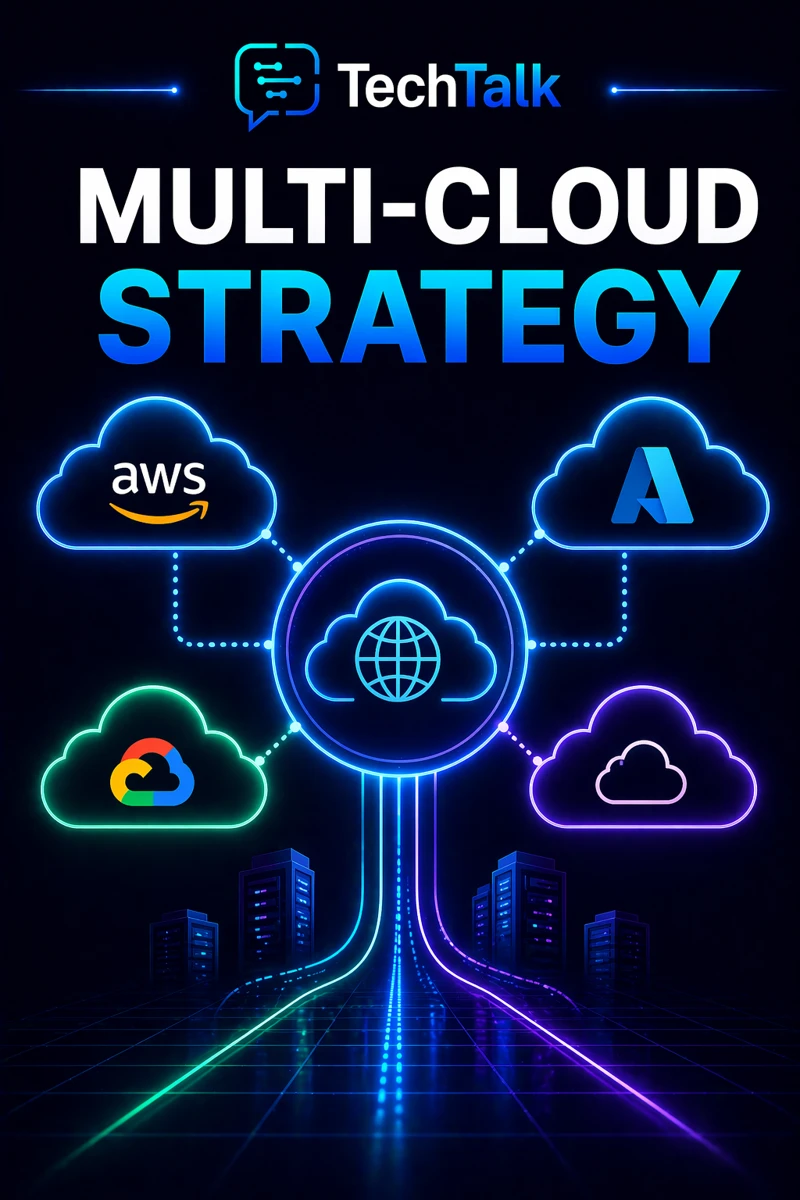
A multi-cloud strategy involves using multiple cloud providers.
This may include:
- different public cloud platforms
- combinations of cloud services
- distributed workloads across providers
The goal is to:
- reduce risk
- improve flexibility
- optimize performance
If you need foundational context, start with what cloud infrastructure is.
Relying on a single cloud provider creates dependency — multi-cloud reduces that risk.
Why Businesses Use Multi-Cloud
Businesses adopt multi-cloud to:
- avoid vendor lock-in
- improve resilience
- optimize performance across platforms
This approach is often compared with hybrid cloud infrastructure explained.
What a Real Multi-Cloud Scenario Looks Like
A typical scenario:
- one provider hosts applications
- another provider manages data
- services are distributed across platforms
At that point:
- flexibility increases
- risk is reduced
- complexity increases
These environments require strong cloud infrastructure architecture.
Multi-cloud improves resilience — but only when systems are properly integrated.
The Core Benefits of Multi-Cloud
Multi-cloud provides several advantages.
Reduced Vendor Risk
Using multiple providers avoids dependency.
This reduces:
- risk of outages
- reliance on a single platform
Improved Resilience
Systems can fail over between providers.
This aligns with cloud failover strategy.
Performance Optimization
Workloads can run where they perform best.
This ties into cloud performance optimization.
Flexibility
Businesses can:
- choose best-of-breed services
- adapt to changing needs
Multi-cloud improves flexibility and resilience — but increases complexity.
The Hidden Risk: Complexity
Multi-cloud environments can become complex.
This happens when:
- systems are not integrated
- management is inconsistent
- monitoring is fragmented
This leads to:
- inefficiency
- security gaps
- performance issues
This is common in environments lacking cloud infrastructure planning.
Multi-cloud without coordination creates fragmented systems.
What Breaks Multi-Cloud Strategies
Multi-cloud fails when:
- integration is weak
- security is inconsistent
- monitoring is incomplete
- governance is lacking
These issues are often tied to cloud misconfigurations and risk.
The Role of Integration in Multi-Cloud
Systems must work together across providers.
This includes:
- data synchronization
- application integration
- secure connectivity
The Role of Monitoring in Multi-Cloud
Visibility must extend across all platforms.
This includes:
- centralized monitoring
- unified alerts
- performance tracking
This aligns with cloud infrastructure monitoring.
Without centralized monitoring, multi-cloud environments become difficult to manage.
The Role of Security in Multi-Cloud
Security must be consistent.
This includes:
- access control
- data protection
- policy enforcement
This aligns with securing cloud infrastructure.
The Role of Cost in Multi-Cloud
Multi-cloud impacts cost.
Benefits:
- competitive pricing
- optimized workload placement
Challenges:
- increased management cost
- potential inefficiency
This ties into cloud cost management strategies.
The Complexity of Multi-Cloud Environments
Multi-cloud systems are:
- distributed
- dynamic
- interconnected
This creates:
- dependency chains
- multiple points of failure
- complex troubleshooting
These challenges are explained in cloud infrastructure explained.
What a Strong Multi-Cloud Strategy Looks Like
A strong strategy includes:
- integrated systems
- centralized monitoring
- consistent security
- clear governance
It must also align with cloud infrastructure strategy.
Multi-cloud should operate as a unified system — not separate platforms.
How Multi-Cloud Impacts Business Operations
Multi-cloud enables:
- flexibility
- resilience
- scalability
But poor implementation leads to:
- inefficiency
- complexity
- increased risk
Multi-cloud can improve operations — or complicate them — depending on execution.
How to Know If Multi-Cloud Is Right for You
You may benefit from multi-cloud if:
- you want to avoid vendor lock-in
- you need high resilience
- you operate across multiple platforms
If your business cannot rely on a single provider, multi-cloud may be necessary.
How to Implement a Multi-Cloud Strategy
Start with:
- defining business requirements
- selecting providers
- integrating systems
- implementing monitoring and governance
These steps align with broader cloud infrastructure strategy.
How This Connects to Other Cloud Topics
Multi-cloud is part of a complete infrastructure system.
It connects to:
- what is cloud infrastructure
- hybrid cloud infrastructure explained
- cloud infrastructure architecture
- cloud performance optimization
- cloud infrastructure strategy
What This Means for Your Business
Your cloud strategy determines:
- how flexible your systems are
- how resilient your infrastructure is
- how efficiently you operate
It is not optional.
It is strategic.
Multi-cloud enables flexibility and resilience — when properly managed.
Final Thoughts
Multi-cloud strategy is powerful.
But it requires:
- strong integration
- consistent management
- clear governance
When done correctly:
- systems are resilient
- performance is optimized
- risk is reduced
Need help with this topic?
Make sure your backups actually work when it matters.
Most businesses discover backup failures during an outage. We help you validate recovery, reduce downtime risk, and build a system that works under pressure.
- Backup validation and testing
- Recovery time optimization
- Clear recovery documentation