What Single-Cloud and Multi-Cloud Really Mean
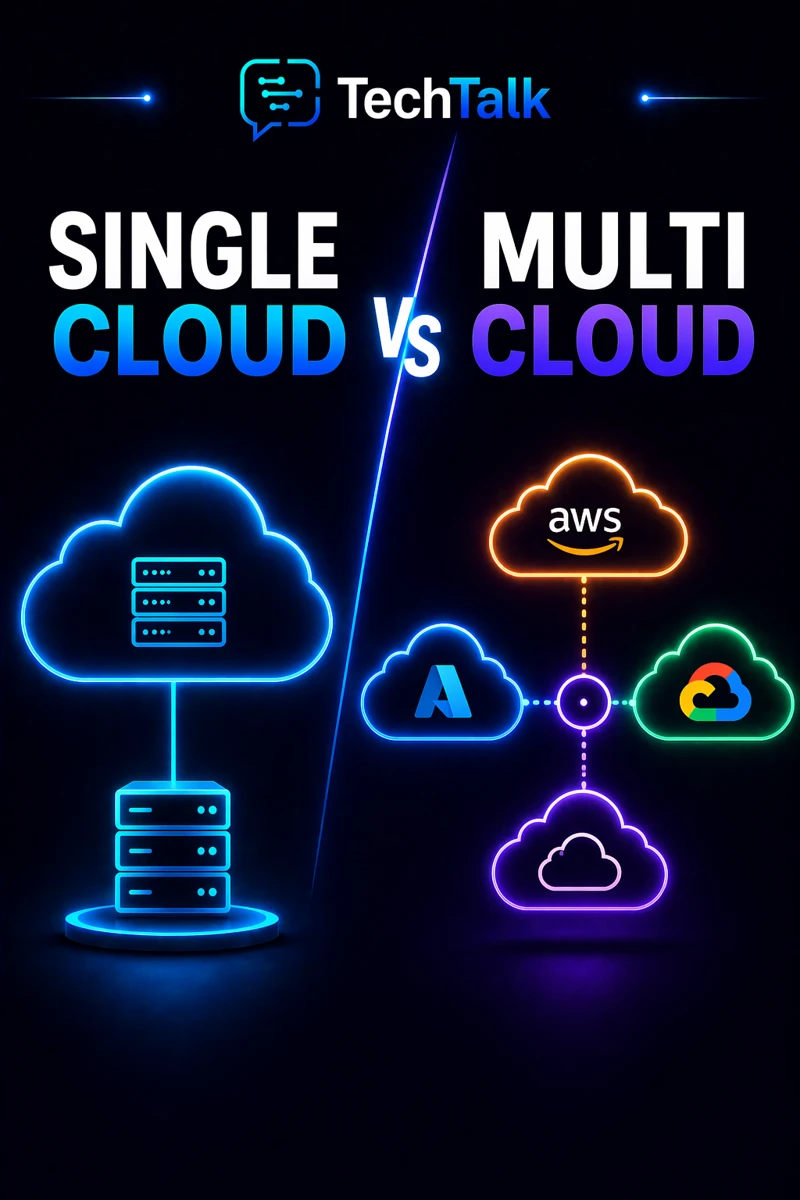
A single-cloud strategy uses one cloud provider for all infrastructure.
A multi-cloud strategy uses multiple providers across different workloads.
Each approach has trade-offs in:
- complexity
- cost
- flexibility
- risk
If you need foundational context, start with what cloud infrastructure is.
Your cloud strategy impacts every aspect of your infrastructure — from performance to risk.
Why This Decision Matters
Choosing between single-cloud and multi-cloud affects:
- system reliability
- vendor dependency
- operational complexity
This is a key decision in cloud infrastructure strategy.
What a Single-Cloud Strategy Looks Like
In a single-cloud model:
- all systems run on one provider
- management is centralized
- integration is simpler
Benefits of Single-Cloud
- simpler architecture
- easier management
- lower operational complexity
This aligns with streamlined cloud infrastructure architecture.
Risks of Single-Cloud
- vendor lock-in
- dependency on one provider
- limited flexibility
These risks are addressed in multi-cloud strategy.
Single-cloud simplifies operations but increases dependency on one provider.
What a Multi-Cloud Strategy Looks Like
In a multi-cloud model:
- workloads are distributed across providers
- services are selected based on strengths
- systems are integrated across platforms
Benefits of Multi-Cloud
- reduced vendor risk
- improved resilience
- greater flexibility
This aligns with multi-cloud strategy.
Risks of Multi-Cloud
- increased complexity
- integration challenges
- higher management overhead
These challenges are explained in cloud infrastructure explained.
Multi-cloud improves flexibility and resilience but requires strong management and integration.
The Hidden Risk: Overengineering
Many businesses:
- adopt multi-cloud too early
- add complexity without need
This leads to:
- inefficiency
- increased cost
- management challenges
This is common in environments lacking cloud infrastructure planning.
Multi-cloud without clear purpose creates unnecessary complexity.
What Breaks Cloud Strategy Decisions
Both approaches fail when:
- architecture is weak
- monitoring is insufficient
- governance is lacking
These issues are often tied to cloud misconfigurations and risk.
The Role of Performance in Strategy
Single-cloud:
- optimized within one platform
Multi-cloud:
- optimized across platforms
This aligns with cloud performance optimization.
The Role of Reliability in Strategy
Single-cloud:
- depends on one provider
Multi-cloud:
- can fail over across providers
This aligns with cloud infrastructure reliability.
Multi-cloud can improve resilience — but only when properly designed.
The Role of Cost in Strategy
Single-cloud:
- simpler cost structure
- easier optimization
Multi-cloud:
- more complex billing
- potential inefficiencies
This ties into cloud cost management strategies.
The Complexity Factor
Single-cloud environments are:
- easier to manage
- simpler to monitor
Multi-cloud environments are:
- more complex
- harder to integrate
- more difficult to secure
These differences are explained in cloud infrastructure explained.
What a Strong Cloud Strategy Looks Like
A strong strategy includes:
- alignment with business needs
- clear architecture
- effective monitoring
- controlled cost
It must also align with cloud infrastructure strategy.
The right strategy is based on business needs — not trends.
How This Decision Impacts Business Operations
Your strategy determines:
- how flexible your systems are
- how resilient your infrastructure is
- how efficiently you operate
Poor decisions lead to:
- inefficiency
- increased risk
- higher cost
Your cloud strategy directly affects operational success.
How to Choose Between Single-Cloud and Multi-Cloud
Choose single-cloud if:
- simplicity is a priority
- you want easier management
- your risk tolerance is moderate
Choose multi-cloud if:
- you need high resilience
- you want to avoid vendor lock-in
- you require flexibility
If your business cannot tolerate dependency on one provider, multi-cloud may be necessary.
How This Connects to Other Cloud Topics
This decision connects to:
- what is cloud infrastructure
- multi-cloud strategy
- hybrid cloud infrastructure explained
- cloud infrastructure architecture
- cloud infrastructure strategy
What This Means for Your Business
Your cloud strategy determines:
- how you scale
- how you manage risk
- how efficiently you operate
It is not optional.
It is strategic.
The best cloud strategy balances simplicity, flexibility, and risk.
Final Thoughts
There is no one-size-fits-all approach.
Single-cloud offers:
- simplicity
- ease of management
Multi-cloud offers:
- flexibility
- resilience
The right choice depends on your business needs.
Need help with this topic?
Make sure your backups actually work when it matters.
Most businesses discover backup failures during an outage. We help you validate recovery, reduce downtime risk, and build a system that works under pressure.
- Backup validation and testing
- Recovery time optimization
- Clear recovery documentation