What Cloud Infrastructure Means for Small Businesses
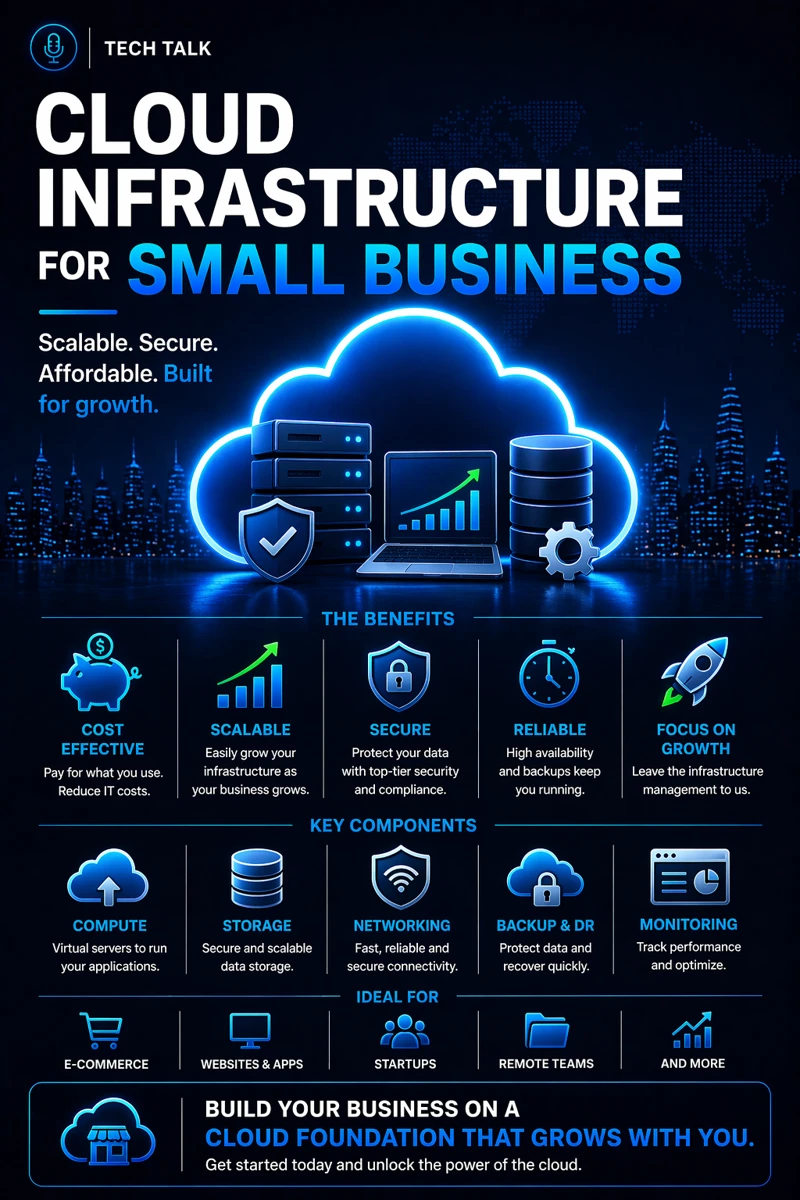
Cloud infrastructure allows small businesses to:
- run systems without physical servers
- scale resources as needed
- access systems from anywhere
It replaces traditional IT with flexible, on-demand services.
If you need foundational context, start with what cloud infrastructure is.
Small businesses don’t need complex cloud systems — they need the right ones.
Why Small Businesses Are Moving to the Cloud
Cloud adoption is growing because it enables:
- lower upfront costs
- easier scalability
- reduced maintenance
These benefits are explained in moving to cloud infrastructure.
What a Typical SMB Cloud Setup Looks Like
A small business environment may include:
- cloud-based applications
- file storage
- backup and recovery
- remote access
At that point:
- systems are more flexible
- operations become simpler
- growth becomes easier
This setup should align with cloud infrastructure basics for business.
Simple cloud environments often outperform overly complex ones for SMBs.
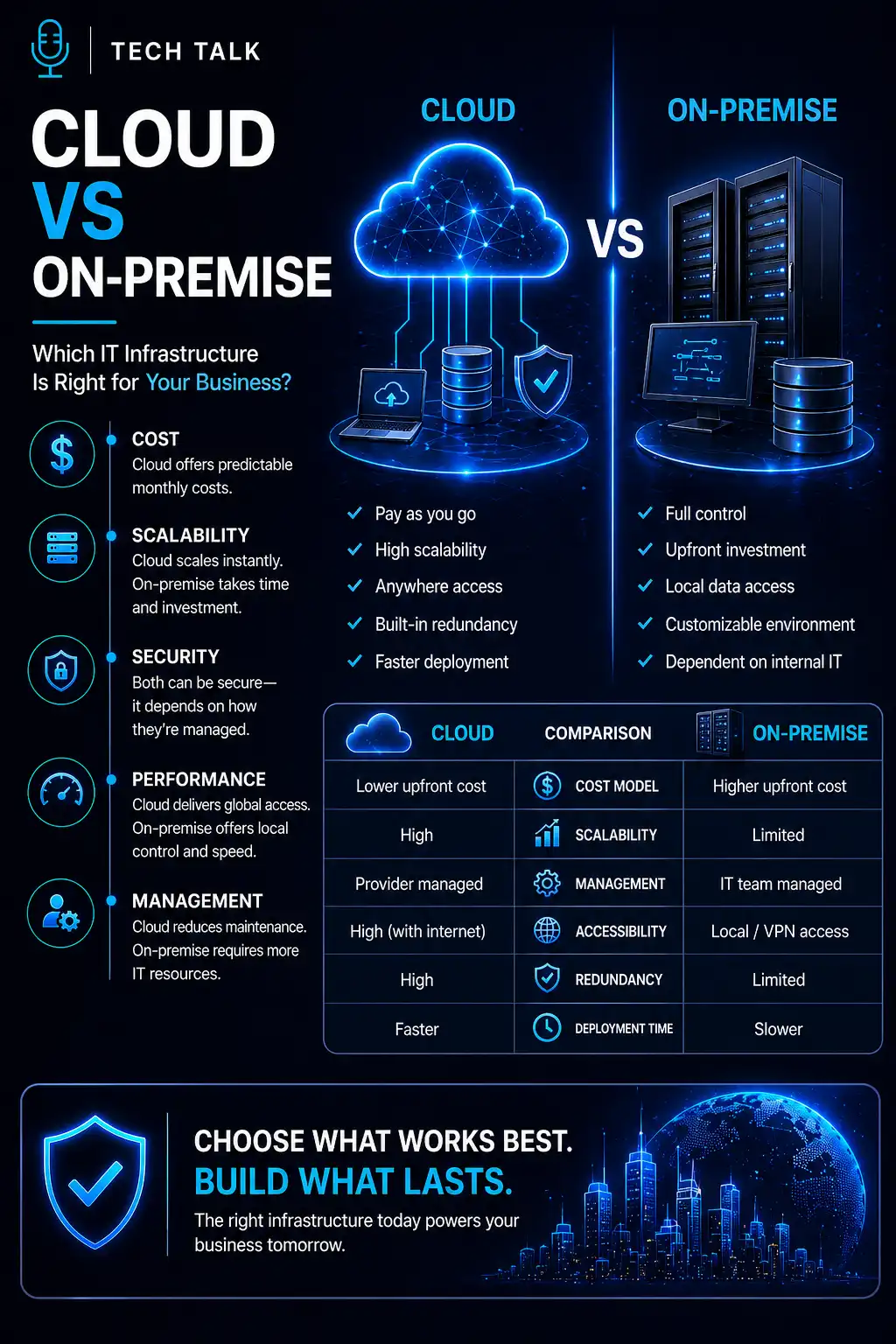
The Core Benefits of Cloud for Small Businesses
Cloud infrastructure provides several key advantages.
Cost Efficiency (Pay for What You Use)
Small businesses avoid large capital expenses.
This aligns with cloud cost management strategies.
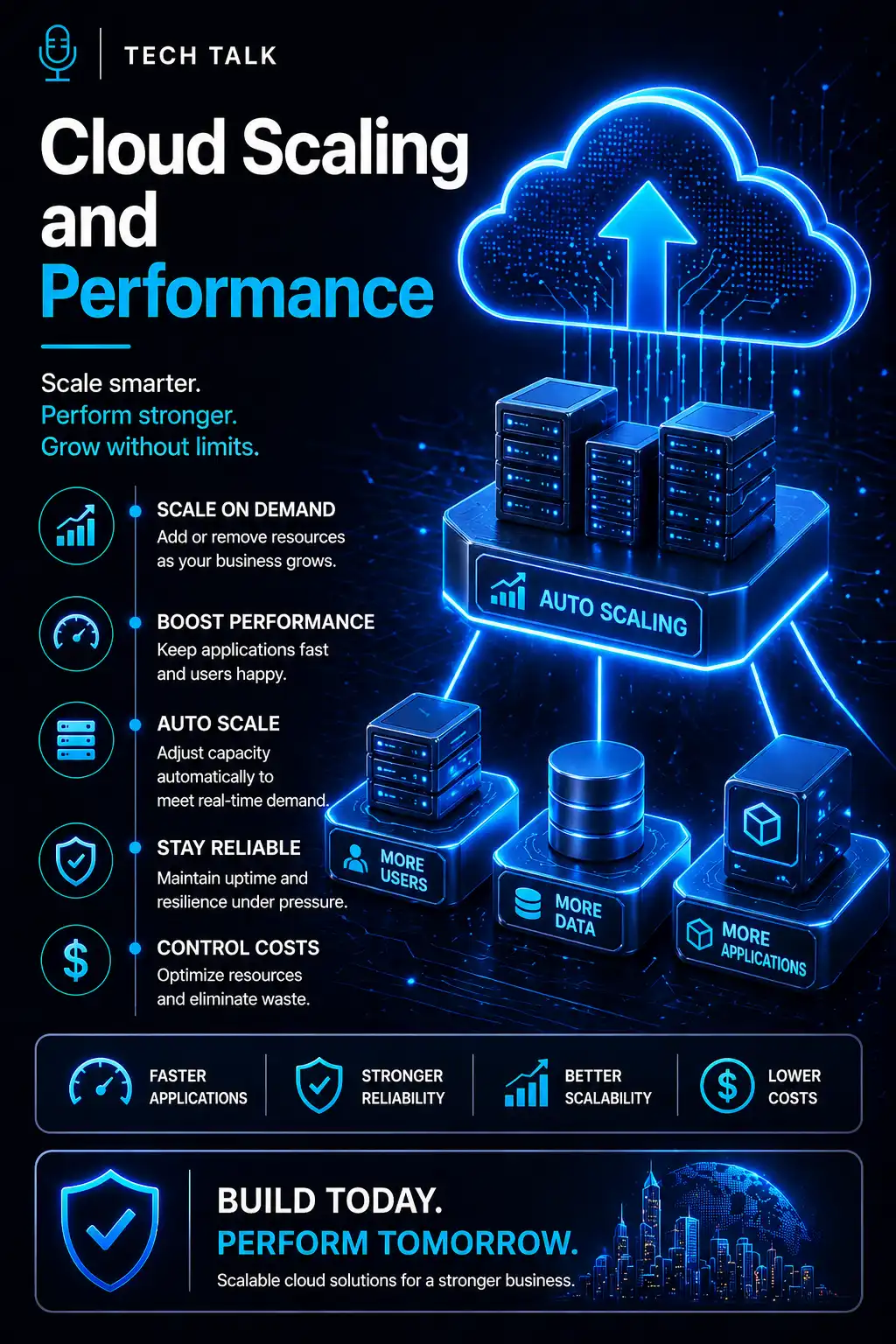
Scalability (Grow Without Rebuilding)
Systems can grow with the business.
This aligns with scaling cloud infrastructure.
Flexibility (Work From Anywhere)
Employees can access systems remotely.
Reliability (Improved Uptime)
Cloud systems often provide better uptime than local setups.
This aligns with cloud infrastructure reliability.
Cloud infrastructure gives small businesses enterprise-level capabilities without enterprise-level cost.
The Hidden Risk: Overengineering
Many small businesses:
- adopt overly complex systems
- implement unnecessary tools
This leads to:
- higher costs
- difficult management
- inefficiency
This is common in environments lacking cloud infrastructure strategy.
Complexity is one of the biggest risks for small business cloud environments.
What Challenges Small Businesses Face
Common challenges include:
- limited IT resources
- cost control
- system management
- security concerns
These challenges are explained in cloud adoption challenges.
The Role of Simplicity in SMB Cloud Design
Small businesses benefit from:
- simple architecture
- easy-to-manage systems
- clear processes
This aligns with designing cloud infrastructure.
Simplicity improves efficiency and reduces risk for small businesses.
The Role of Cost Management for SMBs
Cost control is critical.
This includes:
- avoiding overprovisioning
- optimizing resource usage
This aligns with cloud overprovisioning risks.
The Role of Security in Small Business Cloud
Security must be maintained.
This includes:
- access control
- data protection
This aligns with cloud infrastructure security.
The Role of Management and Monitoring
Cloud environments require oversight.
This includes:
- monitoring performance
- managing resources
This aligns with managing cloud infrastructure.
The Complexity of SMB Cloud Environments
Even small systems can become complex.
This includes:
- multiple services
- integrations
- workflows
These challenges are explained in cloud infrastructure explained.
What a Strong SMB Cloud Environment Looks Like
A strong environment includes:
- simple architecture
- controlled costs
- continuous monitoring
- scalable systems
It must also align with cloud infrastructure strategy.
Small businesses should prioritize simplicity, efficiency, and scalability.
How Cloud Infrastructure Impacts Small Business Operations
Cloud infrastructure enables:
- better productivity
- easier collaboration
- faster growth
Poor implementation leads to:
- inefficiency
- increased cost
- operational challenges
The right cloud setup can significantly improve small business performance.
How to Know If Cloud Is Right for Your Business
You may benefit from cloud if:
- you need flexibility
- your current systems are hard to manage
- growth is limited by infrastructure
If your current setup limits growth, cloud infrastructure may be the solution.
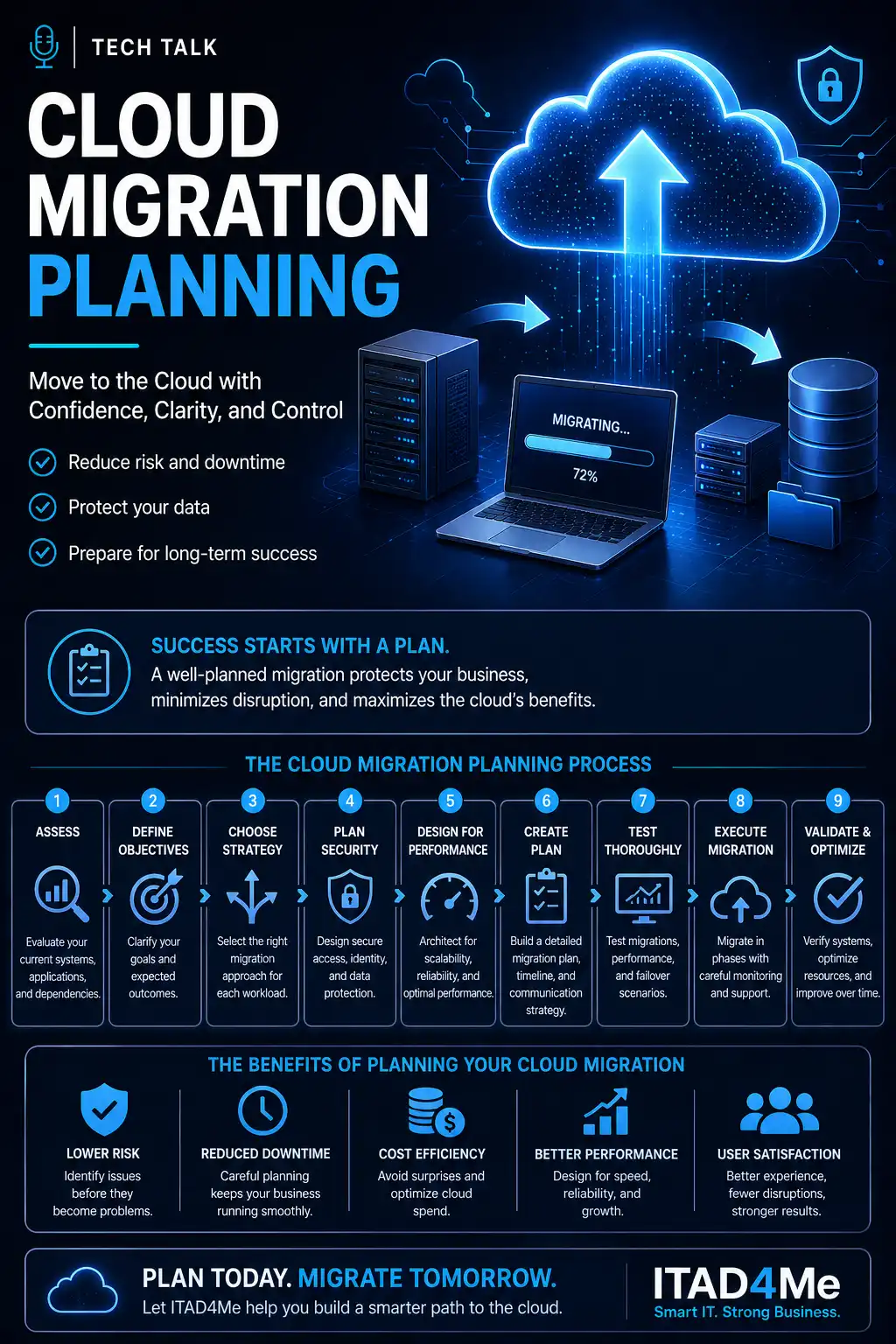
How to Get Started with Cloud Infrastructure
Start with:
- assessing your current systems
- defining business goals
- choosing simple solutions
- implementing monitoring
These steps align with broader cloud infrastructure strategy.
How This Connects to Other Cloud Topics
Cloud for SMBs connects to:
- what is cloud infrastructure
- moving to cloud infrastructure
- cloud infrastructure basics for business
- cloud infrastructure strategy
- managing cloud infrastructure
What This Means for Your Business
Your cloud approach determines:
- how efficiently you operate
- how easily you scale
- how well you control costs
It is not optional.
It is strategic.
Small businesses succeed in the cloud by keeping systems simple and scalable.
Final Thoughts
Cloud infrastructure is a powerful tool for small businesses.
But success depends on:
- simplicity
- strategy
- management
When done correctly:
- systems scale easily
- costs stay controlled
- operations improve
Need help with this topic?
Make sure your backups actually work when it matters.
Most businesses discover backup failures during an outage. We help you validate recovery, reduce downtime risk, and build a system that works under pressure.
- Backup validation and testing
- Recovery time optimization
- Clear recovery documentation