What a Cloud Migration Strategy Really Means
A cloud migration strategy defines how systems are moved from existing environments to the cloud.
It includes:
- planning the transition
- selecting the right approach
- minimizing risk and downtime
Migration is not just a technical process.
It is a business-critical initiative.
If you need foundational context, start with what cloud infrastructure is.
Cloud migration is one of the highest-risk phases in the infrastructure lifecycle.
Why Cloud Migration Matters
Moving to the cloud enables:
- scalability
- flexibility
- cost efficiency
But without a strategy:
- downtime increases
- performance suffers
- costs rise
This makes migration a core part of cloud infrastructure strategy.
What a Failed Migration Looks Like
A typical scenario:
- systems are moved quickly
- dependencies are not understood
- configurations are incorrect
- performance issues occur
At that point:
- downtime increases
- users are impacted
- recovery becomes difficult
These failures are often tied to poor cloud infrastructure planning.
Most migration failures are caused by poor planning — not technology limitations.
The Core Migration Approaches
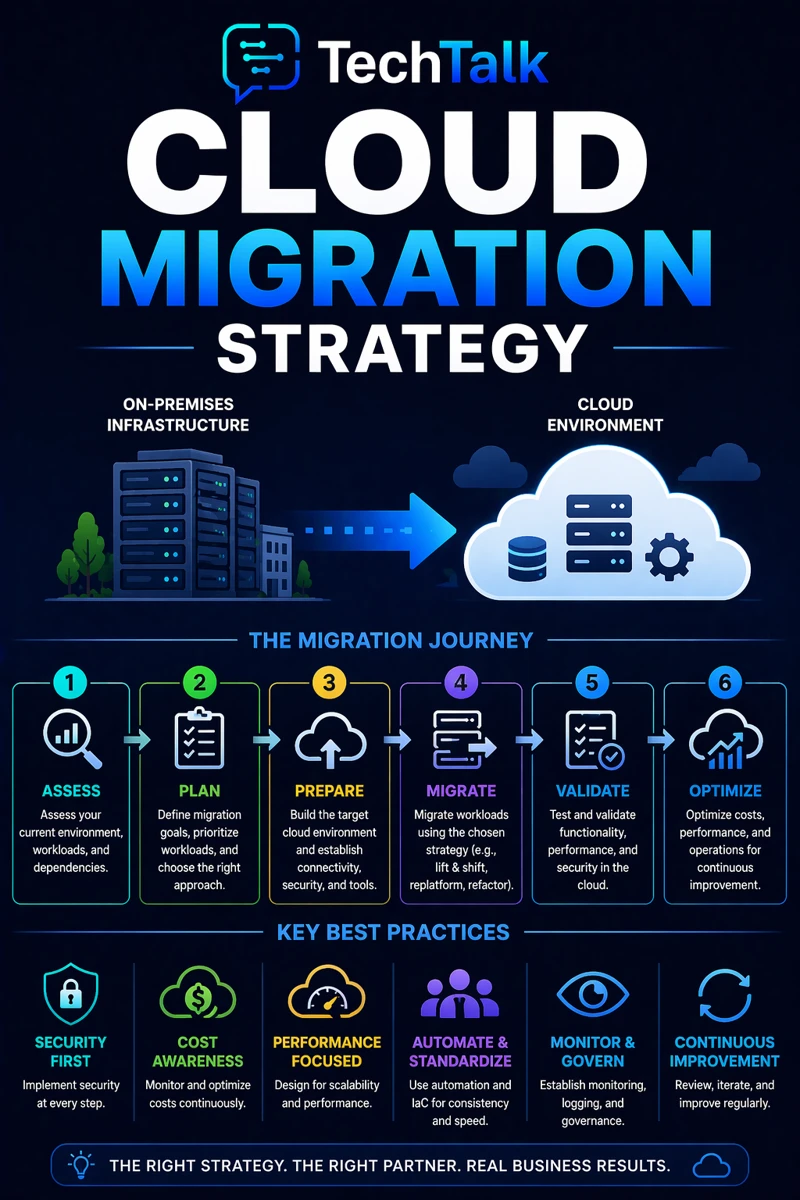
There are several ways to migrate systems.
Lift and Shift (Rehosting)
Move systems without major changes.
Pros:
- fast
- simple
Cons:
- may not optimize performance or cost
Replatforming (Optimizing During Migration)
Make limited changes to improve performance.
Pros:
- better efficiency
Cons:
- more effort
Refactoring (Rebuilding for Cloud)
Redesign applications for cloud-native environments.
Pros:
- maximum optimization
- scalability
Cons:
- highest complexity
This aligns with designing cloud infrastructure.
The right migration approach depends on your goals, timeline, and resources.
The Hidden Risk: Rushing Migration
Many businesses:
- move quickly to the cloud
- skip planning steps
This leads to:
- performance issues
- increased cost
- operational challenges
This is common in environments lacking cloud infrastructure explained.
Rushed migrations create long-term inefficiencies and risk.
What Breaks Cloud Migration
Migration fails when:
- dependencies are not mapped
- systems are not tested
- configurations are incorrect
- monitoring is missing
These issues are often tied to cloud misconfigurations and risk.
The Role of Architecture in Migration
Migration must align with architecture.
This includes:
- designing scalable systems
- ensuring compatibility
- optimizing workloads
This aligns with cloud infrastructure architecture.
Migration without proper architecture leads to inefficiency and instability.
The Role of Monitoring During Migration
Monitoring ensures visibility.
This includes:
- tracking performance
- identifying issues
- validating systems
This aligns with cloud infrastructure monitoring.
The Role of Security in Migration
Security must be maintained.
This includes:
- protecting data
- controlling access
- enforcing policies
This aligns with cloud infrastructure security.
The Role of Cost in Migration
Migration impacts cost.
This includes:
- temporary overlap of environments
- potential inefficiencies
This ties into cloud infrastructure cost optimization.
The Complexity of Cloud Migration
Migration involves:
- multiple systems
- dependencies
- workflows
This creates:
- complexity
- risk
- potential disruption
These challenges are explained in cloud infrastructure explained.
What a Successful Migration Looks Like
A strong migration includes:
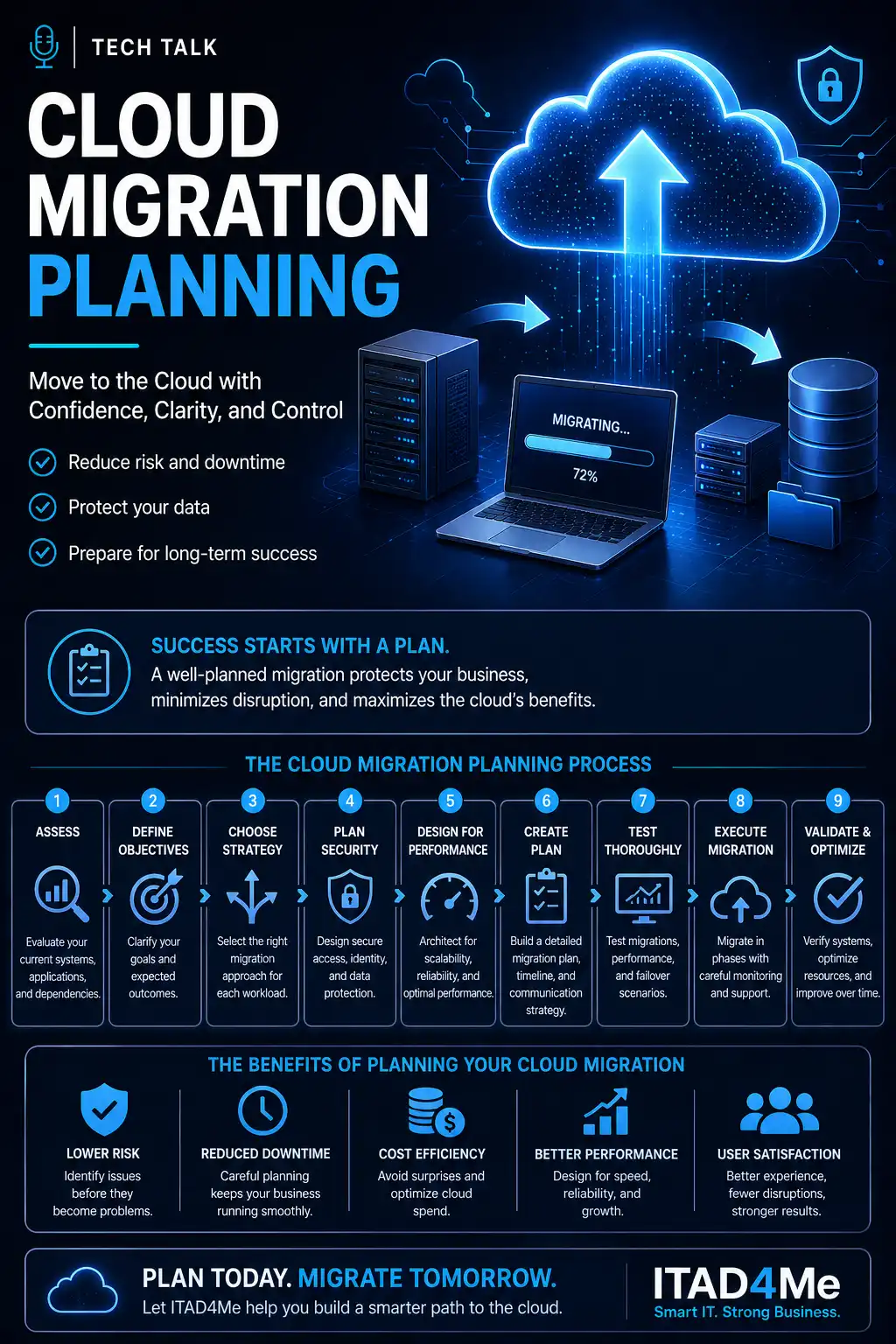
- detailed planning
- clear strategy
- thorough testing
- continuous monitoring
It must also align with cloud infrastructure strategy.
Migration should be planned, tested, and executed in phases.
How Migration Impacts Business Operations
Migration directly affects:
- system availability
- performance
- user experience
Poor migration leads to:
- downtime
- inefficiency
- increased cost
Migration success determines how smoothly your business transitions to the cloud.
How to Know If You Need a Better Migration Strategy
You may have a gap if:
- systems are not performing well after migration
- costs are higher than expected
- dependencies were overlooked
- issues are difficult to resolve
If your migration was rushed or incomplete, your infrastructure may be at risk.
How to Build a Cloud Migration Strategy
Start with:
- assessing current systems
- defining migration goals
- selecting an approach
- planning execution phases
These steps align with broader cloud infrastructure strategy.
How This Connects to Other Cloud Topics
Cloud migration is part of a complete infrastructure system.
It connects to:
- what is cloud infrastructure
- cloud infrastructure planning
- cloud infrastructure architecture
- cloud infrastructure monitoring
- cloud infrastructure strategy
What This Means for Your Business
Your migration strategy determines:
- how smoothly you transition
- how well systems perform
- how efficiently you operate
It is not optional.
It is critical.
A well-planned migration sets the foundation for long-term cloud success.
Final Thoughts
Cloud migration is a major step.
When done correctly:
- systems perform well
- costs are controlled
- operations are stable
When done poorly:
- problems persist
- inefficiencies grow
- risks increase
Need help with this topic?
Make sure your backups actually work when it matters.
Most businesses discover backup failures during an outage. We help you validate recovery, reduce downtime risk, and build a system that works under pressure.
- Backup validation and testing
- Recovery time optimization
- Clear recovery documentation