What Edge Computing Really Means
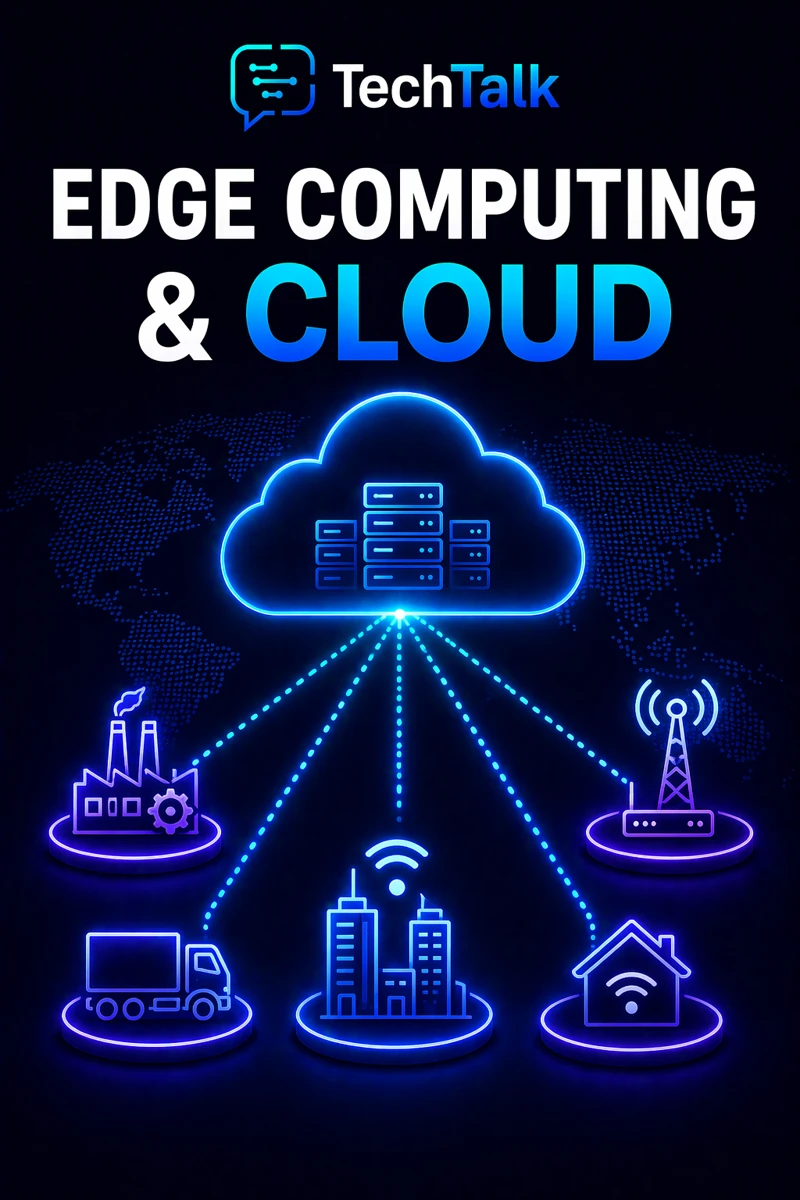
Edge computing moves data processing closer to where it is generated.
Instead of sending all data to centralized cloud systems:
- data is processed near the source
- responses are faster
- latency is reduced
Edge computing works alongside cloud infrastructure — not as a replacement.
If you need foundational context, start with what cloud infrastructure is.
Centralized cloud systems alone cannot meet the demands of real-time applications.
Why Edge Computing Matters
Modern applications require:
- real-time processing
- low latency
- fast response times
Cloud alone may introduce:
- network delays
- slower processing for distant users
Edge computing solves this by:
- reducing distance between data and processing
- enabling faster decision-making
This directly impacts cloud performance optimization.
What a Real Edge Scenario Looks Like
A typical scenario:
- users interact with applications globally
- data must travel long distances to cloud servers
- latency increases
- performance degrades
With edge computing:
- data is processed locally
- response time improves
- user experience is enhanced
These improvements depend on strong cloud infrastructure architecture.
Latency is one of the biggest performance challenges in modern cloud environments.
How Edge Computing and Cloud Work Together
Edge and cloud complement each other.
Edge handles:
- real-time processing
- local data handling
- immediate responses
Cloud handles:
- large-scale processing
- storage
- analytics
This creates a balanced system.
Edge computing improves speed, while cloud infrastructure provides scale and power.
The Core Benefits of Edge Computing
Edge computing provides several advantages.
Reduced Latency (Faster Response Times)
Processing data closer to users reduces delay.
This improves:
- application speed
- user experience
Improved Performance (Real-Time Processing)
Edge enables:
- faster decision-making
- real-time applications
This ties into cloud performance optimization.
Reduced Bandwidth Usage
Less data is sent to the cloud.
This reduces:
- network load
- data transfer costs
Increased Reliability
Local processing allows systems to continue operating even if cloud connectivity is reduced.
This aligns with cloud infrastructure reliability.
Edge computing improves speed, efficiency, and reliability simultaneously.
The Hidden Risk: Ignoring Latency
Many businesses:
- rely entirely on centralized cloud systems
- do not consider user location
This leads to:
- slow response times
- poor user experience
- performance bottlenecks
This is common in environments lacking cloud infrastructure planning.
Ignoring latency leads to performance issues that cloud scaling alone cannot fix.
What Breaks Edge + Cloud Integration
Edge computing fails when:
- systems are not integrated
- data is not synchronized
- security is inconsistent
- monitoring is incomplete
These issues are often tied to cloud misconfigurations and risk.
The Role of Monitoring in Edge Environments
Monitoring must cover:
- edge systems
- cloud systems
- network performance
This aligns with cloud infrastructure monitoring.
Without monitoring, edge environments become difficult to manage.
The Role of Security in Edge Computing
Security must extend to the edge.
This includes:
- device security
- data protection
- access control
This aligns with securing cloud infrastructure.
The Role of Scalability in Edge + Cloud Systems
Edge systems must scale alongside cloud systems.
This includes:
- distributed processing
- load balancing
- dynamic resource allocation
This ties into scaling cloud infrastructure.
The Complexity of Edge Computing
Edge environments are:
- distributed
- dynamic
- harder to manage
They require:
- integration
- monitoring
- consistent configuration
These challenges are explained in cloud infrastructure explained.
What a Strong Edge + Cloud Architecture Looks Like
A strong system includes:
- distributed edge nodes
- centralized cloud processing
- real-time data handling
- continuous monitoring
It must also align with designing cloud infrastructure.
Edge and cloud should work together as a unified system.
How Edge Computing Impacts Business Operations
Edge computing enables:
- faster applications
- better user experience
- real-time capabilities
Poor implementation leads to:
- complexity
- inefficiency
- increased risk
Edge computing can improve performance — or create complexity — depending on implementation.
How to Know If You Need Edge Computing
You may benefit from edge computing if:
- latency impacts performance
- users are geographically distributed
- real-time processing is required
If your applications require fast response times, edge computing may be necessary.
How to Implement Edge Computing
Start with:
- identifying latency-sensitive workloads
- designing edge architecture
- integrating with cloud systems
- implementing monitoring and security
These steps align with broader cloud infrastructure strategy.
How This Connects to Other Cloud Topics
Edge computing is part of a complete infrastructure system.
It connects to:
- what is cloud infrastructure
- cloud infrastructure architecture
- cloud performance optimization
- cloud infrastructure monitoring
- cloud infrastructure strategy
What This Means for Your Business
Your infrastructure design determines:
- how fast your systems respond
- how well users experience your applications
- how scalable your environment is
It is not optional for real-time systems.
It is essential.
Edge computing ensures your infrastructure delivers speed — not just scale.
Final Thoughts
Edge computing is not a replacement for cloud.
It is an enhancement.
When combined correctly:
- performance improves
- latency decreases
- systems become more efficient
Need help with this topic?
Make sure your backups actually work when it matters.
Most businesses discover backup failures during an outage. We help you validate recovery, reduce downtime risk, and build a system that works under pressure.
- Backup validation and testing
- Recovery time optimization
- Clear recovery documentation