What Business Continuity Means in the Cloud
Business continuity is the ability of your business to continue operating during disruption.
This includes:
- system failures
- outages
- unexpected events
Cloud infrastructure plays a key role in enabling continuity.
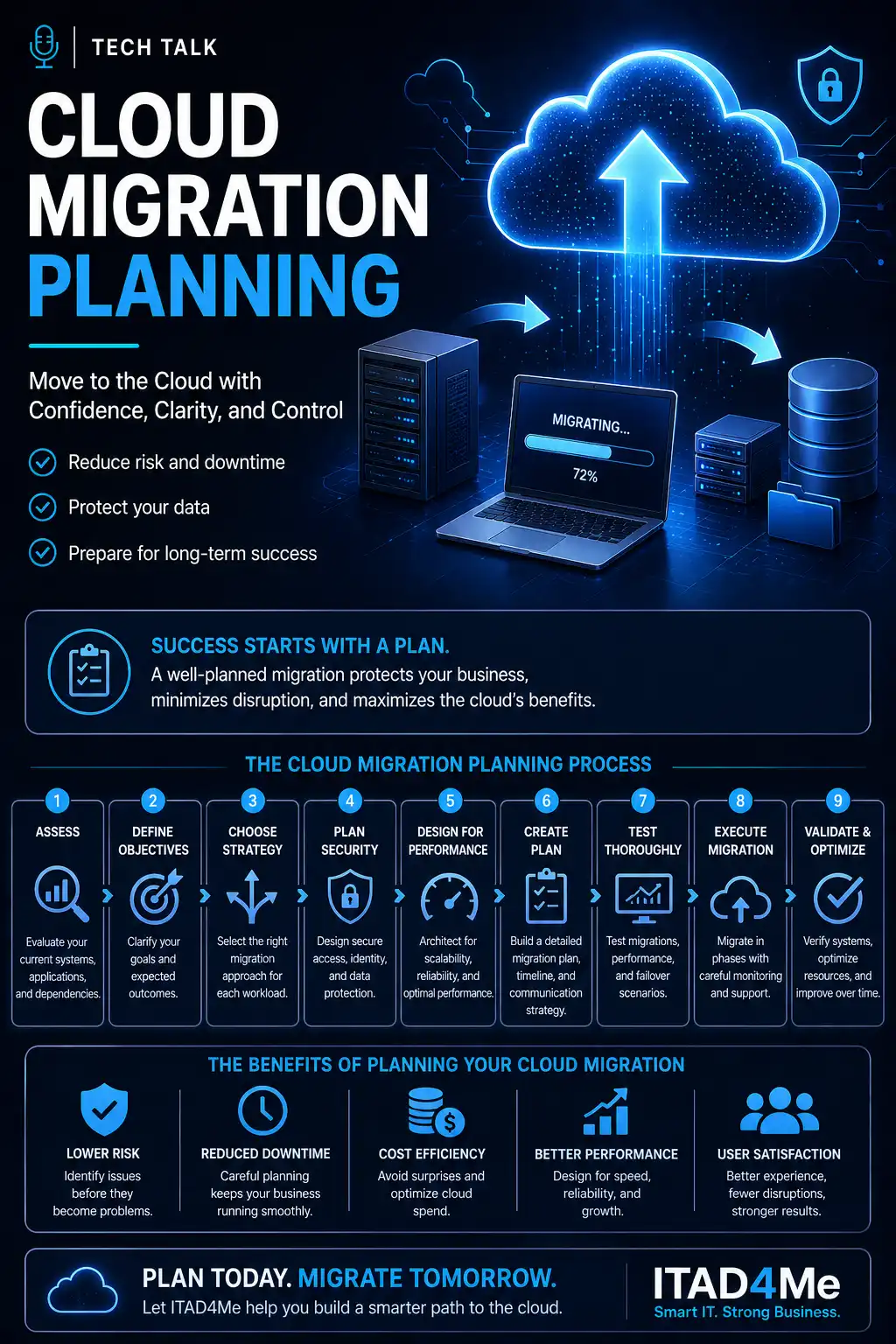
If you need foundational context, start with what cloud infrastructure is.
Business continuity is not about preventing failure — it is about continuing despite it.
Why Cloud Infrastructure Is Critical for Continuity
Traditional systems are limited by:
- physical hardware
- single locations
- fixed capacity
Cloud infrastructure enables:
- redundancy
- geographic distribution
- scalable resources
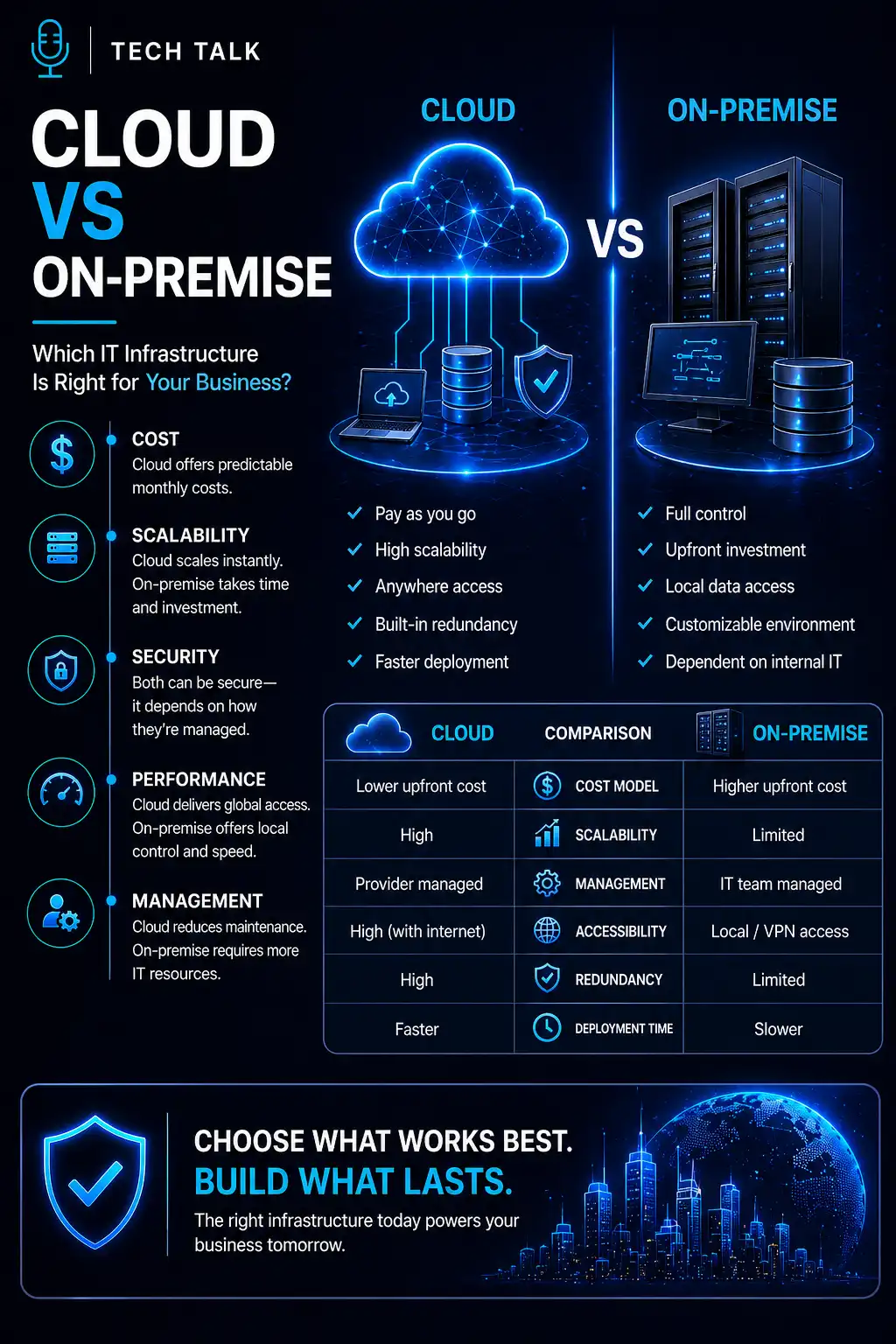
This shift is explained in cloud vs on-premise infrastructure.
What a Real Continuity Failure Looks Like
A typical scenario:
- a critical system fails
- no backup system exists
- data is unavailable
- operations stop
At that point:
- productivity drops
- revenue is impacted
- recovery takes time
These failures are often tied to poor cloud infrastructure planning.
Most continuity failures are caused by lack of preparation — not unexpected events.
The Core Elements of Business Continuity in the Cloud
Business continuity is built on multiple components.
Redundancy (Backup Systems)
Critical systems must be duplicated.
This includes:
- multiple servers
- replicated data
- backup environments
This aligns with high availability in cloud infrastructure.
Disaster Recovery (Restoring Systems)
You must be able to recover quickly.
This includes:
- backup strategies
- recovery processes
- failover systems
See backup and recovery strategies.
Scalability (Handling Increased Demand)
Systems must handle spikes in demand during disruption.
This includes:
- auto-scaling
- load balancing
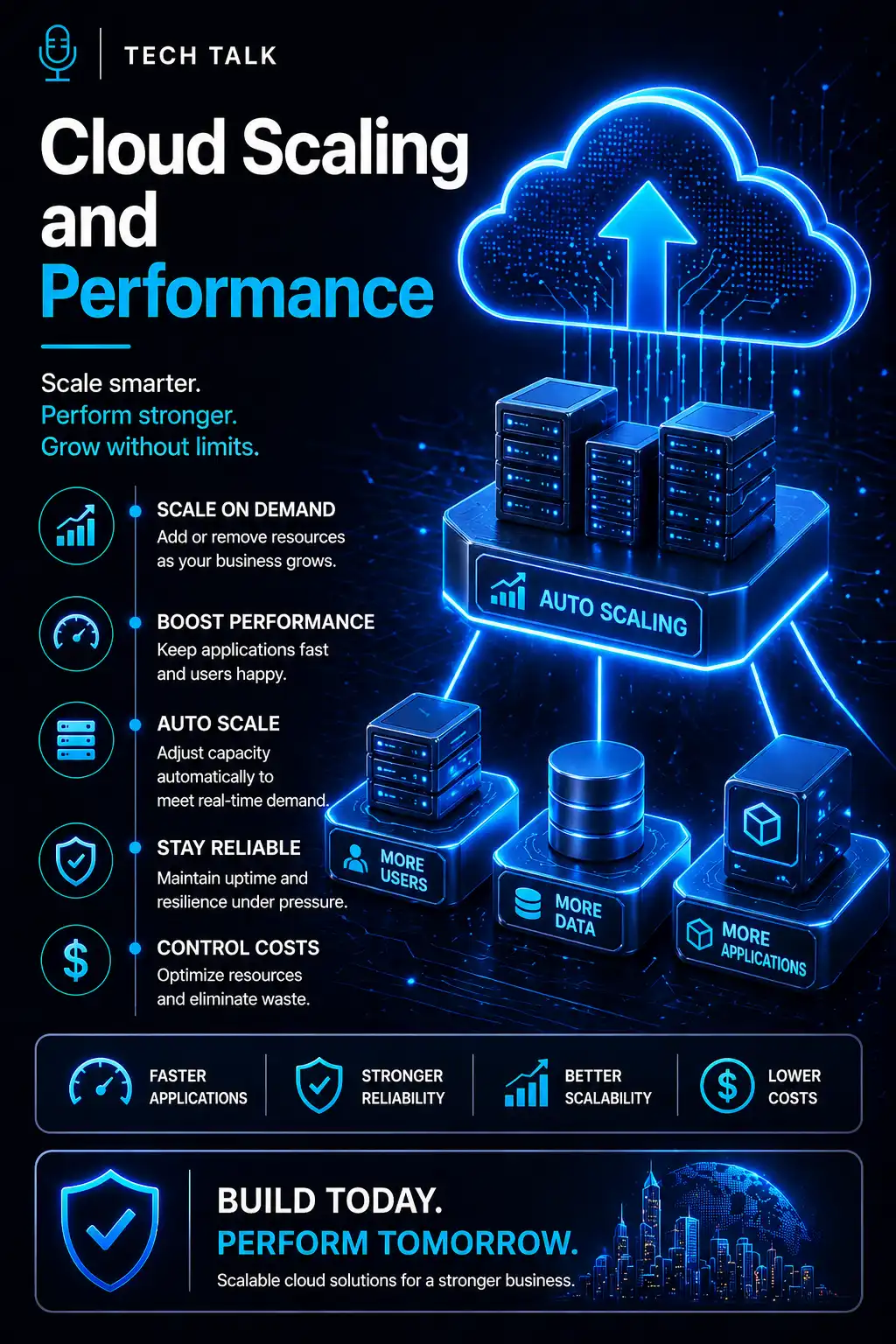
This ties directly to scaling cloud infrastructure.
Monitoring (Detecting Issues Early)
You must detect problems quickly.
This includes:
- alerts
- system monitoring
This aligns with cloud infrastructure monitoring.
Security (Protecting Systems During Disruption)
Security must remain intact during incidents.
This includes:
- access control
- data protection
See cloud infrastructure security.
Business continuity requires redundancy, recovery, scalability, monitoring, and security working together.
The Hidden Risk: Assuming Continuity Exists
Many businesses assume:
- “we are in the cloud, so we are protected”
In reality:
- continuity depends on design
- recovery must be planned
- systems must be tested
This misunderstanding is common in environments lacking cloud infrastructure strategy.
Cloud platforms enable continuity — but they do not guarantee it.
What Breaks Business Continuity
Continuity fails when:
- systems lack redundancy
- backups are not tested
- recovery processes are unclear
- monitoring is insufficient
These issues are often tied to cloud infrastructure risk management.
The Role of Architecture in Continuity
Continuity depends on how systems are designed.
Good architecture ensures:
- redundancy
- fault tolerance
- scalability
This aligns with cloud infrastructure architecture.
Continuity is determined by architecture — not by the cloud provider.
The Complexity of Maintaining Continuity
Modern cloud environments are:
- distributed
- interconnected
- dynamic
This creates:
- dependency chains
- risk of cascading failures
- complex recovery scenarios
These challenges are explained in cloud infrastructure explained.
What a Continuity-Ready Environment Looks Like
A strong environment includes:
- redundant systems
- tested recovery plans
- continuous monitoring
- secure configurations
It must also align with designing cloud infrastructure.
Continuity must be planned, tested, and continuously improved.
How Continuity Impacts Business Performance
Business continuity directly affects:
- uptime
- customer trust
- operational stability
Poor continuity leads to:
- downtime
- lost revenue
- reputational damage
Business continuity failures are business failures — not just technical issues.
How to Know If Your Continuity Is Weak
You may have a gap if:
- recovery processes are unclear
- backups are not tested
- systems lack redundancy
- monitoring is limited
If you are not prepared for failure, your business continuity is at risk.
How to Improve Business Continuity
Start with:
- implementing redundancy
- defining recovery processes
- testing backups
- improving monitoring
These steps align with broader cloud infrastructure strategy.
How This Connects to Other Cloud Topics
Business continuity is part of a complete infrastructure system.
It connects to:
- what is cloud infrastructure
- cloud infrastructure reliability
- high availability in cloud infrastructure
- cloud infrastructure monitoring
- cloud infrastructure strategy
What This Means for Your Business
Your continuity determines:
- how your business operates during disruption
- how quickly you recover
- how much risk you carry
It is not optional.
It is essential.
Business continuity ensures your business keeps running — even when systems fail.
Final Thoughts
Cloud infrastructure enables business continuity.
But it does not guarantee it.
Continuity must be:
- designed
- implemented
- tested
When done correctly:
- downtime is minimized
- recovery is faster
- operations remain stable
Need help with this topic?
Make sure your backups actually work when it matters.
Most businesses discover backup failures during an outage. We help you validate recovery, reduce downtime risk, and build a system that works under pressure.
- Backup validation and testing
- Recovery time optimization
- Clear recovery documentation