What Cloud Performance Issues Really Mean
Cloud performance issues occur when systems:
- respond slowly
- process inefficiently
- fail under load
These issues may not cause full outages.
But they reduce:
- user experience
- productivity
- operational efficiency
If you need foundational context, start with what cloud infrastructure is.
Slow systems are often a sign of deeper infrastructure problems.
Why Cloud Performance Problems Happen
Performance issues are typically caused by:
- improper resource allocation
- misconfiguration
- poor architecture
- lack of monitoring
These are operational issues.
Not platform limitations.
This makes performance optimization a key part of managing cloud infrastructure.
The Most Common Cloud Performance Issues
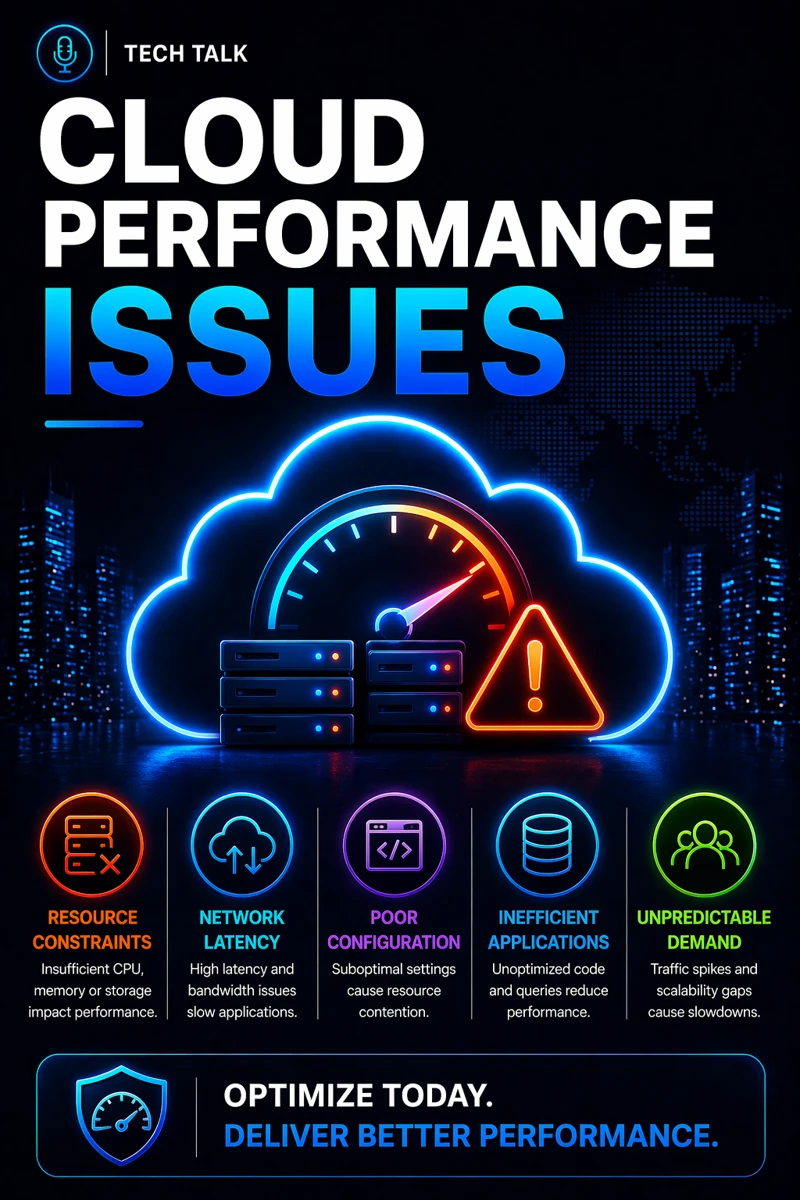
Cloud performance problems usually fall into several categories.
Resource Constraints (Insufficient Capacity)
Systems may not have enough resources.
This leads to:
- slow response times
- system overload
This aligns with right-sizing cloud resources.
Overprovisioning Inefficiencies
Too many resources can create inefficiency.
This includes:
- wasted compute power
- unnecessary cost
This aligns with cloud overprovisioning risks.
Latency Issues (Slow Data Transfer)
Latency occurs when data takes too long to travel.
This impacts:
- user experience
- real-time applications
This aligns with edge computing and cloud infrastructure.
Scaling Failures (Poor Load Handling)
Systems may fail to scale properly.
This leads to:
- performance drops under load
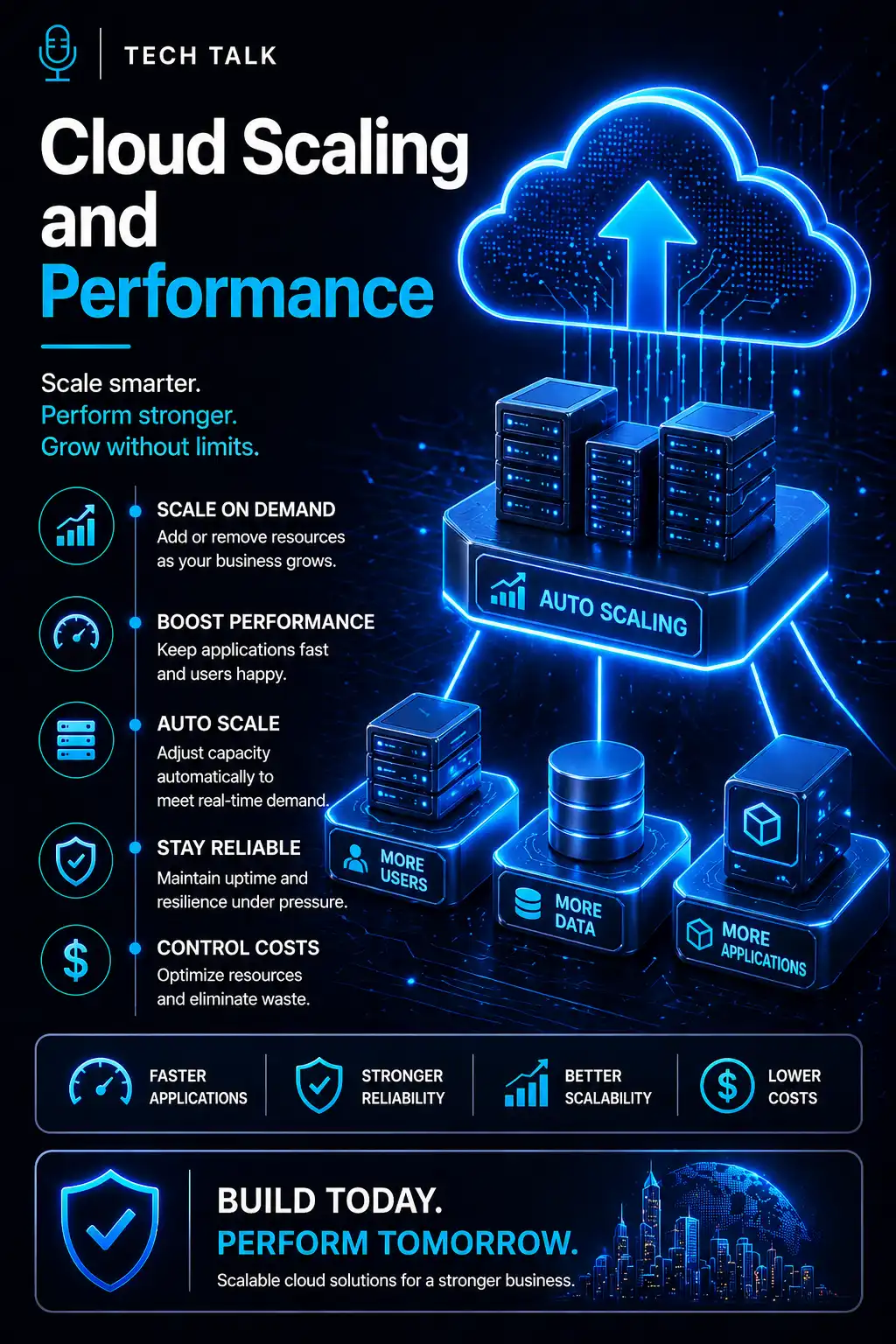
This aligns with scaling cloud infrastructure.
Misconfigurations (Incorrect Settings)
Incorrect configurations reduce performance.
This aligns with cloud misconfigurations and risk.
Performance issues are usually caused by resource allocation, latency, scaling, or configuration problems.
The Hidden Cause: Lack of Visibility
Many environments lack:
- monitoring
- performance insights
This leads to:
- delayed detection
- prolonged issues
This is common in environments lacking cloud infrastructure monitoring.
You cannot fix performance issues you cannot see.
What Makes Performance Issues Worse
Performance problems escalate when:
- systems are not monitored
- scaling is not automated
- resources are not optimized
These issues are often tied to cloud infrastructure mistakes.
The Role of Architecture in Performance
Architecture determines efficiency.
This includes:
- workload distribution
- system design
This aligns with cloud infrastructure architecture.
Poor architecture leads to persistent performance issues.
The Role of Monitoring in Performance Optimization
Monitoring provides insight.
This includes:
- tracking performance metrics
- identifying bottlenecks
This aligns with cloud infrastructure monitoring.
The Role of Automation in Performance
Automation improves responsiveness.
This includes:
- auto-scaling
- automated optimization
This aligns with cloud infrastructure automation.
The Role of Cost Optimization in Performance
Cost and performance are connected.
This includes:
- optimizing resource usage
- avoiding inefficiency
This aligns with cloud infrastructure cost optimization.
The Complexity of Performance Issues
Performance issues often involve:
- multiple systems
- dependencies
- workloads
This creates:
- complex troubleshooting
- multiple failure points
These challenges are explained in cloud infrastructure explained.
What a High-Performance Environment Looks Like
A strong environment includes:
- optimized resource allocation
- scalable systems
- continuous monitoring
- efficient architecture
It must also align with cloud performance optimization.
Performance requires continuous monitoring, optimization, and scaling.
How Performance Issues Impact Business Operations
Performance problems directly affect:
- productivity
- customer experience
- revenue
Poor performance leads to:
- user frustration
- lost opportunities
Slow systems reduce efficiency and impact customer satisfaction.
How to Know If You Have Performance Issues
You may have a gap if:
- systems respond slowly
- performance drops under load
- resource usage is inconsistent
- issues are difficult to diagnose
If performance is inconsistent, optimization is needed.
How to Fix Cloud Performance Issues
Start with:
- implementing monitoring
- optimizing resource allocation
- improving architecture
- enabling auto-scaling
These steps align with broader cloud infrastructure strategy.
How This Connects to Other Cloud Topics
Cloud performance connects to:
- what is cloud infrastructure
- cloud performance optimization
- cloud infrastructure monitoring
- scaling cloud infrastructure
- cloud infrastructure strategy
What This Means for Your Business
Your performance determines:
- user experience
- operational efficiency
- system reliability
It is not optional.
It is critical.
Performance issues are solvable with proper visibility and optimization.
Final Thoughts
Cloud performance issues are common.
But they are fixable.
When addressed correctly:
- systems run efficiently
- users have better experiences
- operations improve
Need help with this topic?
Make sure your backups actually work when it matters.
Most businesses discover backup failures during an outage. We help you validate recovery, reduce downtime risk, and build a system that works under pressure.
- Backup validation and testing
- Recovery time optimization
- Clear recovery documentation